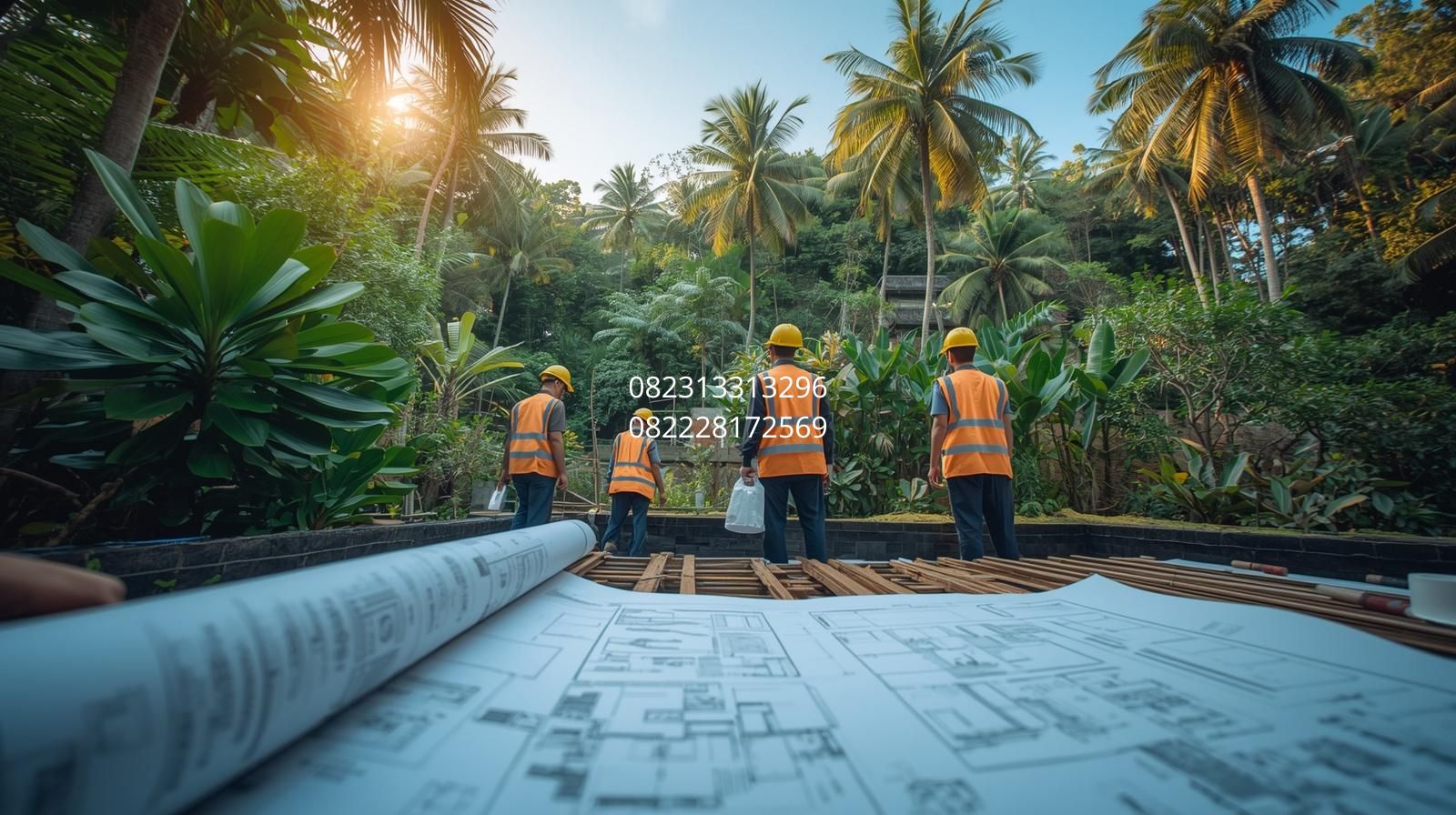
Construction Management Bali: Strategic Approaches for Efficient Project Delivery – arovabuild
Construction Management Bali – Construction management in Bali continues to evolve alongside rapid development.
Moreover, the region attracts residential, hospitality, and commercial projects consistently.
Therefore, project stakeholders demand structured planning and controlled execution systems.
Bali offers unique construction challenges due to geography and cultural regulations.
Additionally, environmental sensitivity shapes many project decisions across the island.
Consequently, construction teams must adapt methods to local conditions effectively.
Construction management integrates planning, coordination, and supervision in one system.
Meanwhile, professionals align resources, timelines, and costs to project goals.
Thus, structured management improves efficiency and reduces unnecessary project risks.

Understanding Construction Management in Bali’s Development Context
Construction management in Bali requires deep understanding of local dynamics.
Moreover, each project must follow regional planning rules and environmental standards.
Local Regulations and Cultural Considerations
Bali enforces strict zoning rules for sustainable development practices.
Additionally, cultural heritage sites influence building design and construction placement.
Therefore, teams must coordinate with local authorities before project execution.
Construction managers also respect community structures in project areas.
Furthermore, they integrate traditional spatial concepts into modern construction planning.
As a result, projects align better with local acceptance and sustainability goals.
Environmental Sensitivity in Construction Projects
Bali emphasizes environmental preservation in all development activities.
Moreover, coastal areas require careful structural and ecological assessments.
Thus, construction managers implement mitigation strategies during early planning stages.
Heavy rainfall and soil conditions affect construction scheduling significantly.
Consequently, project teams adjust timelines based on seasonal patterns.
In addition, drainage systems play a crucial role in design decisions.
Core Functions of Construction Management Systems
Construction management covers multiple coordinated functions in every project phase.
Meanwhile, each function contributes to overall project success and efficiency.
Project Planning and Feasibility Analysis
Planning starts with feasibility studies and site evaluations.
Moreover, teams assess technical, financial, and environmental viability early.
Thus, stakeholders reduce risks before committing to construction execution.
Project managers define scope, objectives, and expected outcomes clearly.
Additionally, they align design concepts with client requirements and regulations.
Consequently, early clarity improves decision-making throughout the project lifecycle.
Budgeting and Cost Control Systems
Cost control ensures financial efficiency across all project stages.
Meanwhile, managers track expenses against planned budgets continuously.
Therefore, teams detect deviations before they escalate into major issues.
Material procurement planning reduces unnecessary cost fluctuations effectively.
Furthermore, strategic sourcing improves overall financial predictability.
As a result, stakeholders maintain stronger control over investment outcomes.
Scheduling and Time Management
Time management drives project delivery success in Bali’s competitive market.
Additionally, managers build schedules based on realistic construction timelines.
Thus, project teams avoid unnecessary delays and resource conflicts.
Weather conditions often influence scheduling adjustments in tropical regions.
Moreover, managers anticipate delays and prepare backup execution plans.
Consequently, projects maintain progress despite environmental disruptions.
Construction Management Process Flow in Bali Projects
Construction management follows structured phases from initiation to completion.
Meanwhile, each phase ensures controlled progress and measurable outcomes.
Pre-Construction Phase Activities
Pre-construction begins with site analysis and design coordination.
Moreover, teams evaluate structural feasibility and infrastructure readiness.
Thus, early planning reduces execution risks significantly.
Permitting processes play a critical role in this phase.
Additionally, managers coordinate documentation with local government authorities.
Consequently, approvals progress smoothly before physical construction begins.
Construction Execution Phase
Execution involves coordinated resource deployment across the site.
Meanwhile, supervisors monitor quality and timeline adherence closely.
Therefore, teams maintain consistent progress throughout construction activities.
Material logistics influence efficiency during active construction stages.
Moreover, timely deliveries prevent workflow interruptions significantly.
As a result, productivity remains stable across project phases.
Post-Construction and Handover Stage
Post-construction focuses on inspection and quality validation processes.
Additionally, teams verify compliance with design specifications thoroughly.
Thus, final delivery meets client expectations and regulatory standards.
Defect resolution ensures long-term building performance reliability.
Furthermore, maintenance planning supports sustainable building operations.
Consequently, facilities operate efficiently after project completion.
Key Roles in Construction Management Teams
Construction management involves multiple professionals with defined responsibilities.
Meanwhile, collaboration ensures project alignment and operational success.
Project Managers and Decision Coordination
Project managers lead overall construction strategy and execution.
Moreover, they coordinate communication between stakeholders and contractors.
Thus, decision-making becomes more structured and efficient.
They also manage risk assessment throughout project phases.
Additionally, they adjust strategies based on field conditions.
Consequently, projects maintain stability under changing circumstances.

Site Engineers and Technical Execution
Site engineers oversee daily construction operations directly.
Meanwhile, they ensure technical accuracy in implementation.
Therefore, structural integrity remains consistent throughout construction.
They also resolve field issues quickly and effectively.
Furthermore, they coordinate with suppliers and subcontractors.
As a result, workflows remain uninterrupted and controlled.
Quantity Surveyors and Cost Specialists
Quantity surveyors manage cost estimation and financial tracking.
Moreover, they evaluate material quantities and labor costs.
Thus, financial transparency improves across project execution.
They also support procurement decisions with accurate data.
Additionally, they help reduce waste and unnecessary spending.
Consequently, budgets remain aligned with project goals.
Construction Management Challenges in Bali
Construction projects in Bali face unique operational challenges.
Meanwhile, managers develop adaptive strategies to overcome these issues.
Geographic and Infrastructure Limitations
Island geography limits logistics efficiency in some areas.
Moreover, transportation routes affect material delivery timelines.
Thus, planning must account for accessibility constraints.
Remote sites require additional coordination for resource allocation.
Additionally, infrastructure gaps influence construction scheduling decisions.
Consequently, managers design flexible execution frameworks.
Climate and Weather Disruptions
Tropical weather impacts construction productivity regularly.
Meanwhile, rainfall patterns influence outdoor work schedules.
Therefore, teams adjust operations based on forecasts.
Humidity affects material storage and quality conditions.
Furthermore, protective systems reduce environmental damage risks.
As a result, construction quality remains consistent.
Regulatory Complexity and Approval Processes
Regulatory frameworks require detailed documentation for approvals.
Moreover, compliance procedures vary across project types.
Thus, managers allocate time for administrative processes.
Coordination with authorities ensures legal project continuity.
Additionally, proper documentation reduces approval delays significantly.
Consequently, projects progress without unnecessary interruptions.
Modern Technologies in Construction Management Bali
Technology transforms construction management practices significantly.
Meanwhile, digital tools improve efficiency and accuracy.
Building Information Modeling Integration
Building Information Modeling improves design coordination.
Moreover, it enables visualization before construction begins.
Thus, stakeholders identify issues early in planning.
BIM also enhances communication between project teams.
Additionally, it reduces design conflicts during execution.
Consequently, project efficiency improves across all stages.
Project Management Software Systems
Software tools streamline scheduling and documentation processes.
Meanwhile, teams track progress in real time.
Therefore, transparency increases across project stakeholders.
These systems improve communication and reduce errors.
Furthermore, data tracking supports better decision-making.
As a result, project control becomes more precise.
Drone and Surveying Technologies
Drones support site monitoring and mapping activities.
Moreover, they capture accurate terrain data quickly.
Thus, teams improve planning accuracy significantly.
Surveying tools reduce manual measurement errors.
Additionally, they speed up pre-construction analysis.
Consequently, project preparation becomes more efficient.

Sustainable Construction Management Practices
Sustainability plays a major role in Bali development.
Meanwhile, green practices improve long-term environmental outcomes.
Eco-Friendly Material Selection
Sustainable materials reduce environmental impact effectively.
Moreover, they support long-term structural durability.
Thus, projects align with global sustainability standards.
Local sourcing reduces transportation emissions significantly.
Additionally, it supports regional economic ecosystems.
Consequently, construction becomes more environmentally responsible.
Energy-Efficient Building Design
Energy efficiency reduces operational costs over time.
Meanwhile, design strategies improve natural ventilation systems.
Therefore, buildings consume less external energy.
Solar integration supports renewable energy adoption.
Furthermore, architects design structures for optimal lighting.
As a result, sustainability performance improves significantly.
Strategic Value of Professional Construction Management
Professional management increases project reliability and efficiency.
Meanwhile, structured systems reduce uncertainty in execution.
Risk Reduction and Quality Assurance
Risk management identifies potential issues early.
Moreover, proactive planning prevents costly disruptions.
Thus, project stability improves significantly.
Quality assurance ensures compliance with standards.
Additionally, inspections maintain construction consistency.
Consequently, final output meets expectations reliably.
Resource Optimization and Efficiency Gains
Efficient resource use reduces project waste.
Meanwhile, planning ensures balanced allocation.
Therefore, productivity increases across teams.
Strategic coordination improves workflow efficiency.
Furthermore, communication reduces operational delays.
As a result, project delivery becomes smoother.
Arovabuild Role in Construction Management Solutions
Arovabuild delivers professional construction management solutions consistently.
Meanwhile, the company operates from Surabaya, East Java.
Therefore, it supports projects across Indonesia including Bali.
Arovabuild focuses on structured planning and technical execution.
Additionally, the team applies modern management systems effectively.
Thus, clients receive organized and efficient project handling.
The company emphasizes practical solutions over theoretical approaches.
Moreover, it aligns project execution with real field conditions.
Consequently, outcomes remain realistic and measurable.
Future Trends in Construction Management Bali
Construction management continues to evolve rapidly in Bali.
Meanwhile, innovation drives new industry standards.
Digital Transformation Expansion
Digital systems will dominate future project management.
Moreover, automation improves accuracy and speed.
Thus, manual inefficiencies reduce significantly.
Integrated platforms connect all project stakeholders.
Additionally, real-time updates improve coordination.
Consequently, decision-making becomes faster and smarter.
Sustainable Urban Development Growth
Urban planning emphasizes environmental balance increasingly.
Meanwhile, developers adopt green construction practices.
Therefore, sustainability becomes a core requirement.
Community-focused designs gain more importance.
Furthermore, planners integrate cultural values into projects.
As a result, development becomes more inclusive.
Continued Insights on Construction Management Bali
Furthermore, construction management in Bali continues to shift toward more integrated systems.
Additionally, stakeholders now demand higher transparency across every project phase.
Therefore, project teams must strengthen coordination from planning to completion.
Moreover, digital adoption reshapes how managers control cost, time, and quality.
Consequently, construction workflows become more structured and data-driven.
Thus, decision-making improves across all operational levels.
Advanced Coordination Strategies in Construction Management
In addition, coordination plays a central role in project success.
Meanwhile, managers connect architects, engineers, and contractors within one workflow.
As a result, communication gaps reduce significantly across teams.
Furthermore, clear role distribution improves accountability in construction execution.
Additionally, each stakeholder understands responsibilities from the beginning.
Therefore, project delays decrease due to better task alignment.
Moreover, coordination tools support faster information sharing across departments.
Consequently, teams respond quickly to field changes and updates.
Thus, project stability increases even under complex conditions.
Risk Management Approach in Bali Construction Projects
Meanwhile, risk management becomes essential in Bali’s dynamic construction environment.
Furthermore, managers identify risks during early planning stages.
Therefore, they prevent cost escalation before it occurs.
Additionally, environmental risks require special attention in coastal and tropical zones.
Moreover, teams monitor soil conditions and weather patterns continuously.
Consequently, they adjust construction methods when needed.
In addition, financial risks demand strict monitoring of procurement and budgeting.
Furthermore, managers implement control systems for expense tracking.
Thus, project budgets remain stable and predictable.
Quality Control Systems in Modern Construction Management
Similarly, quality control ensures construction outcomes meet required standards.
Moreover, supervisors inspect materials before and during installation.
Therefore, structural integrity remains consistent throughout execution.
Additionally, testing procedures validate system performance on-site.
Furthermore, teams document every inspection for accountability.
Consequently, project transparency improves across all stakeholders.
In contrast to traditional methods, modern quality systems rely on data.
Thus, managers detect issues earlier and resolve them faster.
Meanwhile, this approach reduces rework and material waste.
Procurement and Supply Chain Optimization
Moreover, procurement management influences project efficiency significantly.
Additionally, managers coordinate suppliers based on project timelines.
Therefore, material delivery aligns with construction schedules.
Furthermore, supply chain planning reduces delays in remote Bali locations.
Consequently, teams maintain steady workflow progress on-site.
Thus, productivity remains consistent across phases.
In addition, strategic supplier selection improves cost efficiency.
Moreover, long-term vendor relationships strengthen project reliability.
Therefore, construction teams gain stable material availability.
Labor Management and Workforce Productivity
Meanwhile, labor management determines execution speed in construction projects.
Furthermore, supervisors allocate workers based on task complexity.
Therefore, productivity increases across different site sections.
Additionally, training programs improve workforce skill levels.
Moreover, skilled labor reduces construction errors significantly.
Consequently, project quality improves consistently.
In addition, workforce scheduling prevents downtime during operations.
Thus, teams maintain continuous progress across work cycles.
Meanwhile, effective leadership strengthens team coordination on-site.

Digital Transformation Impact on Construction Management
Furthermore, digital transformation reshapes construction industry practices in Bali.
Additionally, cloud-based platforms store project data securely.
Therefore, teams access information in real time.
Moreover, automation tools reduce manual administrative tasks significantly.
Consequently, managers focus more on strategic decision-making.
Thus, efficiency increases across all project stages.
In addition, data analytics support predictive planning models.
Furthermore, teams forecast risks and resource needs more accurately.
Therefore, project outcomes become more reliable and controlled.
Integration of Sustainability and Innovation
Meanwhile, sustainability integrates strongly with modern construction innovation.
Furthermore, green building strategies reduce environmental impact effectively.
Therefore, Bali development aligns with global sustainability goals.
Additionally, innovative materials improve energy efficiency in buildings.
Moreover, architects design structures that optimize natural resources.
Consequently, long-term operational costs decrease significantly.
In addition, waste management systems support eco-friendly construction sites.
Thus, projects maintain environmental responsibility throughout execution.
Meanwhile, regulatory compliance improves with sustainable practices.
Strategic Role of Professional Firms like Arovabuild
Moreover, professional firms contribute significantly to construction success.
Additionally, Arovabuild operates from Surabaya, East Java with strong technical expertise.
Therefore, it supports diverse construction projects across Indonesia including Bali.
Furthermore, the company applies structured construction management principles consistently.
Consequently, clients receive organized and efficient project execution support.
Thus, project outcomes become more predictable and reliable.
In addition, Arovabuild emphasizes practical solutions based on field conditions.
Moreover, this approach reduces unnecessary complexity in project execution.
Therefore, stakeholders achieve better efficiency and cost control.
Future Outlook of Construction Management in Bali
Meanwhile, future construction trends show stronger digital integration.
Furthermore, automation will redefine traditional construction workflows.
Therefore, project efficiency will increase significantly.
Additionally, smart building systems will become more common.
Moreover, energy-efficient infrastructure will dominate new developments.
Consequently, sustainability will remain a key priority.
In addition, collaboration platforms will connect global project teams.
Thus, construction management will become more interconnected and agile.
Meanwhile, innovation will continue shaping industry standards in Bali.
Conclusion and Practical Insights
Construction management in Bali requires structured systems and adaptive strategies.
Meanwhile, environmental and regulatory factors shape every decision.
Therefore, success depends on planning accuracy and execution discipline.
Professionals must integrate technology, sustainability, and coordination effectively.
Additionally, teams must respond quickly to local conditions.
Thus, projects achieve efficiency and long-term value.
Arovabuild supports this approach through professional construction management solutions.
Moreover, the company operates from Surabaya, East Java with broad experience.
Consequently, clients gain reliable project execution support.
If you plan construction projects in Bali, consider structured management early.
Furthermore, consult professionals to improve efficiency and reduce risks.
Ultimately, strong planning leads to successful project delivery outcomes.