Gazebo Installation Bali: Creating Beautiful and Functional Outdoor Spaces – arovabuild
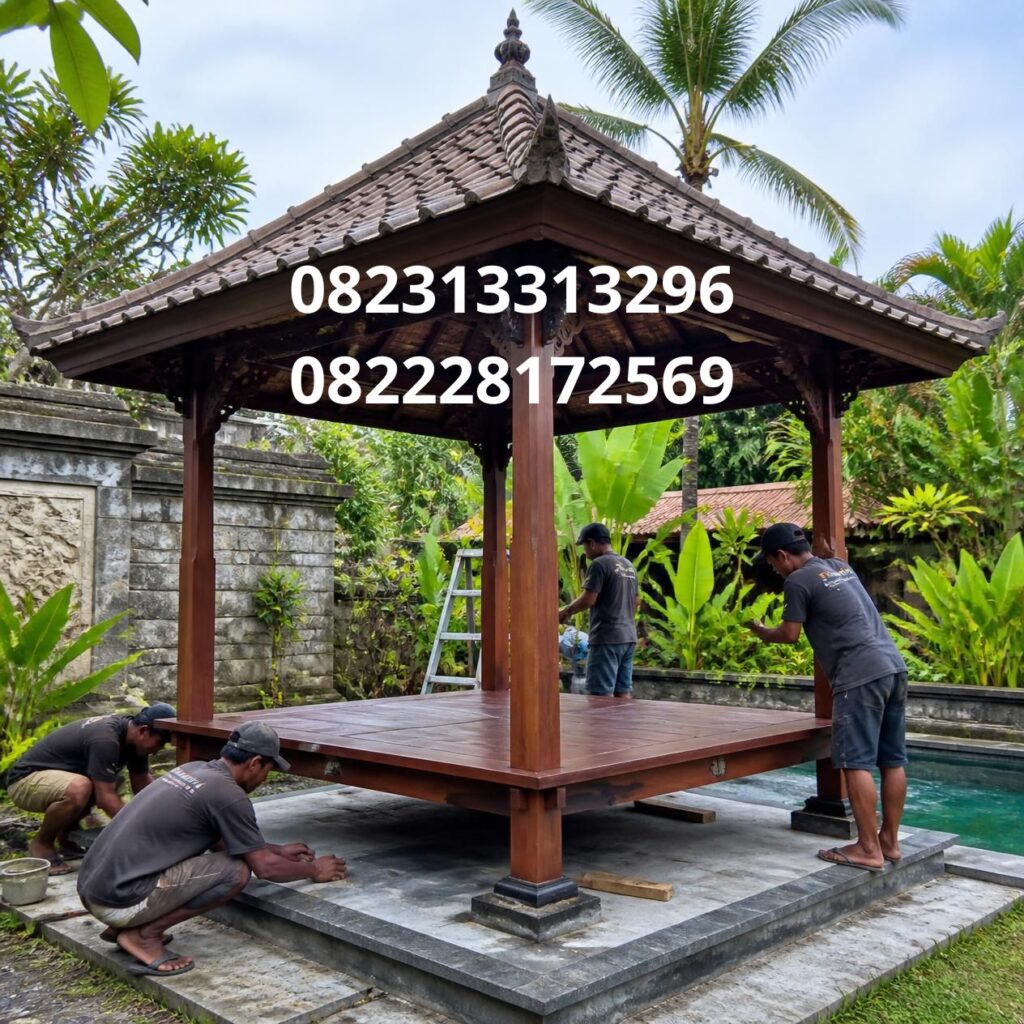
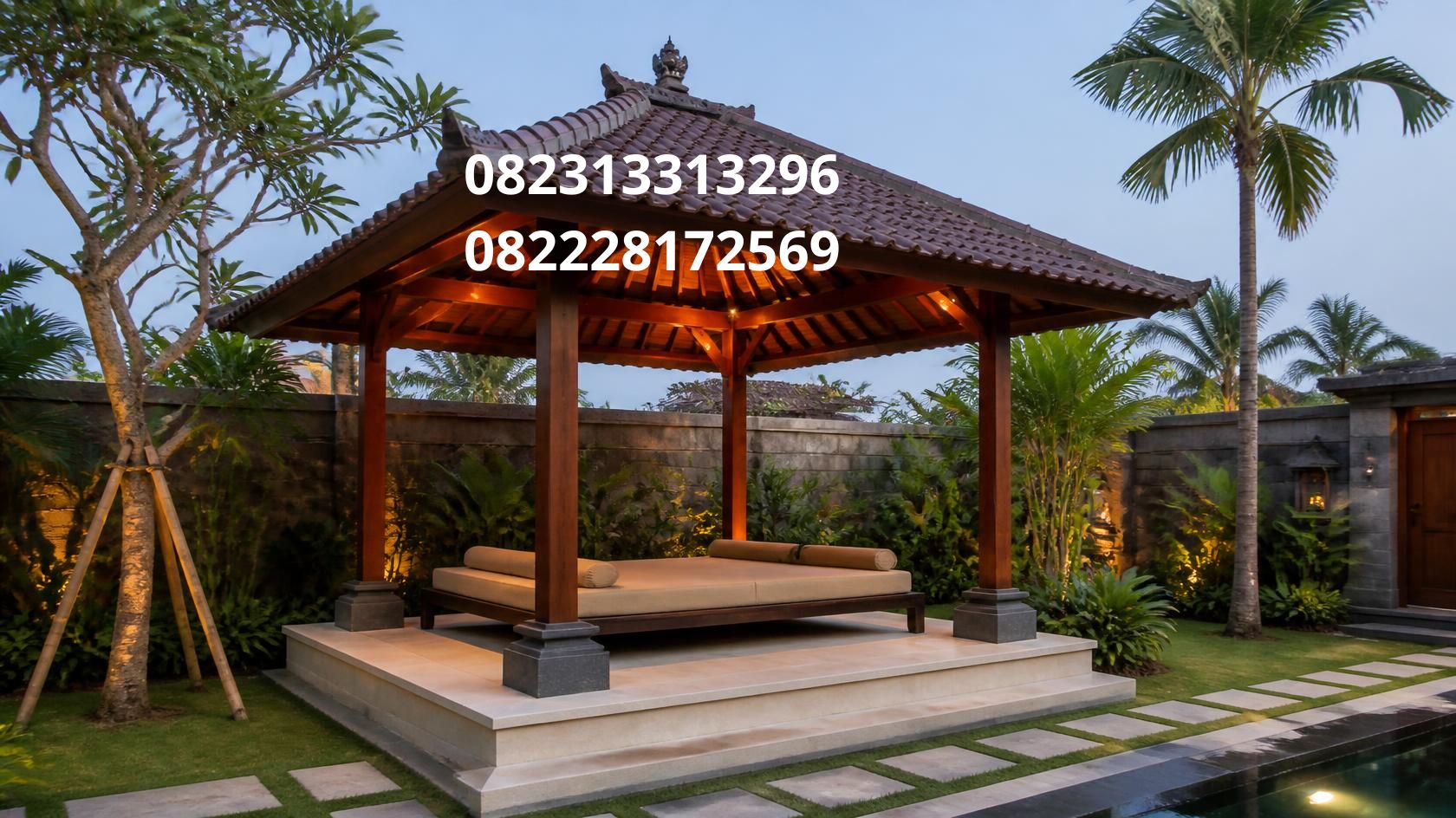
Gazebo installation Bali – offers an excellent way to improve outdoor living areas. A well-designed gazebo can support relaxation, dining, entertainment, and hospitality activities.
Moreover, Bali’s tropical environment creates an ideal setting for outdoor structures. Gardens, terraces, pool areas, and scenic landscapes can complement a carefully planned gazebo.
However, property owners need more than an attractive design. They should consider location, materials, dimensions, roofing, drainage, ventilation, lighting, and maintenance.
Therefore, proper planning can help owners create a gazebo that matches the property. This approach can also improve comfort, functionality, and long-term value.
Chat on WhatsApp
Chat on WhatsApp
What Is Gazebo Installation Bali?
Gazebo installation Bali involves planning, preparing, assembling, and finishing an outdoor gazebo structure. Contractors can install gazebos for homes, villas, resorts, restaurants, and private gardens.
Furthermore, each property needs a different installation approach. A small garden gazebo requires different dimensions from a large resort pavilion.
Therefore, property owners should define the gazebo’s purpose before selecting the design. This decision can influence the structure, layout, materials, and budget.
Common Uses of Gazebos in Bali
Gazebos can support many outdoor activities. For example, homeowners can create comfortable areas for reading, relaxing, dining, or enjoying the garden.
Meanwhile, villa owners can use gazebos as private lounges or poolside retreats. Resorts can also create relaxing guest areas around gardens and swimming pools.
Additionally, restaurants can install gazebos as dedicated outdoor dining spaces. These structures can provide shade while creating a distinctive dining atmosphere.
Why Gazebo Design Matters
A gazebo should complement the surrounding property. Therefore, designers should consider the existing architecture, landscape, pathways, and outdoor furniture.
Moreover, designers should prioritize practical comfort. Proper roof coverage, ventilation, lighting, and seating arrangements can improve the user experience.
A beautiful gazebo may still create problems when designers ignore practical requirements. Consequently, functional planning should guide every stage of the project.
Choosing the Right Gazebo Location in Bali
Location can influence comfort, accessibility, appearance, and maintenance. Therefore, property owners should evaluate the site before starting construction.
First, owners should study sunlight patterns throughout the day. Strong afternoon sunlight may require additional shading or strategic roof placement.
Next, owners should examine wind direction and surrounding vegetation. These factors can influence ventilation and structural planning.
Furthermore, owners should evaluate drainage conditions around the proposed location. Bali’s tropical rainfall can create significant water flow around outdoor structures.
Garden Gazebo Installation
Garden gazebos can create attractive focal points within residential landscapes. However, owners should maintain suitable distances from trees and existing structures.
Additionally, designers should connect the gazebo with existing pathways. Guests should reach the gazebo comfortably without crossing muddy or difficult areas.
Therefore, landscape planning should accompany gazebo installation. Plants, pathways, lighting, and seating can create a cohesive outdoor environment.
Poolside Gazebo Installation
Poolside gazebos require careful attention to moisture and safety. Owners should choose flooring that provides suitable traction around wet areas.
Moreover, contractors should create effective drainage around the gazebo foundation. Proper drainage can reduce standing water and protect surrounding materials.
Additionally, designers should maintain sufficient circulation around the pool. This arrangement can help users move safely between the pool and gazebo.
Villa Terrace Gazebo
Villa terraces often provide excellent locations for outdoor gazebos. Owners can use these structures to expand functional outdoor living areas.
However, designers should maintain balanced proportions between the villa and gazebo. An oversized structure can dominate the existing architectural composition.
Conversely, a small gazebo may not provide enough space for its intended purpose. Therefore, accurate measurements should guide the final design.
Choosing Materials for Gazebo Installation Bali
Material selection affects appearance, durability, maintenance, and project costs. Bali’s tropical climate makes material selection particularly important.
Wood can create a warm and natural appearance. However, owners should select suitable wood species and apply appropriate protective treatments.
Metal can support modern designs and provide strong structural performance. Meanwhile, composite materials can provide another option for owners who prefer lower maintenance.
Ultimately, property owners should choose materials according to environmental conditions and intended use.
Wooden Gazebo
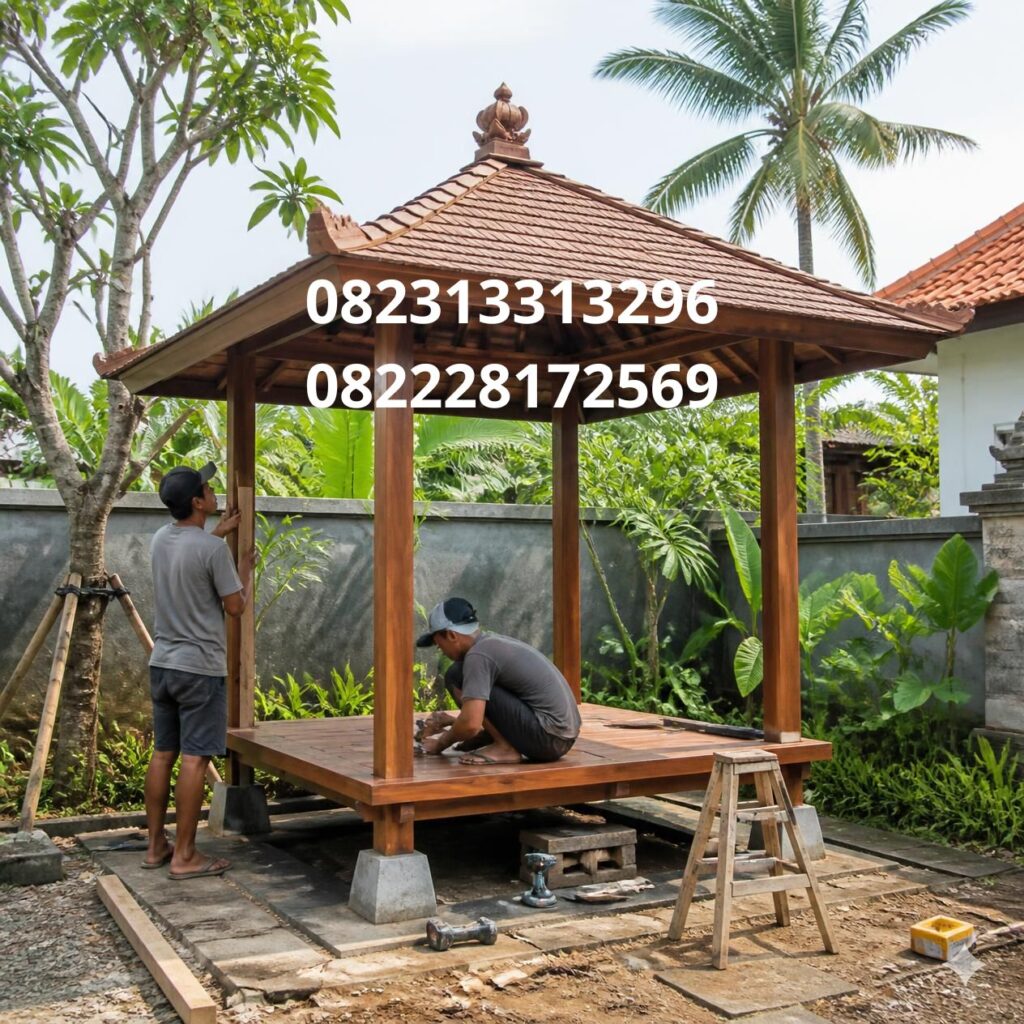
Wooden gazebos can create a warm tropical atmosphere. They can complement gardens, villas, resorts, and traditional architectural concepts.
However, humid conditions require regular wood maintenance. Owners should inspect surfaces, joints, and protective coatings regularly.
Furthermore, designers can use suitable roof overhangs to reduce direct rain exposure. Proper drainage can also protect lower wooden components from prolonged moisture.
baca juga : https://arovabuild
Metal Gazebo
Metal gazebos can support contemporary architectural concepts. Steel and aluminum can provide different structural characteristics and maintenance requirements.
However, owners should consider corrosion protection, especially near coastal areas. Suitable coatings can help protect exposed metal surfaces.
Additionally, metal structures can support minimalist roof designs. Therefore, they can complement modern villas, restaurants, and commercial properties.
Traditional Bali-Inspired Gazebo
A Bali-inspired gazebo can combine traditional visual elements with modern functionality. Natural materials, timber details, pitched roofs, and open sides can create a distinctive atmosphere.
However, designers should still address modern requirements. They should plan drainage, lighting, electrical systems, and structural connections carefully.
Therefore, owners can combine traditional aesthetics with practical construction methods.
Gazebo Roof Options in Bali
The roof protects users and structural components from tropical weather. Therefore, property owners should select roofing materials carefully.
Tile roofs can create a traditional appearance and complement Bali-inspired architecture. Meanwhile, metal roofs can support lighter structures and contemporary designs.
On the other hand, thatched roofs can create a tropical resort atmosphere. Owners should understand their maintenance requirements before selecting natural roofing.
Pitched Roof Gazebo
Pitched roofs can direct rainwater toward suitable drainage points. Therefore, they work well with outdoor structures in areas that experience frequent rainfall.
Moreover, pitched roofs can create attractive architectural proportions. They can also provide additional overhead space for comfortable outdoor activities.
Flat Roof Gazebo
Flat or low-slope roofs can create a modern architectural appearance. However, designers need to plan water drainage carefully.
Without proper drainage, water can accumulate on the roof and create maintenance problems. Therefore, contractors should include suitable slopes and drainage systems during the design stage.
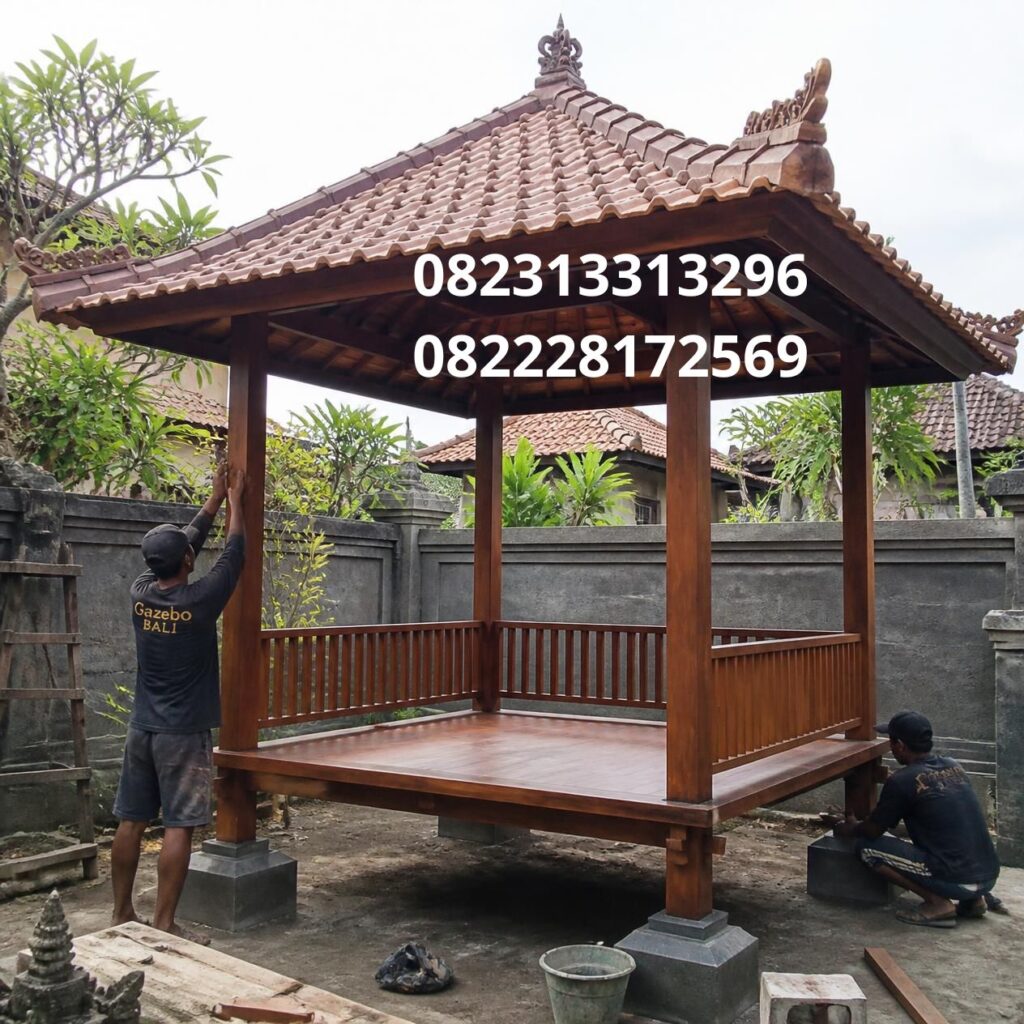
Structural Considerations for Gazebo Installation
A gazebo needs a stable structure that matches its size and location. Therefore, contractors should assess the site before beginning construction.
The foundation should support the expected structural load. Soil conditions can also influence the foundation design.
Moreover, roof weight, wind exposure, and material selection can influence structural requirements. Larger gazebos usually require more detailed structural planning.
Foundation Preparation
Foundation preparation provides stability for the gazebo. Contractors should select the foundation method according to soil conditions and structure requirements.
Therefore, contractors should inspect the ground before selecting the foundation system. This process can help reduce structural problems.
Additionally, contractors should consider site elevation and surface water. Proper elevation can help protect the gazebo from excessive moisture.
Roof Load and Wind Exposure
Bali experiences tropical weather throughout the year. Therefore, designers should consider wind exposure when planning gazebo structures.
Larger roofs can experience stronger wind forces. Designers should account for these forces when selecting structural components.
Furthermore, workers should secure roof connections properly. Strong connections can improve structural stability during changing weather conditions.
Gazebo Installation Process in Bali
Professional gazebo installation usually follows several organized stages. Each stage helps maintain construction quality and project efficiency.
First, contractors inspect the site and discuss the intended gazebo function. Next, designers develop measurements and design concepts.
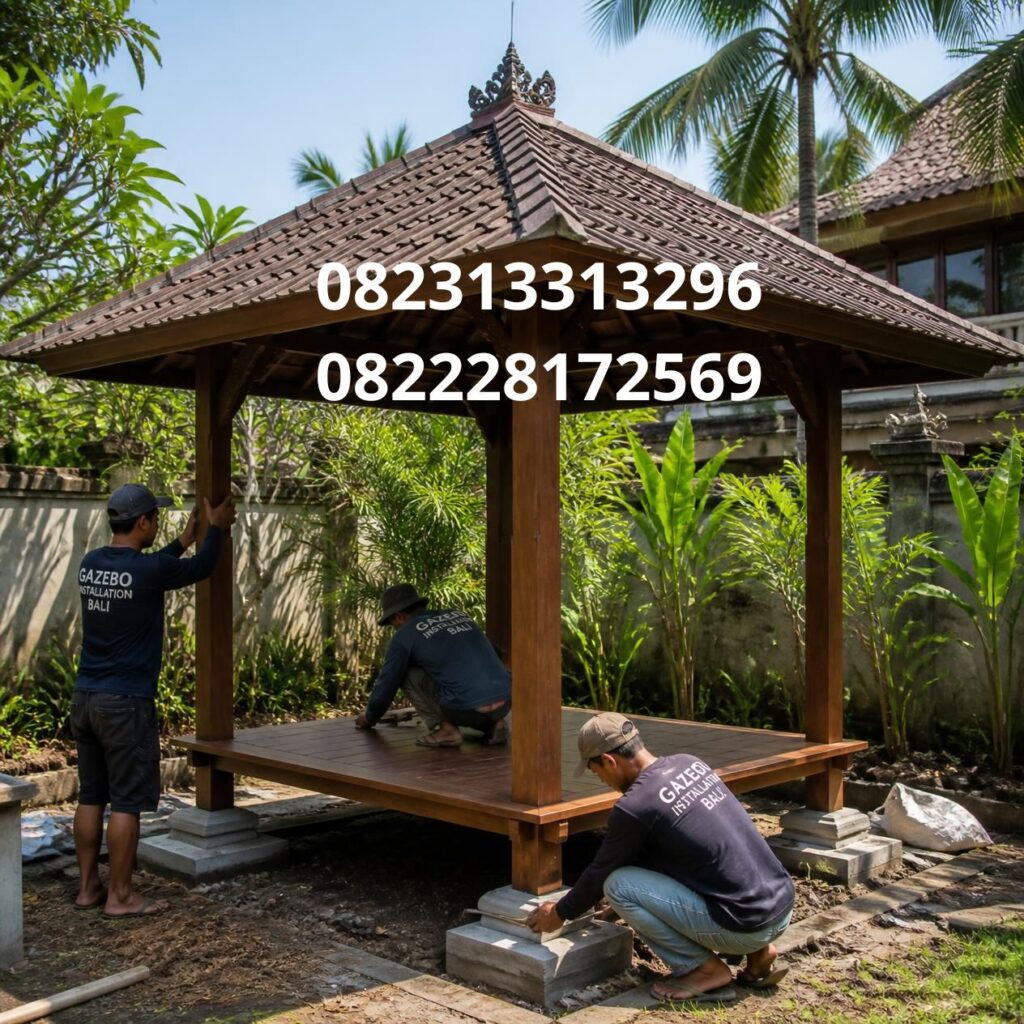
After that, workers prepare the foundation and structural components. The team then assembles the frame, roof, flooring, and supporting elements.
Finally, workers complete finishing, lighting, drainage checks, and site cleanup.
Site Survey
A site survey helps contractors understand actual project conditions. Contractors can measure available space and identify access limitations.
Additionally, they can identify drainage paths, existing structures, trees, and utility lines. These details can reduce unnecessary changes during construction.
Design and Measurement
Accurate measurements help designers establish suitable gazebo proportions. The design should include dimensions, roof configuration, seating capacity, and circulation space.
Furthermore, owners can discuss materials during this stage. Early decisions can simplify procurement and construction scheduling.
Foundation and Structural Work
After finalizing the design, workers prepare the foundation. The team then installs the main structural components.
Moreover, workers should verify alignment during installation. Proper alignment can improve both appearance and structural performance.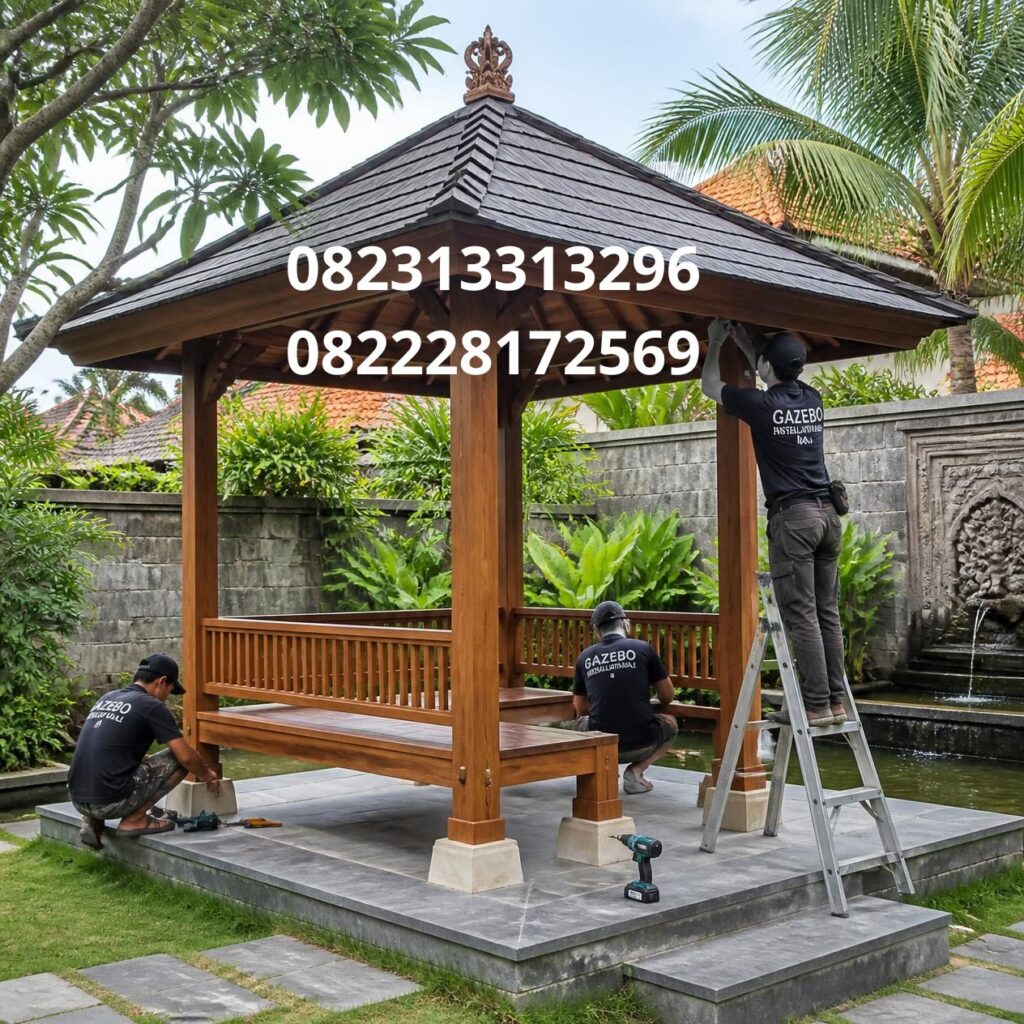
Roofing and Finishing
The team installs the roof after completing the main structure. Workers then install flooring, railings, lighting, and decorative components.
Finally, the team checks drainage, structural connections, and finishing details. A final inspection can identify adjustments before project completion.
Gazebo Installation for Bali Villas
Villa owners can use gazebos to improve outdoor experiences. A well-designed structure can create additional spaces for relaxation and entertainment.
Moreover, villa owners can use gazebos for spa areas, dining spaces, pool lounges, or private seating zones.
However, the gazebo should complement the villa’s architectural concept. A consistent material and color palette can improve visual harmony.
Pool Villa Gazebo
Pool villas can benefit from shaded outdoor structures. A gazebo can provide a comfortable area between swimming and other activities.
Additionally, designers can integrate outdoor furniture and lighting. These elements can improve comfort and support evening activities.
However, moisture requires careful consideration. Owners should select materials that can handle regular exposure to water and humidity.
Garden Villa Gazebo
Garden gazebos can create peaceful outdoor spaces. Owners can position them near landscaping features, ponds, pathways, or scenic areas.
Furthermore, designers can connect the structure with garden pathways. This arrangement can create a natural relationship between architecture and landscape.
Gazebo Installation for Resorts and Restaurants
Commercial properties need different planning from private homes. Resorts and restaurants can use gazebos to expand guest areas and outdoor dining spaces.
Therefore, commercial gazebo designs should prioritize accessibility and easy maintenance. Staff need convenient access to the gazebo and surrounding service areas.
Additionally, designers should arrange furniture to maintain comfortable movement. This approach becomes especially important for busy restaurants and hospitality properties.
Outdoor Dining Gazebo
Restaurants can install gazebos as dedicated outdoor dining areas. These structures provide shade and create a distinctive dining experience.
Moreover, restaurants can use strategic lighting to support evening operations. Therefore, designers should plan electrical installations before construction begins.
Additionally, restaurant owners should choose durable flooring for frequent foot traffic. Easy-to-maintain materials can simplify daily cleaning and routine maintenance.
Resort Relaxation Gazebo
Resorts can install gazebos as dedicated relaxation areas. Guests can use these spaces for reading, resting, private dining, or wellness activities.
Therefore, designers should consider location and privacy during the planning stage. Landscaping can create separation while preserving attractive views.
Moreover, resort operators can add comfortable furniture to improve guest experiences. They can also integrate lighting to support evening relaxation.
Climate Considerations for Gazebo Installation Bali
Bali’s tropical climate creates several construction considerations. High humidity, rainfall, heat, and sunlight can affect outdoor materials.
Therefore, owners should choose materials according to environmental exposure. Protective coatings and suitable finishes can help improve material durability.
Additionally, designers should prioritize natural ventilation. Open-sided gazebos can encourage airflow, while enclosed structures need additional ventilation planning.
Rain Protection
A suitable roof can protect the gazebo from heavy rainfall. Wide roof overhangs can shield seating areas and structural components.
Furthermore, gutters can direct rainwater toward appropriate drainage points. Proper drainage can reduce moisture accumulation around the structure.
Therefore, contractors should integrate water management into the initial gazebo design.
Sun Protection
Strong sunlight can affect outdoor furniture and exposed finishing materials. Therefore, owners should consider adequate roof coverage and additional shading elements.
Additionally, owners can choose UV-resistant finishes for exposed surfaces. Regular maintenance can further protect materials from prolonged sunlight.
Gazebo Maintenance in Bali
Regular maintenance helps owners preserve gazebo appearance and functionality. Property owners should inspect the structure regularly for early signs of wear.
First, owners should check roofing components and drainage systems. Next, they should inspect structural connections and exposed surfaces.
Additionally, owners should clean the roof and surrounding areas regularly. Removing leaves and debris can help maintain proper water drainage.
Wooden Gazebo Maintenance
Wooden gazebos require regular inspection in tropical environments. Owners should check surfaces for discoloration, cracking, moisture damage, and other changes.
Furthermore, owners should renew protective coatings according to material conditions. Proper maintenance can help preserve the wood’s appearance and performance.
Additionally, owners should keep the surrounding area clean and well-drained. Good drainage can reduce prolonged moisture exposure.
Metal Gazebo Maintenance
Metal gazebos require regular inspection for corrosion and coating damage. Coastal properties may require more frequent inspections.
Therefore, owners should clean exposed metal surfaces regularly. They should also repair damaged protective coatings as soon as possible.
Early maintenance can prevent minor surface problems from developing into larger issues.
Why Professional Planning Matters
Gazebo installation involves several technical decisions. For this reason, professional planning can connect design goals with structural and practical requirements.
Moreover, proper planning can reduce unnecessary modifications during construction. As a result, this approach can support better budget control and project organization.
However, every property has different conditions. Therefore, owners should discuss their site characteristics before selecting the final gazebo design.
Gazebo installation Bali can improve outdoor spaces for homes, villas, resorts, and restaurants. Nevertheless, property owners need careful planning before starting construction.
First, property owners should consider location, structure, materials, roofing, drainage, ventilation, and maintenance. Together, these factors can influence comfort, appearance, durability, and long-term expenses.
Furthermore, Bali’s tropical climate requires suitable construction methods and material choices. Consequently, proper roof design and drainage can help protect the gazebo from heavy rainfall.
At the same time, thoughtful landscaping can connect the gazebo with the surrounding property. As a result, this approach can create an attractive and functional outdoor environment.
Before construction begins, property owners should define the gazebo’s purpose and available space. Afterward, they should discuss design, materials, budget, and installation requirements with an experienced professional.
More importantly, a well-planned gazebo can serve more than simple outdoor shelter. Instead, it can expand living, dining, relaxation, and hospitality spaces.
If you plan a gazebo installation in Bali, start with a site assessment and design discussion. From there, an experienced professional can clarify technical requirements and improve project planning.