Exterior Renovation Bali: A Practical Guide for Villa Owners Who Want It Done Once – arovabuild
Exterior Renovation Bali – The most expensive mistake in an exterior renovation in Bali is repainting a wall that is still wet inside. It looks great for about four months. Then the first heavy rains of the wet season arrive, the paint starts to bubble, black mold creeps up from the base, and the owner pays for the same job twice.
I see this pattern constantly with villa owners, especially those who manage their property from overseas. The surface gets the attention because it’s what guests see. The real problem sits behind it: water getting in, salt air eating away at metal, or a roof edge that sends rain straight down the facade.
This guide follows the way a good renovation should be planned. First the problem, then its cause, then the fix, and finally how to choose the right approach and the right team for your property.
Chat on WhatsApp
Chat on WhatsApp
Why Bali Villa Exteriors Age So Fast
A building in Bali works harder than a building almost anywhere in Europe, North America, or Australia. The combination of heat, humidity, intense UV, and seasonal downpours puts constant stress on every exterior surface.
The Wet Season Does Most of the Damage
Bali’s rainy season usually runs from around November to March. During those months, walls can stay damp for weeks at a time. Water finds every crack, every unsealed joint, and every spot where a roof overhang is too short. By the time the dry season returns, the damage is already done, even if it doesn’t show yet.
Salt Air Along the Coast
Properties in coastal areas such as Canggu, Seminyak, Uluwatu, Sanur, and Jimbaran face an extra enemy. Salt carried on the sea breeze settles on railings, window frames, light fixtures, and exposed rebar. Standard steel rusts quickly here, and rust expands as it forms. That expansion cracks render and concrete from the inside out.
UV and Heat
Strong equatorial sun fades paint, dries out timber, and makes cheap sealants brittle. A dark facade can also absorb a lot of heat, which pushes up cooling costs inside the villa.
Termites and Organic Growth
Wooden pergolas, decking, and traditional thatched roofs are beautiful, but untreated timber is an open invitation to termites. Meanwhile, moss, algae, and mold thrive on shaded walls that never fully dry.
Tracing the Real Cause Before You Spend Anything
Here is the advice I give every client: don’t ask “what color should we paint it?” until you’ve answered “why does it look like this?”
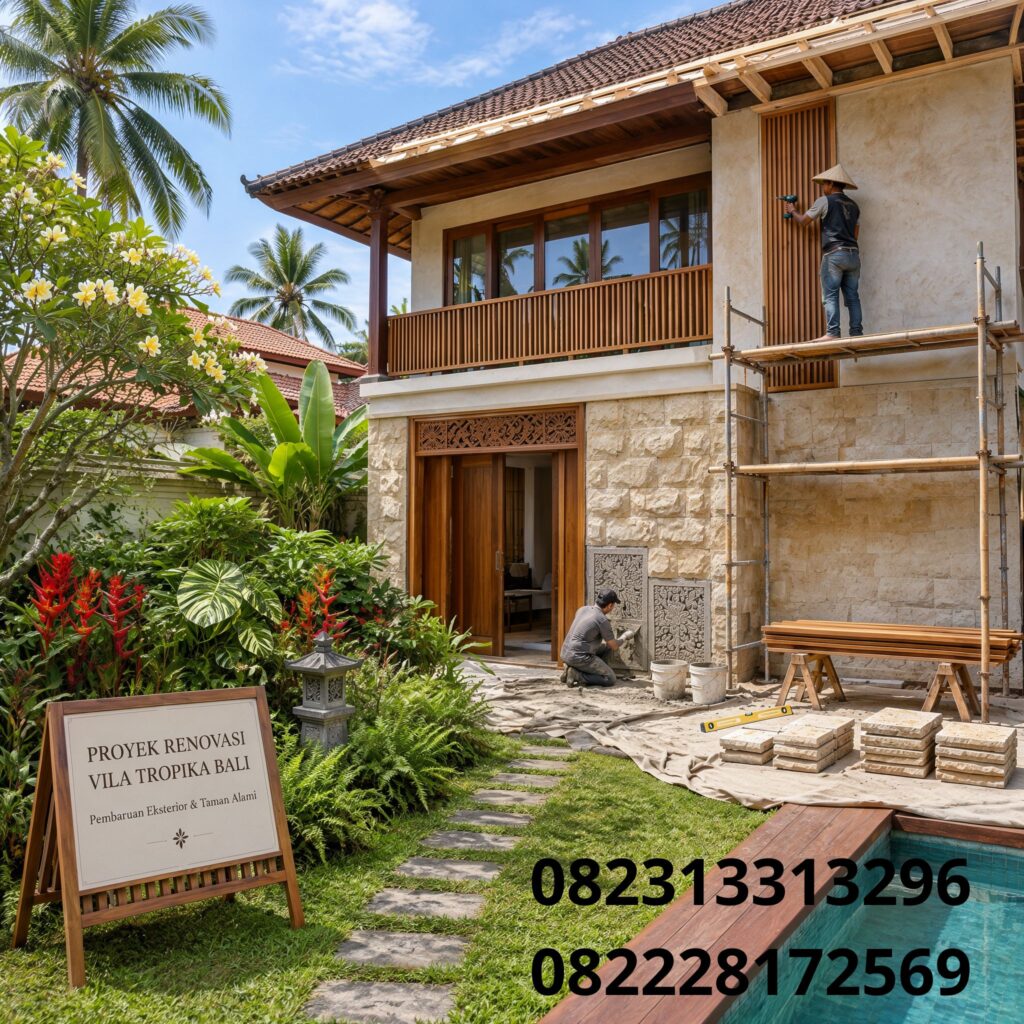
Most exterior damage in Bali traces back to one of five root causes:
- Rising damp. Moisture wicks up from the ground into walls built without a proper damp-proof layer.
- Poor roof drainage. Short eaves, blocked gutters, or no gutters at all send water directly onto walls and foundations.
- Failed waterproofing. Flat roofs, rooftop terraces, and balconies leak into the structure below.
- Corroding metal. Rusting rebar or fixings crack concrete and render around them.
- Wrong materials for the climate. Interior-grade paint, untreated timber, or low-grade steel used outdoors.
A proper inspection checks all five. That usually means looking at the roof, the drainage path, the base of every wall, and any spot where two materials meet. Moisture readings help too, because a wall can feel dry on the surface while holding plenty of water inside.
One realistic example: a villa owner calls about peeling paint on the pool side of the house. The inspection shows that the wall faces the prevailing rain, the roof overhang above it is barely 40 centimeters, and the pool deck slopes slightly toward the wall instead of away from it. Repainting alone would fail again within a season. Extending the overhang, correcting the deck drainage, and sealing the base before painting solves it for years.
What a Proper Exterior Renovation in Bali Actually Includes
Once the cause is clear, the solution becomes much easier to plan. A complete exterior renovation in Bali typically covers several layers of work, done in the right order.
Structural and Moisture Repairs Come First
Cracks get opened up, cleaned, and filled correctly. Spalling concrete gets cut back to sound material, rusty rebar is treated or replaced, and the area is patched with a suitable repair mortar. Damp walls are allowed to dry or treated with an appropriate barrier before anything goes on top.
Waterproofing That Matches the Surface
Flat roofs, terraces, planter boxes, and balconies need a membrane or coating designed for constant water exposure and UV. This is the layer most often skipped, and it is the one that protects everything else.
Roof and Drainage Upgrades
Fixing gutters, adding downpipes, extending eaves, or repairing roof tiles can do more for your walls than any paint ever will. In a tropical climate, managing where water goes is half the battle.
Facade Finishes Built for the Tropics
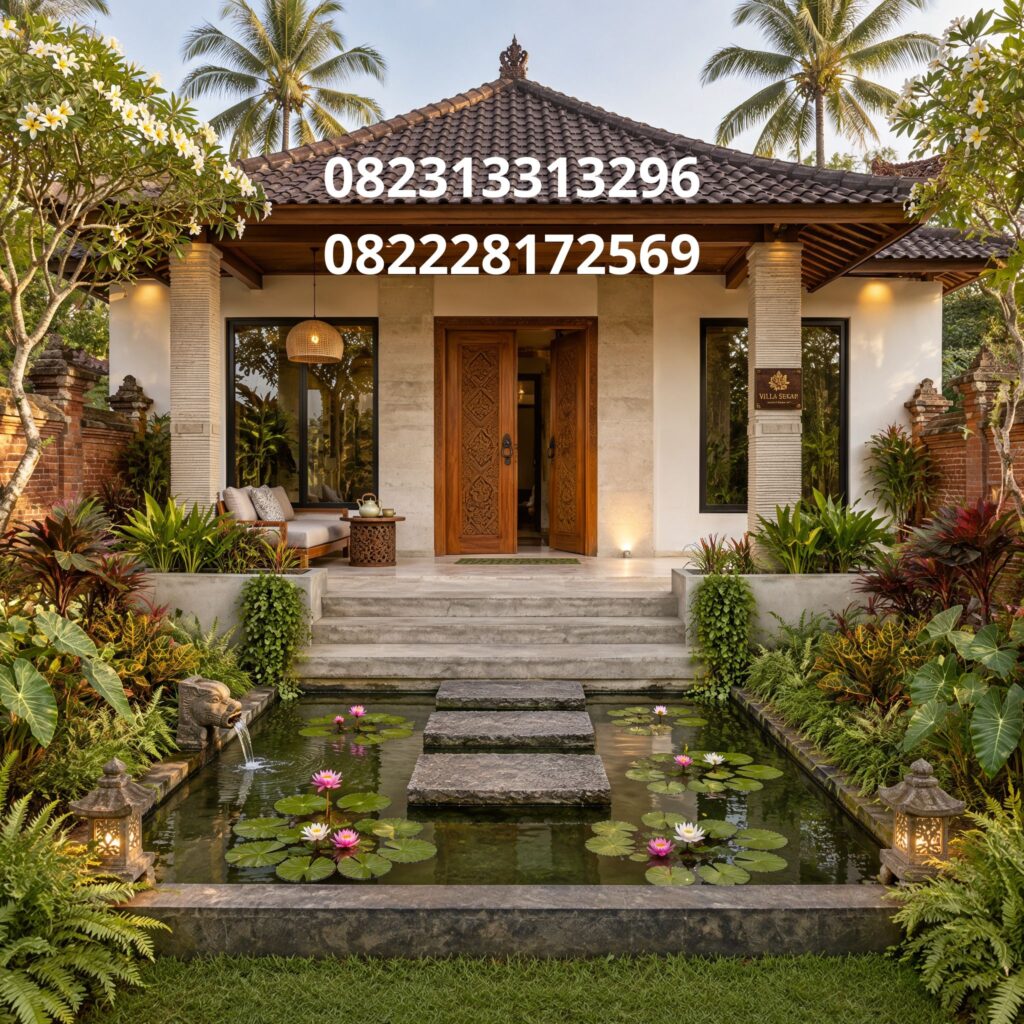
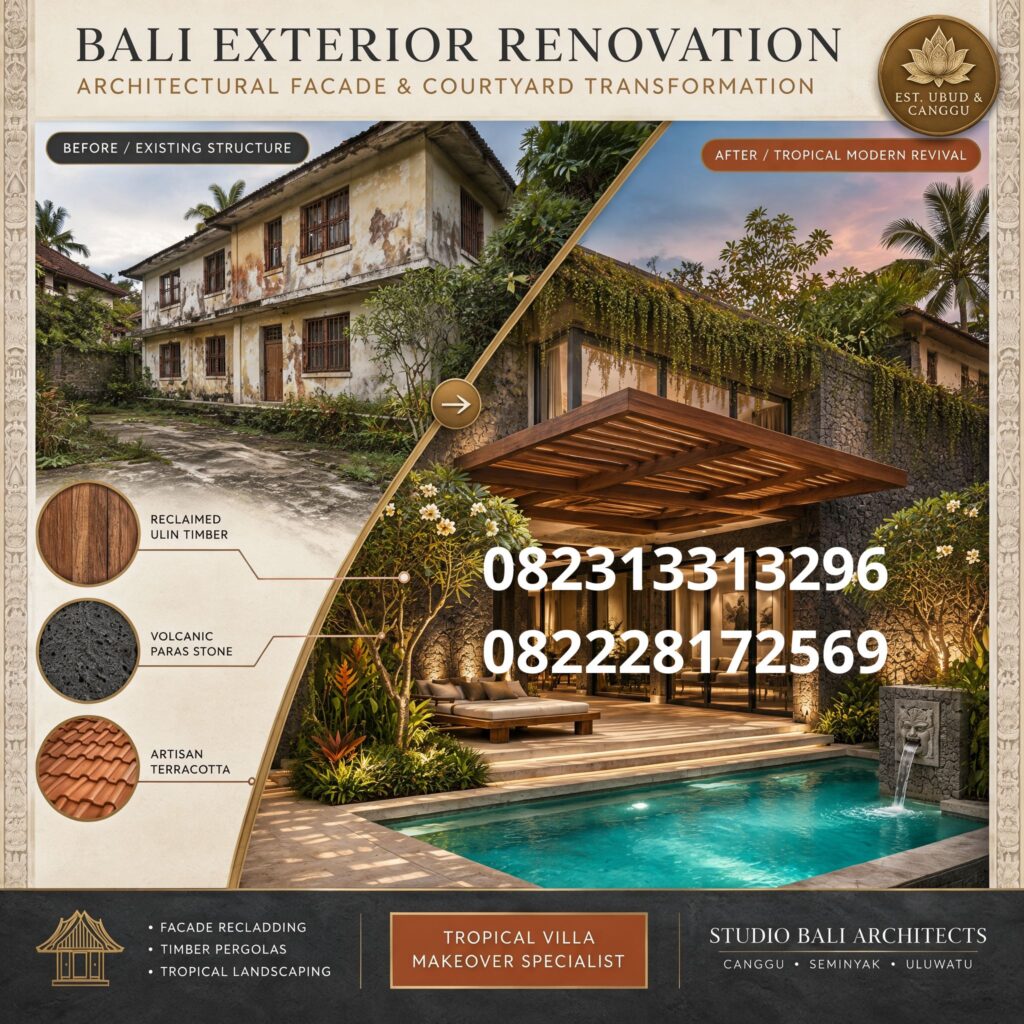
This is where the visible transformation happens. Options include breathable exterior paint, natural stone cladding, textured render, timber or composite cladding, and decorative screens. Each has strengths and weaknesses, which we’ll compare below.
Outdoor Living Areas
Many renovations also refresh pool decks, pergolas, garden walls, gates, and outdoor lighting. These areas shape how guests experience a villa and how it photographs for rental listings.
If you’re weighing up which of these your property actually needs, a site assessment from a team like arovabuild.com can separate the essential repairs from the nice-to-haves before you commit to a budget.
Choosing Facade Materials That Survive the Bali Climate
Different finishes behave very differently under tropical sun and rain. Here’s an honest comparison of the most common options:
| Material | Strengths | Watch Out For | Best Suited To |
|---|---|---|---|
| Exterior elastomeric or breathable paint | Affordable, flexible, bridges hairline cracks, easy to refresh | Needs a dry, sound substrate; still requires repainting every few years | Rendered walls, budget-conscious upgrades |
| Natural volcanic stone (paras, andesite) | Authentic Balinese look, excellent heat resistance, ages well | Porous, can grow moss if unsealed; heavier and costlier to install | Feature walls, entrances, garden walls |
| Textured render | Hides imperfections, modern or rustic finish possible | Can crack if applied over moving substrate; holds dirt in deep textures | Contemporary villas, large plain facades |
| Hardwood timber cladding | Warm, natural, fits tropical architecture | Needs regular oiling and termite treatment; can grey and split | Accent areas protected by deep eaves |
| Composite (WPC) cladding | Low maintenance, resists rot and termites | Can heat up in direct sun; less natural feel up close | Pool areas, decks, coastal properties |
| Fiber cement panels | Stable, fire resistant, paintable | Joints need careful sealing; finish depends on paint quality | Modern extensions, upper floors |
A few practical tips from experience:
- Seal natural stone. Unsealed stone in shaded areas turns green within one wet season. A breathable sealer keeps the natural look while slowing organic growth.
- Use marine-grade or galvanized metal near the coast. Stainless fixings and powder-coated aluminum last far longer than mild steel on a beachside property.
- Choose lighter colors for sun-facing walls. They reflect heat, fade less visibly, and can help keep interiors cooler.
- Put timber where the eaves protect it. Wood exposed to direct rain and sun will demand constant maintenance.
How to Plan Your Renovation Without Wasting Money
Good planning protects your budget more than any discount ever could. Here’s how I recommend owners approach it.
Time the Work Around the Seasons
The dry season, roughly April to October, is the best window for painting, waterproofing, and render work. Coatings cure properly, walls dry out, and crews lose fewer days to rain. If your villa is a rental, you’ll also want to balance this against peak tourist months, since noisy work during high season can affect bookings.
Decide Between Phased and Full Renovation
A full renovation is faster overall and usually more cost-efficient, because scaffolding, crews, and materials are mobilized once. A phased approach spreads the cost and keeps part of the villa rentable. Neither is wrong. The key is doing the moisture and structural repairs first, whichever route you choose.
Understand What Drives the Cost
Every property is different, so any honest contractor will give you a range rather than a fixed figure before inspecting. The biggest cost factors are:
- The size of the facade and the number of floors (scaffolding adds up)
- How much hidden damage sits behind the surface
- The finish you choose, with natural stone and quality cladding at the higher end
- Access to the site, since narrow lanes in parts of Bali make material delivery slower
- Whether roof, drainage, or outdoor areas are included
A simple repaint with minor repairs sits at the lower end of the budget scale. A full facade makeover with new cladding, waterproofing, and outdoor upgrades sits at the top. The only way to get an accurate number is a site visit and a written scope of work.
Check Permits and Local Requirements
Repainting and repairs usually don’t need special approval, but changes to the building’s structure, footprint, or height may. Local banjar (community) rules can also affect working hours and noise during ceremonies. A contractor familiar with Bali will factor these in and plan around religious holidays, when work typically pauses.
How to Pick the Right Contractor for Your Villa
For overseas owners especially, choosing the right team matters more than choosing the right paint. Look for these signs:
They inspect before they quote. A price given over the phone without seeing the property is a guess. Expect someone to check moisture, drainage, and structure first.
They explain the cause, not just the fix. If a contractor can’t tell you why your walls are failing, they can’t promise the problem won’t return.
They put the scope in writing. Materials, brands of product categories, number of coats, preparation steps, and timeline should all be documented.
They communicate remotely. If you live abroad, regular photo and video updates are essential. You should be able to follow progress without flying in.
They can supply materials reliably. Bali’s construction market leans heavily on materials shipped in from Java. A team with a supply base there can often keep projects moving when local stock runs low.
That last point is part of why arovabuild.com works well for Bali projects. Operating from Surabaya, one of Indonesia’s major industrial and trading hubs, gives access to a wide range of building materials. Goods move overland across East Java and over the short ferry crossing from Ketapang to Gilimanuk, which keeps supply lines practical for projects on the island.
Frequently Asked Questions About Exterior Renovation in Bali
How long does an exterior renovation in Bali take?
A straightforward repaint with minor repairs on a single villa may take one to three weeks. A full facade renovation with waterproofing, cladding, and outdoor work can take one to three months, depending on size, weather, and how much hidden damage is found.
What is the best time of year to renovate a villa exterior in Bali?
The dry season, from about April to October, is ideal. Paint and waterproofing need dry conditions to cure properly, and fewer rain delays keep the schedule on track.
How often should I repaint my villa in Bali?
With quality exterior paint and good preparation, many villas need repainting every three to five years. Coastal properties and walls facing heavy rain or direct sun may need attention sooner.
Can I manage an exterior renovation from overseas?
Yes. Many owners do. Choose a contractor who provides a written scope, regular photo or video updates, and clear milestones for payment so you can track progress remotely.
Why does my villa wall keep growing mold after repainting?
Usually the wall is still holding moisture, from rising damp, poor drainage, or a leak above. Paint can’t stop water coming from behind it. The moisture source has to be fixed first.
Is natural stone a good choice for Bali exteriors?
It’s an excellent, climate-friendly choice that suits Balinese architecture. Seal it properly and keep it out of permanently shaded, damp areas to limit moss growth.
Build It Once, Enjoy It for Years
A successful exterior renovation in Bali starts below the surface. Find out where the water, salt, and sun are winning, fix those causes, and then choose finishes made for a tropical climate. Time the work for the dry season, insist on a written scope, and work with a team that explains the “why” behind every recommendation.
Do it this way and your villa won’t just look better next month. It will still look good after several wet seasons, protect its rental value, and save you from paying for the same job twice.
If you’re ready to plan your project, reach out to arovabuild.com for a site assessment and a detailed quote tailored to your property, your budget, and your timeline.