Interior Renovation Bali: Fixing the Mistakes Before They Cost You Twice – arovabuild
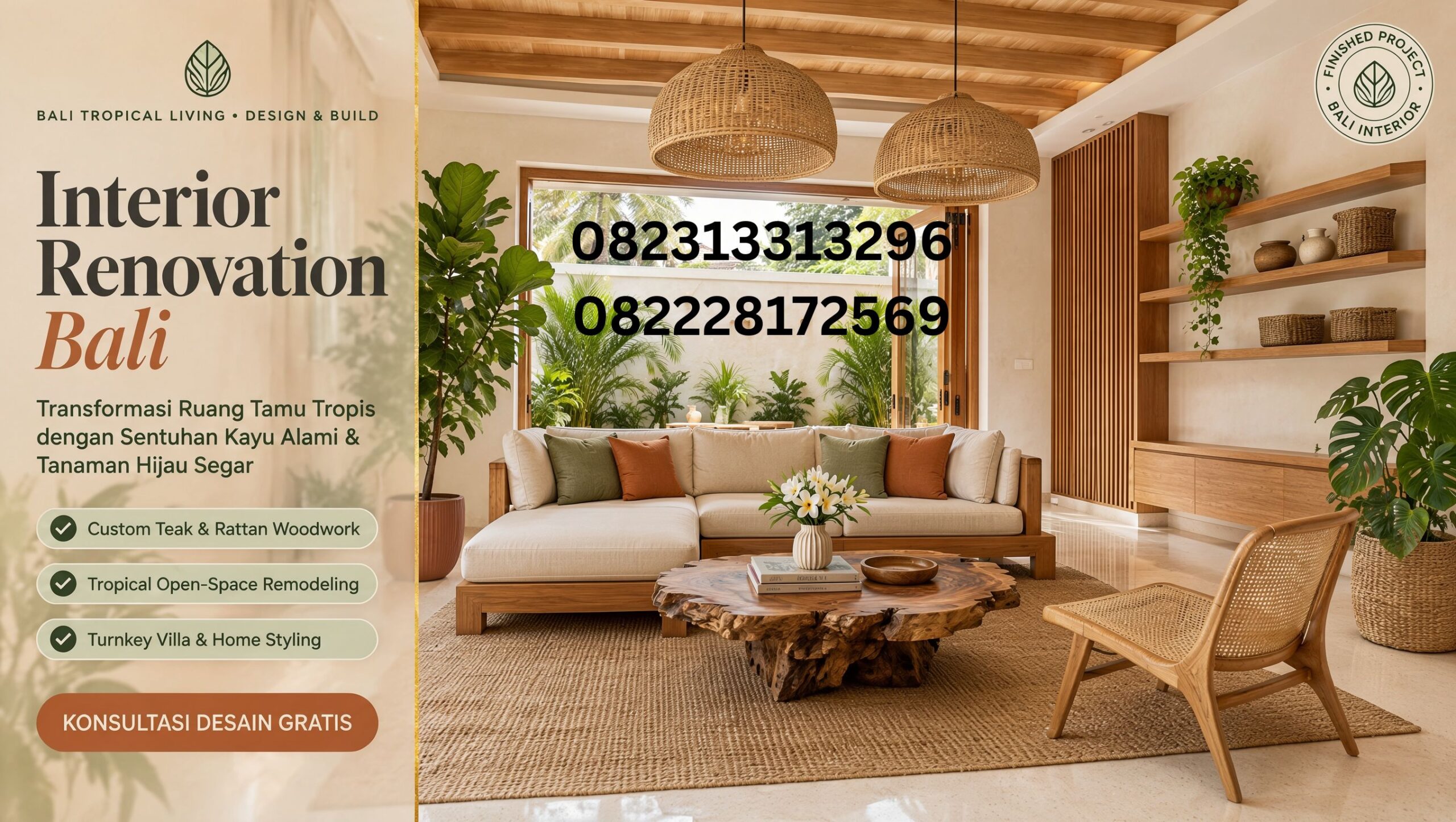
Interior Renovation Bali – Most villa owners start an interior renovation in Bali by picking finishes. They save photos of polished concrete, rattan pendants, and pale oak cabinetry, then hand that mood board to a crew and hope for the best. Eighteen months later, the cabinet doors have swollen shut, black spots are creeping across the ceiling, and the “oak” veneer is peeling at the edges.
The problem was never the design. It was the order of decisions.
After watching many renovations on the island, I can say the projects that hold up share one habit: they treat Bali’s climate, logistics, and building culture as the brief, and the mood board as the last step. This guide walks through why interiors fail here, what causes it, and how to plan an interior renovation in Bali that still looks good after five monsoon seasons.
Chat on WhatsApp
Chat on WhatsApp
The Real Problem: Interiors That Look Finished but Don’t Last
Interior Renovation Bali – A Bali interior can look perfect on handover day and still be failing quietly. The signs usually show up in the first wet season:
- Doors and drawers that stick from November to March
- Musty smells in wardrobes and closed bedrooms
- Grout lines turning grey or green in bathrooms
- Rust stains under metal fittings near the coast
- Termite trails along skirting boards or inside built-in shelves
For a private home, that is frustrating. For a rental villa, it shows up in guest reviews, and reviews show up in occupancy. A renovation that needs a second round of repairs within two years has effectively cost you twice.
Why Bali Is Hard on Interiors (The Causes Most People Underestimate)
Humidity That Never Takes a Day Off
Interior Renovation Bali – Relative humidity in much of Bali sits high for most of the year, and it climbs further during the rainy season. Inland areas like Ubud and the hills around Tabanan feel it even more, since dense vegetation and frequent rain keep the air damp. Every porous material inside your home absorbs that moisture, then releases it as the air-conditioning cycles on and off. That constant swelling and shrinking is what opens joints, loosens veneers, and invites mold.
Salt Air on the Coast
Properties in Canggu, Seminyak, Sanur, Jimbaran, and along the Bukit peninsula deal with salt-laden air. Standard steel hinges, cheap chrome taps, and uncoated aluminum corrode fast here. Meanwhile, fabrics and mattresses near open windows pick up dampness and salt that shorten their life.
Open-Air Living Blurs Inside and Outside
The Balinese style that buyers love, with open living pavilions, sliding walls, and garden bathrooms, also means there is often no true “indoor” zone. Materials chosen for a sealed Western interior simply weren’t designed for spaces that breathe with the weather.

Termites and Timber Choices
Bali’s termites are relentless. Untreated softwood, low-grade plywood, and particle board are an open invitation. Even good timber needs proper treatment and detailing so it doesn’t sit in direct contact with damp masonry.
Scheduling Realities
Bali runs on a ceremonial calendar. Major days such as Nyepi, Galungan, and Kuningan, plus village ceremonies organized by the local banjar, can pause work or slow deliveries. Owners who build a renovation timeline without allowing for this end up frustrated with crews who are simply observing their community obligations.
read also : https://arovabuild
Materials Often Travel From Java
Plenty of quality materials, fittings, and fabricated joinery come from Java and cross to Bali by truck through the Ketapang–Gilimanuk ferry. That route works well, but it adds lead time. Late ordering is one of the biggest causes of a stalled interior renovation in Bali.
The Solution: Design for the Climate First, Then for the Look
Good interior work here follows a different sequence. Instead of “what do I want it to look like?”, the first question becomes “what will survive in this room?”
Start With Moisture Control
Before touching finishes, deal with where water comes from. Check roof leaks, wall dampness rising from the ground, poor bathroom falls, and leaking AC drain lines. Also consider ventilation: a closed bedroom with an AC unit and no airflow when unoccupied is a mold factory. Simple fixes like louvered panels, ceiling vents, or dehumidifiers in storage rooms often do more for durability than any premium material.
Choose Materials That Tolerate Movement
Rather than fighting the humidity, pick materials that cope with it. Here is a quick comparison of common choices for Bali interiors:
| Material | Strengths in Bali | Watch Out For | Best Use |
|---|---|---|---|
| Teak (properly dried) | Naturally oily, resists moisture and pests | Higher cost; poorly dried teak still moves | Doors, furniture, frames |
| Merbau / bengkirai | Dense, durable, good value | Heavy; can bleed tannin stains when new | Flooring, decking, structural trim |
| Marine plywood / HMR board | Stable, holds up better than standard board | Edges must be sealed fully | Cabinet carcasses, wardrobes |
| Particle board / MDF (standard) | Cheap, smooth finish | Swells quickly with moisture | Avoid in wet or semi-open areas |
| Terrazzo / natural stone | Cool, long-lasting, easy to clean | Needs sealing; some stone stains | Floors, bathrooms, countertops |
| Polished concrete / microcement | Seamless, modern | Quality depends heavily on applicator | Floors, feature walls, vanities |
| Stainless steel 316 fittings | Strong corrosion resistance | Costs more than standard grades | Coastal hinges, handles, taps |
Even a mid-range budget goes much further when it’s spent on the right base materials instead of on surface decoration.
Detail Joinery for Airflow
Built-in wardrobes and kitchen units benefit from small ventilation gaps, raised bases that keep timber off wet floors, and backs that don’t sit tight against masonry walls. These details cost little during fabrication and save a lot later.

Plan the Timeline Around Seasons and Ceremonies
Dry season, roughly April to October, is usually the easier window for finishing work like painting, sealing, and floor coating, since curing goes more predictably. In practice, a well-planned project builds in buffer days for ceremonies and orders long-lead items before demolition even begins.
If you’re weighing whether your current interior can be refreshed or needs deeper work, a short consultation with arovabuild.com can help you separate cosmetic fixes from the issues that will keep coming back.
How to Choose the Right Approach for Your Interior Renovation in Bali
Not every property needs the same scope. Here is how I usually help owners decide.
Refresh, Upgrade, or Full Strip-Out?
A refresh suits interiors with sound bones: no damp problems, no structural movement, joinery in decent shape. Think repainting with breathable or anti-mold paint, new soft furnishings, updated lighting, and replaced hardware. It is quick and affordable, often done in a few weeks.
An upgrade makes sense when certain rooms are failing. Kitchens and bathrooms are the usual suspects. You keep the layout but replace cabinetry, waterproofing, tiles, and fixtures. This is where most rental villas find the best return.
A full strip-out is for properties with persistent dampness, termite damage, or layouts that no longer work. It costs the most and takes longest, yet it’s often the only way to solve problems that repeated patch jobs keep hiding.
Think About How the Property Earns Its Keep
A family home and a short-term rental need different priorities. Rental villas benefit from tough, easy-to-replace finishes, since guests are not always gentle. By contrast, a private home can justify more delicate materials in protected rooms. Investors should also consider how photos will look on booking platforms: lighting and a clear design concept matter more in a listing than expensive surfaces nobody notices.
Budget Realistically
Exact numbers depend on location, access, material grade, and scope, so treat any figure you see online with caution. As a very rough guide, a cosmetic refresh might run from a few thousand US dollars for a small villa, while a full kitchen and bathroom upgrade or complete strip-out can reach well into five figures or more. The best way to avoid surprises is a detailed itemized quote after a site inspection, plus a contingency of around 10–15% for hidden issues like damp behind tiles.
Ask These Questions Before You Hire Anyone
- How will you handle moisture and ventilation in this specific room?
- Which board and timber grades are you quoting, and how is the timber treated?
- What is the payment schedule, and is it tied to completed milestones?
- How will you report progress if I’m overseas?
- What happens if a defect appears in the first wet season?
A contractor who answers these clearly is usually one who has dealt with Bali’s conditions before.
Managing a Renovation From Overseas
Many villa owners live in Australia, Europe, Asia, or the US and can’t be on site every week. That is common, and it is manageable with the right structure.
Insist on a written scope with drawings or reference images for each room. Agree on regular photo and video updates, ideally at fixed points: after demolition, after waterproofing, before closing up walls, and before final finishes. Those “before closing up” moments matter most, since they’re your only chance to see what will be hidden for years.
Staged payments linked to visible milestones protect both sides. A local representative or property manager who can walk the site occasionally also adds peace of mind.
For owners who prefer one point of contact handling design, sourcing, and execution, arovabuild.com coordinates interior work in Bali from its base in Surabaya, which also makes sourcing from East Java more straightforward.
Small Upgrades With an Outsized Impact
Not every improvement needs a large budget. Some of the most effective changes I recommend are simple:
- Anti-mold, breathable paint in bedrooms and bathrooms instead of standard acrylic
- Upgraded hardware in marine-grade stainless steel for coastal properties
- Ceiling fans to keep air moving, which cuts both mold risk and AC costs
- Layered lighting with warm, dimmable fixtures, since overhead white light flattens tropical interiors
- Sealed stone or terrazzo surfaces in wet zones in place of porous finishes
Each one improves daily comfort and slows the wear that humidity causes.

Frequently Asked Questions About Interior Renovation in Bali
How long does an interior renovation in Bali usually take?
A light refresh may take two to six weeks. Kitchen and bathroom upgrades often need one to three months, while full strip-outs can run longer. Ceremonies, material lead times, and wet-season curing all affect the schedule.
What is the best time of year to renovate in Bali?
The dry season, roughly April to October, is generally better for painting, sealing, and floor finishes. Interior work can continue during the wet season, but plan extra time for drying and curing.
Do I need a permit for an interior renovation in Bali?
Purely cosmetic interior work usually involves fewer formalities, but structural changes, extensions, or changes of use may need approval. Requirements vary, so confirm with your contractor and local authorities before starting.
Which wood is best for furniture and cabinetry in Bali’s humidity?
Properly dried teak performs very well. Merbau and bengkirai are durable options for flooring and trim, while marine plywood or moisture-resistant board works for cabinet carcasses. Avoid standard particle board in damp areas.
Can I manage a Bali renovation without being there?
Yes, with a clear written scope, milestone-based payments, and regular photo updates at key stages. Having someone local check in occasionally helps too.
How do I stop mold from coming back after renovation?
Fix the water source first, improve ventilation, use breathable anti-mold coatings, and keep air moving in rooms that sit closed for long periods. Dehumidifiers help in storage areas and wardrobes.
Build It Once, Enjoy It for Years
A successful interior renovation in Bali comes down to sequence. Solve moisture and ventilation first, then choose materials that tolerate the climate, detail the joinery for airflow, and plan the timeline around the seasons and the island’s ceremonial calendar. Only after that does the mood board get its turn, and by then, every beautiful choice you make has a real chance of lasting.
Whether you’re refreshing a single villa bedroom or reworking an entire rental property, a clear plan saves money and stress. If you’d like an honest assessment of what your interior needs and a quote based on your actual space, get in touch with arovabuild.com to start planning a renovation that holds up long after the first rainy season.