Garden Renovation Bali: Why So Many Villa Gardens Struggle by the Second Wet Season – arovabuild
Garden Renovation Bali – The most expensive mistake I see in Bali gardens is buying the plants first.
A villa owner falls in love with a photo: lush heliconia, a stepping-stone path through ground cover, frangipani arching over a plunge pool. They hire someone to recreate it, the garden looks spectacular for about four months, and then the rains arrive. Water pools against the villa walls. The lawn turns to mud in the shady corners. The stepping stones sink unevenly. By the following dry season, half the plants are gone and the owner is paying for a second garden renovation in Bali that should have been the first one done properly.
I’ve spent years advising on outdoor projects, and the pattern rarely changes. A Bali garden doesn’t fail because the owner chose the wrong flowers. It fails because nobody looked at what was happening underneath the flowers. This guide walks through the real problems behind tired or failing gardens on the island, why they happen, how to fix them properly, and how to choose a team that will build something you only pay for once.
Chat on WhatsApp
Chat on WhatsApp
The Problem: Gardens That Look Great on Handover Day and Tired by Month Six
Garden Renovation Bali – Most owners come to a garden renovation project with one of three complaints.
The first is water. Puddles that never drain, damp patches creeping up rendered walls, mosquitoes breeding in low spots, or paths that become slippery streams during a December downpour.
The second is decline. Plants yellowing, lawns thinning, hedges going bare at the base, and a general feeling that the garden needs constant replanting just to look acceptable.
The third is maintenance cost. The gardener is there every day, the water bill keeps climbing in the dry months, and the owner of a rental villa notices guests photographing the pool but never the garden.
These look like three different problems. In practice, they usually share the same few causes.
Why Bali Gardens Break Down: The Causes Nobody Mentions on the Quote
Rainfall That Arrives All at Once
Bali’s wet season, roughly November through March, doesn’t deliver gentle, steady rain. It delivers intense afternoon storms that drop a large volume of water in a short time. A garden graded by eye, with no thought given to where that water goes, will move it straight toward the lowest point. Too often, that lowest point is the foundation of the villa or the edge of the pool deck.
Proper fall across lawns and paved areas, subsurface drainage in clay-heavy soil, and a clear discharge point are not glamorous line items. They are the line items that protect everything else you pay for.
Soil That Varies Wildly Across the Island
Bali is not one soil type. Around Ubud and the central highlands, volcanic soils can be fertile but often hold moisture heavily, and the higher humidity means fungal problems spread fast in crowded beds. On the Bukit Peninsula, around Uluwatu and Pecatu, you’re often dealing with thin topsoil sitting on limestone, where plants dry out quickly and roots struggle to go deep. In Canggu and the rice-field fringes, former paddy land can stay waterlogged long after the rain stops.
A garden designed without testing what’s in the ground is essentially a guess. Sometimes the guess works. Often it doesn’t.
Salt, Sun, and Wind on the Coast
Villas in Seminyak, Canggu, Sanur, or along the southern cliffs face salt-laden wind that burns sensitive foliage. Full afternoon sun reflected off white render and pool water raises the heat around planting beds considerably. Species that thrive in a shaded Ubud courtyard can scorch within weeks on an exposed cliff-top lawn.
Construction Debris Buried Under Topsoil
This one surprises owners. During villa construction, leftover concrete, broken bricks, and compacted fill often get buried where the garden will eventually go, then covered with a thin layer of topsoil. Roots hit that layer and stop. Water hits it and sits. If your garden has struggled since the day the villa was finished, there’s a decent chance the problem is buried rubble.
Plants Chosen for the Photo, Not the Site
Overplanting is common because it makes the garden look mature on handover day. Within a year, everything competes for light and airflow, and the humidity does the rest. Choosing species for their mature size, light requirements, and tolerance to the specific microclimate of each corner is what separates a garden that matures gracefully from one that collapses into a tangle.
baca juga : https://arovabuild
The Solution: How a Proper Garden Renovation in Bali Should Unfold
Good renovation work follows a logical order. When a contractor skips steps or reshuffles them to save time, the cost usually shows up later.
Step One: Site Assessment Before Any Design
Before anyone sketches a layout, someone should walk the site after rain if possible, check where water collects, dig test holes in several spots, note sun angles across the day, and identify existing trees worth keeping. Mature trees are hard to replace and give a new garden instant structure, so protecting them during the works matters.
Step Two: Groundwork and Drainage
This is the stage owners are tempted to cut, and the one I’d defend most strongly. It can include regrading, removing buried debris, installing French drains or perforated pipe trenches, building soakaways where local conditions allow, and improving soil with compost and organic matter. On sloping sites, retaining walls in local paras stone or andesite can turn an unusable bank into terraced beds that echo the rice terraces Bali is famous for.
Step Three: Hardscape
Paths, decks, steps, edging, water features, and outdoor lighting go in next, before the planting. Natural stone, timber decking, and textured concrete each behave differently in tropical conditions. I’ll cover those trade-offs below, because the material choice affects both the look and the long-term maintenance bill.
Step Four: Planting With the Mature Garden in Mind
Planting is staged by layer: trees and palms, then shrubs and screening, then ground cover and lawn. Spacing should reflect what each plant will become in two or three years, not what it looks like in the nursery bag.
Step Five: Irrigation and a Realistic Maintenance Plan
Even in the tropics, the dry season from roughly April to October can be harsh, particularly on the Bukit. A simple drip or zoned irrigation system on a timer cuts water use and labor. A short written maintenance guide for your gardener, covering pruning, feeding, and what to watch for after heavy rain, protects the investment long after the contractor leaves.
If you’d like a second opinion on an existing garden before committing to a full renovation, the team at arovabuild.com can review site photos and drainage issues and tell you honestly whether you need a full overhaul or a targeted fix.
Hardscape Materials Compared for Tropical Gardens
Material choice is where many owners overspend on the wrong thing. Here’s an honest comparison of the options most commonly used in Bali gardens.
| Material | Strengths | Watch Out For | Best Suited To |
|---|---|---|---|
| Paras stone (local sandstone) | Traditional Balinese look, carves beautifully, stays cooler underfoot | Soft and porous; can grow moss in shade and needs sealing | Garden walls, decorative panels, shaded courtyards |
| Andesite / lava stone | Very durable, good grip when wet, dark tones suit tropical planting | Heavier and pricier to cut; can get hot in full sun | Paths, steps, pool surrounds |
| Hardwood decking | Warm, natural, lifts living areas above damp ground | Needs regular oiling; termite and rot risk if poorly ventilated | Elevated decks, bale platforms |
| Composite decking | Low maintenance, consistent color, resists rot | Can feel less natural; some types heat up in direct sun | Rental villas where upkeep must stay minimal |
| Washed pebble / exposed aggregate concrete | Slip-resistant, affordable, quick to install | Can crack if the base isn’t prepared properly | Driveways, service paths, larger paved areas |
| Gravel and stepping stones | Excellent drainage, budget-friendly, easy to adjust | Gravel migrates; needs edging and occasional topping up | Informal paths, side gardens, drainage zones |
There’s no single right answer. A cliff-top villa in Uluwatu might lean toward andesite and drought-tolerant planting, while a jungle-edge retreat near Ubud might suit paras walls, raised timber walkways, and shade-loving ferns and gingers.
How to Choose the Right Approach for Your Garden Renovation Bali Project
Decide What the Garden Has to Do
A family home, a holiday villa you visit twice a year, and a rental villa that lives or dies on guest reviews need different gardens. Rental villas benefit from tough, photogenic planting, strong lighting for evening photos, and materials that tolerate heavy foot traffic. A private residence can carry more delicate planting and features that need regular care.
Be Honest About Maintenance
If you’re overseas for most of the year, an elaborate lawn and a koi pond may become a burden. Ground covers, mulched beds, and a smaller, better-kept lawn often look more polished over time than a large lawn that can’t be maintained properly.
Plan Around the Seasons
Groundwork and drainage are easiest to do in the dry season, when soil can be worked and excavations don’t flood. Planting can then go in toward the start of the rains, so new plants establish with natural water. Starting heavy earthworks in January often means delays, mud, and extra cost.
Understand What Drives Cost
I won’t quote figures without seeing your site, because every garden is different. As a rough guide, a targeted refresh with replanting and minor repairs sits at the lower end, while a full renovation with regrading, drainage, new hardscape, lighting, and irrigation can cost several times more. The biggest variables are:
- Site size and access (narrow gang access means more manual handling)
- The amount of excavation and debris removal needed
- Hardscape material and finish quality
- Size and maturity of trees and palms purchased
- Whether irrigation and landscape lighting are included
A detailed itemized quote is the only reliable way to compare options, and any contractor worth hiring should be happy to break it down for you.
Ask the Right Questions Before You Sign
A short checklist I give every client:
- Will you assess drainage and soil before designing?
- Who handles the groundwork, and is it included in the quote?
- Which plant species are proposed, and why do they suit my site?
- How will existing trees and structures be protected?
- What happens if plants fail in the first few months?
- Is a maintenance guide included at handover?
If the answers are vague, that tells you something.
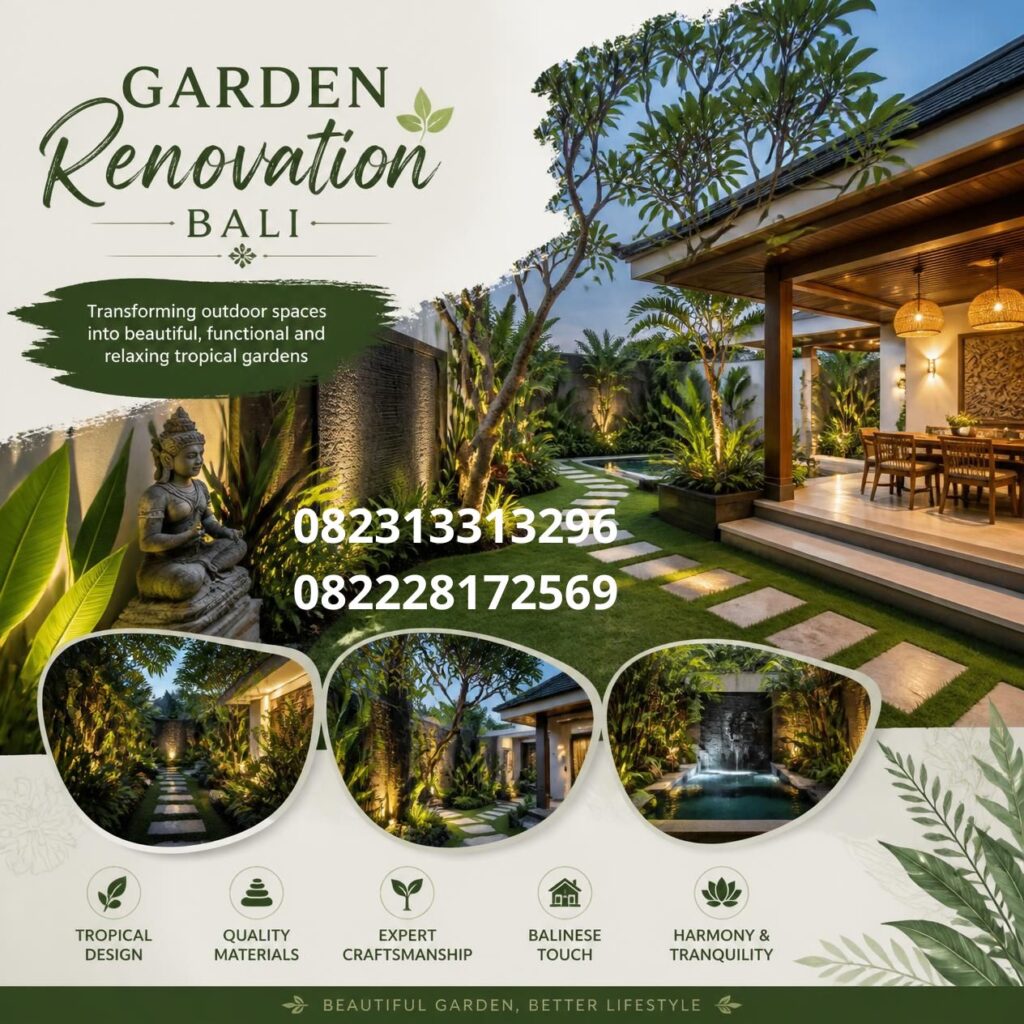
Why a Surabaya-Based Team Can Work Well for Bali Projects
arovabuild.com operates from Surabaya in East Java, and that’s a practical advantage for Bali garden work rather than a drawback. East Java is a major source of building materials, natural stone, and nursery stock, and the overland route to Bali via the Ketapang–Gilimanuk crossing is well established. Sourcing and coordinating materials from this side of the strait can give more options on stone types and plant sizes, and allows larger orders to be consolidated into fewer shipments.
For overseas owners, the important part is clear communication: progress photos, itemized budgets, and a single point of contact who understands both the technical side and what you’re trying to achieve.
Frequently Asked Questions About Garden Renovation in Bali
How long does a garden renovation in Bali take?
A planting refresh can take one to two weeks. A full renovation with drainage, hardscape, and lighting typically runs several weeks to a few months, depending on size and access.
When is the best time to renovate a garden in Bali?
Start groundwork in the dry season, roughly April to October, then plant toward the beginning of the wet season so new plants establish with natural rainfall.
Which plants are lowest maintenance in Bali?
Native and well-adapted species such as frangipani, cordylines, bird of paradise, gingers, and many palms handle local conditions well. The right choice still depends on your sun, soil, and coastal exposure.
Can I renovate my garden while I’m living overseas?
Yes. Many owners manage projects remotely with regular photo updates, video walkthroughs, and staged payments tied to completed milestones.
Do I need to fix drainage if my garden only floods occasionally?
Usually, yes. Occasional pooling near walls or foundations can cause damp, mold, and structural wear over time, and it tends to get worse as soil settles.
Is a lawn a good idea in Bali?
A small, well-drained lawn in a sunny spot can thrive. Large lawns in shade or on poorly drained ground struggle, and ground covers or gravel areas often work better there.
From Mud Patch to Garden You’ll Actually Use
A successful garden renovation Bali project starts below the surface: drainage that handles wet-season storms, soil matched to your corner of the island, materials chosen for tropical conditions, and plants selected for how they’ll look in three years rather than on day one. Get that order right and the garden becomes easier and cheaper to look after every year, instead of a recurring repair bill.
If your villa garden is struggling, or you’re planning a fresh start and want it done properly the first time, get in touch with arovabuild.com for a site review and an itemized quote. Share a few photos and your goals, and we’ll help you work out the smartest way forward.