Hotel Landscaping Bali: Matching Garden Style, Stone, and Plants to Your Site – arovabuild
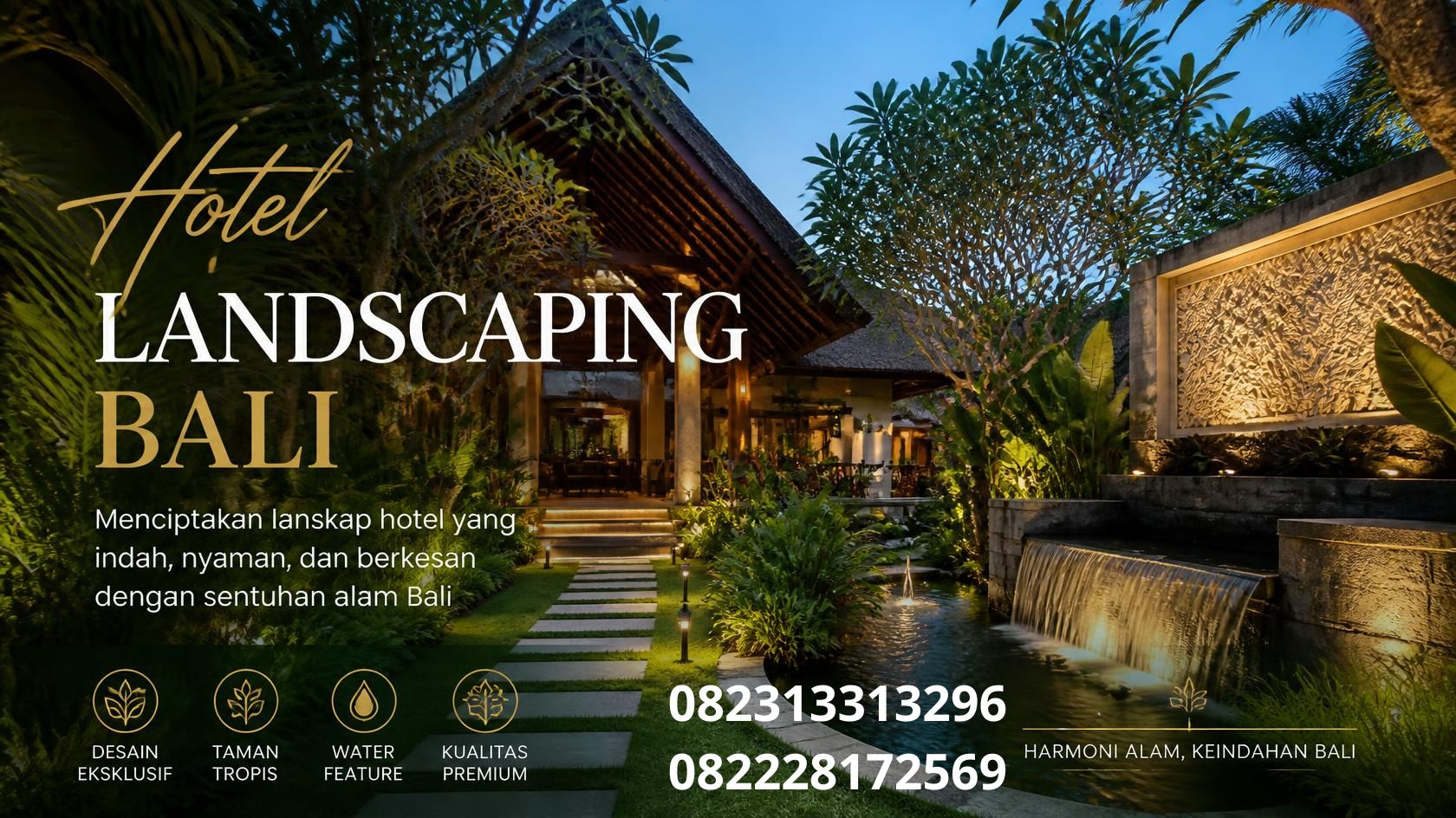
Hotel Landscaping Bali – Bali has a planning tradition that most visitors never notice: buildings are generally kept below the height of a coconut palm, roughly 15 meters. That single rule shapes hotel landscaping in Bali more than any design trend. With few tall towers on the island, most guest rooms look out over gardens, courtyards, and pools instead of a skyline. On many properties, the landscape is the view guests are paying for.
That changes how owners should plan. A garden that looks lush at handover but turns patchy after one wet season isn’t just a cosmetic problem. It shows up in guest photos, in reviews, and in the maintenance budget.
This guide is for hotel owners, developers, general managers, and architects (many of them based overseas) who are planning a new resort or refreshing an older one. It compares the main landscape styles, hardscape materials, and planting approaches used in Bali, with honest notes on where each one works and where it struggles.
Chat on WhatsApp
Chat on WhatsApp
Bali Isn’t One Climate, So It Can’t Have One Garden
Before choosing a style, look at where the property sits. Bali is small, but its microclimates differ sharply.
- The Bukit Peninsula (Uluwatu, Jimbaran, Nusa Dua): Limestone bedrock with thin topsoil, strong sun, wind on the cliff tops, and a noticeably drier feel in the long dry season. Planting pits often have to be excavated and backfilled with imported soil.
- The west coast (Seminyak, Canggu, Kerobokan): Sandy soils, salt spray close to the beach, and high water tables in some former rice-field areas, which makes drainage design critical.
- Ubud and the central uplands: Cooler, wetter, and humid, with steep river ravines. Plants grow fast, and so do moss, algae, and erosion problems.
- The north and east coasts: Generally drier, with volcanic black sand and soils that drain quickly.
Across all of them, the wet season (roughly November to March) brings heavy tropical downpours, while the dry season (roughly April to October) can leave unirrigated lawns brown within weeks. A good hotel landscape is designed for both extremes, not just for the photos taken on handover day.
Five Hotel Landscaping Styles in Bali, Compared
These are the approaches you’ll see most often on the island. Many successful properties blend two of them, but it helps to know what each one asks of you.
The Traditional Balinese Garden
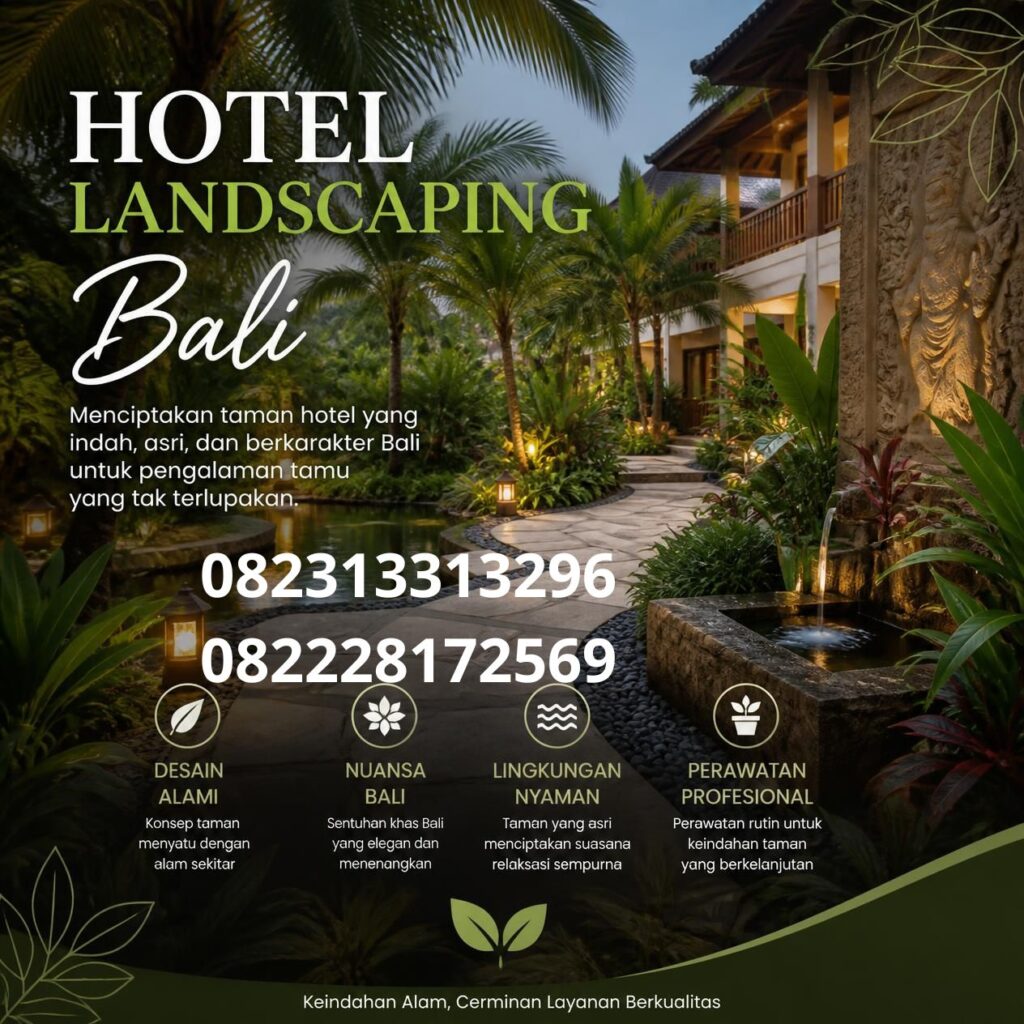
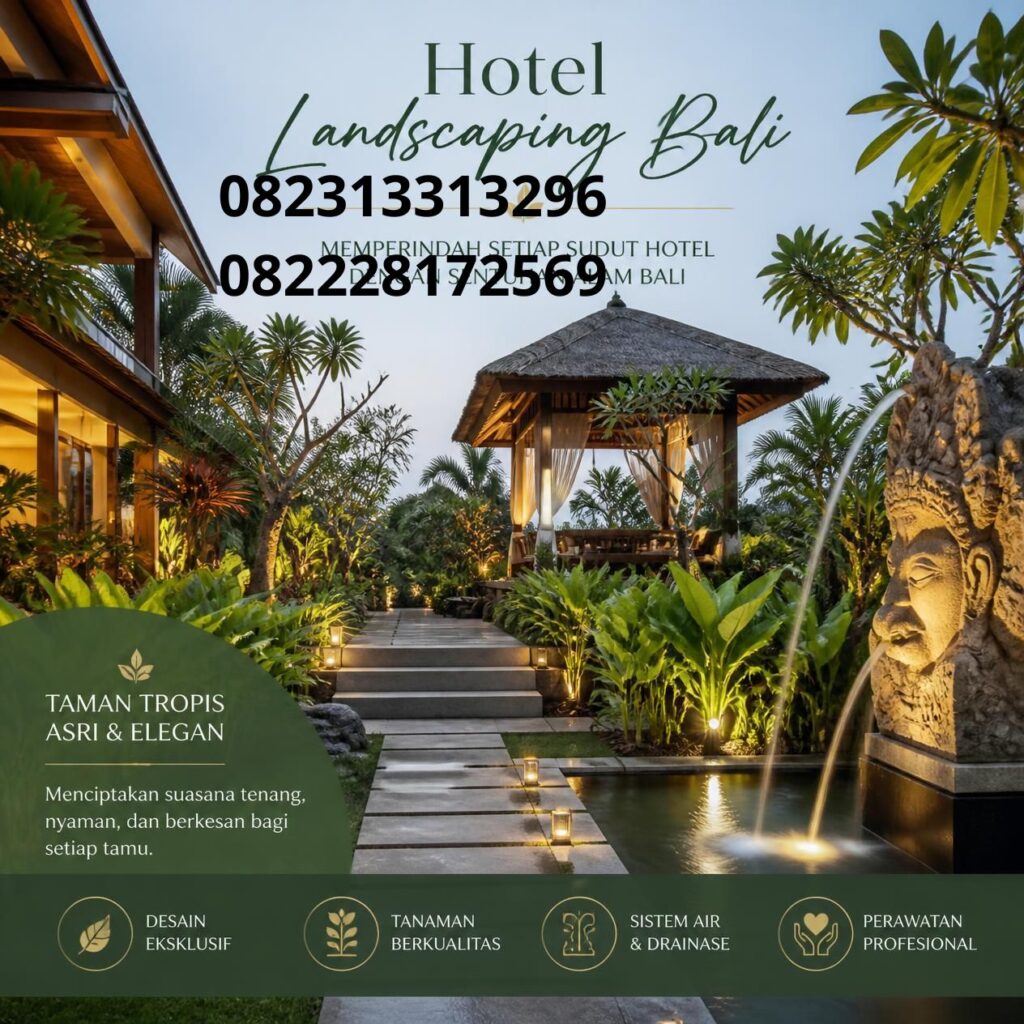
Hotel Landscaping Bali – Think carved stone gateways, shrines, frangipani trees dropping flowers onto paras stone paths, lotus ponds, and layered greenery. This style draws on local philosophy that values harmony between people, nature, and the spiritual.
Where it shines: Heritage-style resorts, wellness retreats, and properties marketed around cultural immersion.
The trade-off: Carved stone needs regular cleaning and occasional repair, and dense layering takes skilled pruning to keep it from looking overgrown. It also requires cultural sensitivity: shrines and ritual spaces should be placed and treated correctly, ideally with local guidance.

Modern Tropical
Clean lines, large-format stone, structured planting beds, sculptural single trees, and plenty of negative space. The greenery is still lush, but more controlled.
Where it shines: Design-led boutique hotels, beach clubs, and villa complexes in Canggu and Seminyak.
The trade-off: Minimalism is unforgiving. One dead plant in a row of twenty identical ones is obvious, so plant selection and irrigation have to be precise.
The Water-Led Resort Landscape
Infinity pools, reflecting ponds, cascading water features, and streams threaded through the grounds. Water becomes the organizing element, and planting frames it.
Where it shines: Cliff-top resorts and large integrated properties where the pool is the signature image.
The trade-off: Running costs. Pumps, filtration, algae control, and leaf removal add up. In Bali’s climate, open water in shaded areas can also become a mosquito issue if circulation is poor.
The Coastal, Low-Water Landscape
Inspired by dry-climate gardening principles: salt-tolerant shrubs, pandanus, bougainvillea, spider lilies, ornamental grasses, gravel mulch, and smaller lawn areas.
Where it shines: Beachfront properties and the Bukit Peninsula, where salt and dry winds punish delicate plants.
>The trade-off: It can look sparse if done poorly. The skill is in layering textures so it reads as intentional, not unfinished.
The Productive or Edible Garden
Herb beds, fruit trees, vegetable plots, and sometimes small rice terraces, often linked to the hotel restaurant’s menu.
Where it shines: Eco-resorts, farm-to-table concepts, and properties offering cooking classes.
The trade-off: It needs a gardener who understands food crops, not just ornamentals, and it changes appearance through the seasons.
Hardscape Materials for Hotel Landscaping in Bali
Plants grow back. Stone doesn’t. The hardscape choices you make will be with the hotel for decades, so match each material to where it will be used.
| Material | Look | Strengths | Watch Out For | Best Use |
|---|---|---|---|---|
| Paras stone (soft volcanic tuff) | Warm, carved, traditional | Easy to carve, authentic Balinese character | Porous; grows moss in shade, wears on high-traffic paths | Walls, carvings, decorative panels |
| Andesite | Grey, dense, refined | Hard-wearing, works for both classic and modern designs | Can get hot in full sun; needs a textured finish where wet | Pathways, steps, pool surrounds |
| Lava stone | Dark, rough, dramatic | Naturally slip-resistant, strong contrast with greenery | Absorbs heat; rough texture traps dirt | Feature walls, outdoor showers, accents |
| Green pool stone | Soft green, glassy water effect | Gives pools the iconic tropical turquoise color | Needs proper sealing and water chemistry to avoid staining | Pool lining and pool edges |
| Limestone | Pale, elegant | Light and cool-looking, suits modern resorts | Softer and more porous; sensitive to acidic cleaners | Wall cladding, low-traffic terraces |
| Reclaimed hardwood | Rich, rustic | Natural warmth, durable species resist rot | Requires regular oiling; check sourcing documentation | Decking, bridges, pergolas |
| Washed-pebble concrete | Textured, practical | Good grip, cost-effective for large areas | Less premium feel if overused | Service paths, driveways, staff areas |
A practical tip from site experience: always ask for a slip test on wet samples. Bali hotel paths get wet constantly, from rain, pool splash, and morning dew. A beautiful polished stone that turns slick is a liability waiting to happen.
If you’re weighing several of these options for different zones of your property, the team at Arovabuild.com can help you compare samples and finishes against your site conditions before anything is ordered.
read also : https://arovabuild
Planting Palettes That Survive Both Seasons
Choosing plants for a hotel is different from choosing plants for a private garden. They need to look good every day of the year, tolerate guests brushing past them, and stay manageable for a maintenance team working within a budget.
For Coastal and Cliff-Top Properties
Salt-tolerant and wind-hardy species do the heavy lifting here: pandanus, sea hibiscus, bougainvillea, spider lily, beach morning glory as ground cover, and frangipani, which handles dry spells well. Coconut palms are iconic, but plant them away from main walkways and pool loungers, and budget for regular fruit removal. A falling coconut is a genuine safety risk.
For Ubud and Shaded, Humid Sites
This is where heliconia, ginger, alocasia, philodendron, cordyline, ferns, and climbing vines thrive. The challenge isn’t growth but control. Specify plants with predictable mature sizes so they don’t block views from the rooms within two years.
Choosing Lawn Grass
Many hotels default to large lawns, then struggle to maintain them. Zoysia-type fine grasses look manicured in full sun but thin out under trees. Broad-leaf carpet grass copes better with partial shade. In heavily shaded zones, skip grass entirely and use ground covers or gravel beds instead.
Mature Trees Versus Young Stock
Mature specimen trees give instant impact for an opening date, but they cost more, need careful transport, and take longer to establish. A smart compromise: buy a handful of mature feature trees for arrival areas and key views, and use younger stock elsewhere.
The Line Items Owners Forget: Drainage, Irrigation, and Lighting
Most landscape problems in Bali hotels trace back to infrastructure, not plant choice.
Drainage. A tropical downpour can drop an enormous amount of water in an hour. Without proper slopes, French drains, and catch basins, you’ll get waterlogged roots, eroded beds, and puddles on guest paths. On sloping Ubud sites, retaining walls and erosion control matter even more.
Irrigation. Automatic drip and sprinkler systems pay for themselves by saving labor and preventing dry-season losses. Zone them by plant type, so thirsty ferns and drought-tolerant succulents aren’t watered on the same schedule.
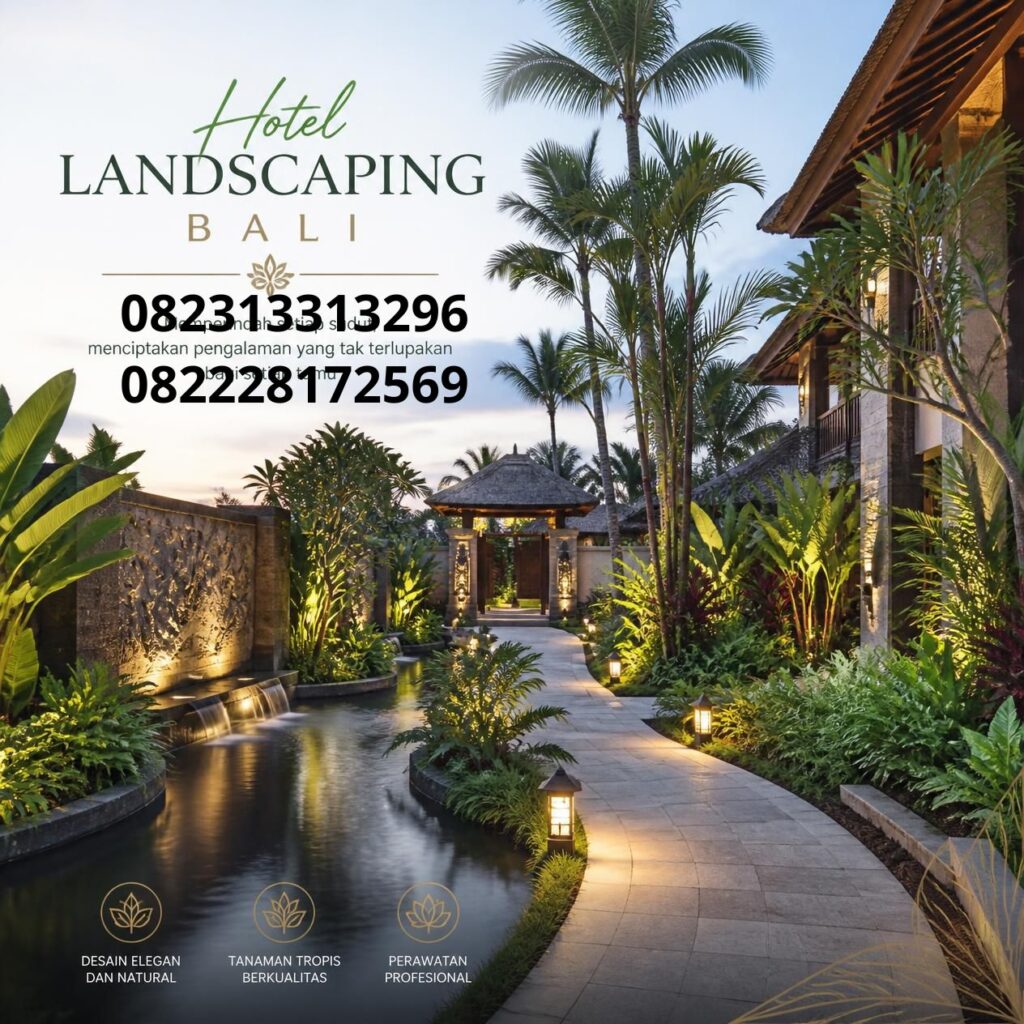
Lighting. Bali hotels are experienced as much at night as in the day. Uplighting on feature trees, low path lights, and soft lighting around water features turn a garden into an evening attraction. Use warm color temperatures and fittings rated for constant humidity.
Planning these three systems early, before paving goes down, is far cheaper than retrofitting them later.
How to Choose the Right Approach for Your Property
Here’s how I’d steer different types of projects:
- Cliff-top resort on the Bukit: Water-led design with a coastal, low-water planting palette. Invest in soil preparation, wind protection, and andesite or lava stone for durable surfaces.
- Boutique hotel or beach club on the west coast: Modern tropical with salt-tolerant species near the beach, plus serious drainage design if the land was formerly rice fields.
- Jungle retreat in Ubud: Traditional Balinese or a softened modern tropical style, with erosion control and plants chosen for controlled growth.
- Business or airport-area hotel: Low-maintenance modern tropical. Fewer lawns, more structured beds, and strong night lighting for evening arrivals.
- Renovating an older resort: Keep the mature trees (they’re your most valuable asset) and focus the budget on hardscape repairs, updated lighting, and replacing tired understory planting.
Why Sourcing From East Java Can Work for a Bali Project
Many owners assume everything for a Bali landscape must come from Bali. In practice, East Java has large nursery areas and stone-processing workshops, and Surabaya is connected to Bali by road via the Ketapang–Gilimanuk ferry crossing. Trucks can reach most parts of Bali within a day.
For larger hotel projects, this can widen your choice of plant sizes and stone finishes. It does mean coordinating logistics carefully: scheduling deliveries to avoid holding live plants on site for too long, protecting stone during transport, and checking whether inter-island plant shipments need plant health documentation.
Based in Surabaya, Arovabuild.com works with this supply route in mind, which helps when a project needs volume, consistency, and coordinated delivery timing.
What Hotel Landscaping in Bali Typically Costs
Costs vary widely depending on scope. Planting-led areas with modest hardscape sit at the lower end, while zones heavy with stone paving, water features, retaining walls, and lighting can cost many times more per square meter. Mature specimen trees, custom stone carving, and difficult site access (cliffs, steep ravines) push budgets up quickly.
The most reliable way to control cost is to phase the work: complete infrastructure and hardscape first, plant key arrival and view areas next, and fill secondary zones last. Request an itemized quote so you can see exactly where the money goes.
FAQ: Hotel Landscaping in Bali
How much does hotel landscaping in Bali cost?
It depends on site size, style, and how much hardscape is involved. Soft landscaping is far cheaper per square meter than stone-heavy or water-led zones. A site survey is the only way to get an accurate figure.
How long does a hotel landscape project take?
Smaller boutique projects can take a few weeks to a couple of months. Large resorts with water features and extensive hardscape often take several months, and planting usually comes after the main construction.
When is the best time to plant in Bali?
The early wet season helps new plants establish with less irrigation. Planting in the dry season works too, provided an irrigation system is running from day one.
Can landscaping be done while the hotel is operating?
Yes, with careful phasing. Work can be scheduled by zone, with noisy tasks kept to set hours and guest areas screened off.
Which grass is best for a Bali hotel lawn?
Fine-bladed grasses suit open, sunny areas, while broad-leaf carpet grass handles partial shade better. Deep shade is better served by ground covers than any lawn.
Can overseas owners manage a project remotely?
Many do. Clear drawings, regular photo and video updates, and agreed milestones make remote oversight practical.
Where Your Guests’ First Impression Takes Root
In Bali, guests often see your garden before they see their room, and they keep seeing it from the balcony, the pool, and the restaurant. Strong hotel landscaping in Bali starts with reading the site’s microclimate, then choosing a style, stone, and planting palette that will still look good after several wet seasons, backed by drainage, irrigation, and lighting planned from the start.
If you’re planning a new resort or refreshing an existing property, talk to Arovabuild.com about your site, your concept, and your timeline. A clear plan now saves years of fixing avoidable problems later.
