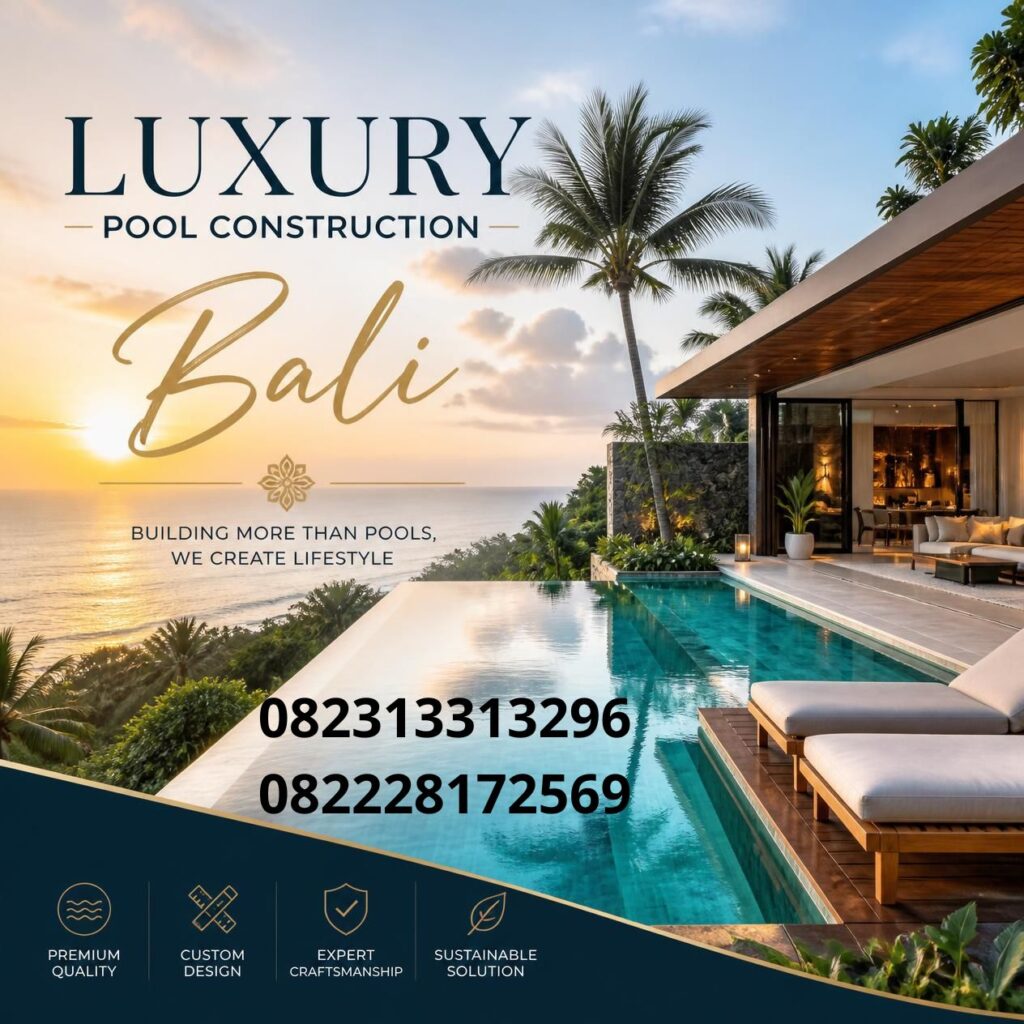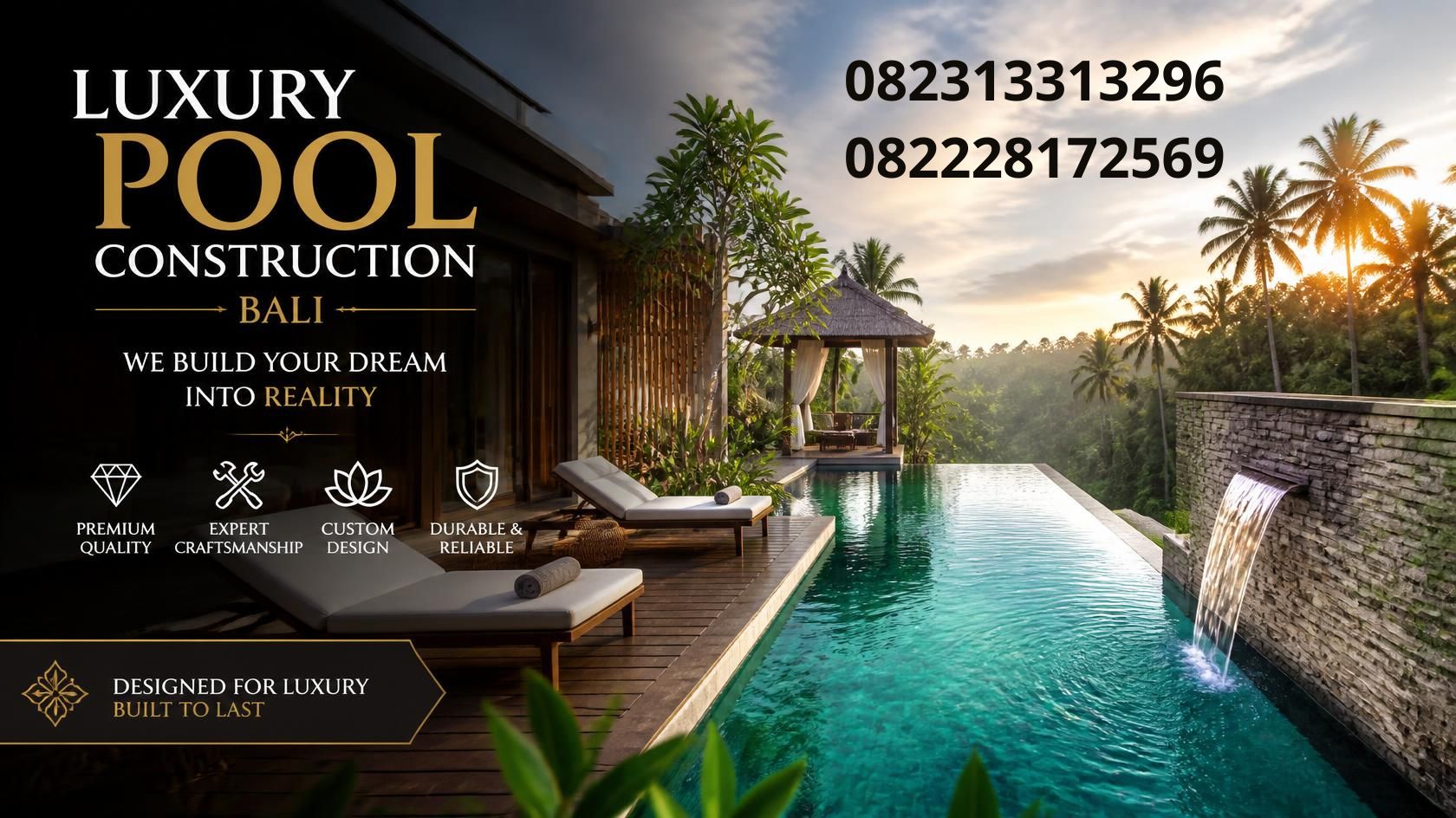
Luxury Pool Construction Bali: A Practical Guide to Premium Pool Development – arovabuild
Luxury pool construction in Bali – requires more than attractive visual concepts. Instead, every project needs careful planning, technical coordination, and disciplined execution.
Bali offers diverse architectural settings, from tropical villas to boutique resorts and private residences. Therefore, each swimming pool needs a suitable construction approach.
Moreover, climate, terrain, drainage, materials, and surrounding structures can influence the construction process. These factors require early technical consideration.
A premium pool should also support daily use, maintenance, safety, and long-term performance. Consequently, designers and builders need to balance aesthetics with practical requirements.
This guide explains the working methods behind luxury pool construction in Bali. It also explores planning, excavation, structure, waterproofing, finishing, equipment, and maintenance.
The discussion focuses on practical construction decisions rather than decorative trends alone. As a result, property owners can understand each stage more clearly.
Arova Build provides professional construction solutions from its business location in Surabaya, East Java. The company can support projects according to their technical requirements.
However, every Bali project still needs site-specific planning. Local conditions should guide construction methods, material choices, drainage systems, and project logistics.
Chat on WhatsApp
Chat on WhatsApp
Understanding Luxury Pool Construction Bali
Luxury pool construction combines architectural planning with structural and mechanical work. Therefore, successful execution requires coordination between several technical disciplines.
A swimming pool normally includes excavation, structural work, waterproofing, plumbing, electrical systems, filtration, and surface finishing.
Furthermore, the surrounding landscape can influence drainage and circulation. Pool decks, gardens, outdoor kitchens, and villas often share the same project area.
For that reason, builders should study the complete property before starting construction. This approach helps reduce conflicts between different building components.
What Makes a Luxury Pool Different?
A luxury pool does not simply depend on expensive materials. Instead, quality comes from appropriate planning, precise execution, and suitable technical systems.
Premium projects often combine several features. These features may include infinity edges, integrated lighting, custom steps, water features, and spacious pool decks.
However, every feature adds technical requirements. Therefore, the project team should evaluate each feature according to its function and maintenance needs.
A visually impressive feature can create operational problems when builders ignore drainage or equipment access.
Consequently, practical engineering should guide aesthetic decisions throughout the project.
Why Site Conditions Matter in Bali
Bali presents varied terrain across coastal, urban, hillside, and rural locations. Therefore, builders should inspect the site before preparing detailed construction plans.
Soil conditions can affect excavation methods and structural requirements. Meanwhile, slopes can influence retaining structures and water management.
Rainfall also requires careful drainage planning. Excess surface water can create pressure around the pool structure.
Additionally, coastal locations may require suitable material selection because salt exposure can accelerate material deterioration.
For these reasons, local site conditions should shape the construction strategy from the beginning.
Luxury Pool Design and Construction Planning
A reliable project starts with a clear design and construction plan. Therefore, the planning stage should define both visual goals and technical requirements.
The owner should establish the pool’s purpose before construction begins. A private villa pool may require different features than a resort pool.
For example, a family pool may prioritize safety and comfortable circulation. Meanwhile, a resort pool may emphasize visual impact and guest experience.
Defining Pool Dimensions
Pool dimensions influence excavation, structural materials, equipment capacity, and finishing costs.
Therefore, builders should determine length, width, depth, and water volume early.
The design should also consider circulation around the pool. Guests need sufficient space for movement, seating, maintenance, and emergency access.
Moreover, pool proportions should complement the surrounding architecture. A balanced relationship creates better visual integration with the property.
Selecting the Pool Shape
Rectangular pools offer efficient layouts and straightforward construction. However, curved pools can create softer relationships with tropical landscapes.
Infinity pools require additional structural and hydraulic planning. Their overflow systems need accurate levels and reliable water circulation.
Meanwhile, plunge pools can suit compact villas and limited outdoor areas.
Therefore, the pool shape should reflect both architectural goals and site limitations.
Planning Pool Depth
Different activities require different water depths. Therefore, designers should avoid choosing depth based solely on appearance.
A shallow section can support relaxation and safe access. Meanwhile, deeper sections can accommodate swimming activities.
However, deeper pools increase excavation and water volume. Consequently, they can also affect structural and mechanical requirements.
The project team should establish depth zones according to the intended use.
Site Survey for Luxury Pool Construction
A site survey provides important information before excavation begins. Therefore, builders should inspect the property carefully.
The survey can identify existing structures, access limitations, drainage routes, utilities, and ground conditions.
Furthermore, survey information helps the team establish accurate pool positioning.
read also : https://arovabuild
Measuring Existing Conditions
Builders should measure nearby buildings, walls, landscape elements, and existing levels.
These measurements help prevent conflicts during excavation and construction.
Additionally, accurate measurements support better coordination between architectural and structural drawings.
Checking Construction Access
Large equipment may require suitable access to the project area. Therefore, narrow roads or restricted entrances can affect construction logistics.
The team should identify equipment routes before mobilization.
Moreover, builders should plan material delivery according to site limitations.
This approach helps reduce unnecessary handling and improves project organization.
Excavation Method for Swimming Pool Construction
Excavation marks one of the first major physical stages of pool construction. Therefore, the team should follow the approved dimensions carefully.
Workers remove soil according to the planned pool footprint and depth.
However, excavation methods should respond to ground conditions. Loose soil, hard ground, or sloped terrain can require different approaches.
Excavation for Flat Sites
Flat sites usually offer simpler excavation conditions. Nevertheless, workers still need accurate level control.
The excavation must follow the planned dimensions. Therefore, survey points should guide the work throughout this stage.
Excavation for Sloping Sites
Sloping properties require more careful planning. Retaining structures may become necessary around certain pool sections.
Moreover, builders should coordinate excavation with existing terrain and drainage paths.
The team should avoid uncontrolled soil movement because it can affect nearby structures.
Managing Excavated Soil
Excavated soil requires an organized handling strategy. Therefore, the project team should determine storage, reuse, or removal requirements.
Some soil may support landscape grading. Other materials may require transportation away from the property.
Proper planning can reduce unnecessary site congestion during construction.
Structural Construction for Luxury Pools
The pool structure provides the foundation for long-term performance. Therefore, builders should follow structural calculations and reinforcement plans carefully.
Concrete pools often require reinforced structural systems. The exact reinforcement depends on pool dimensions, soil conditions, and structural design.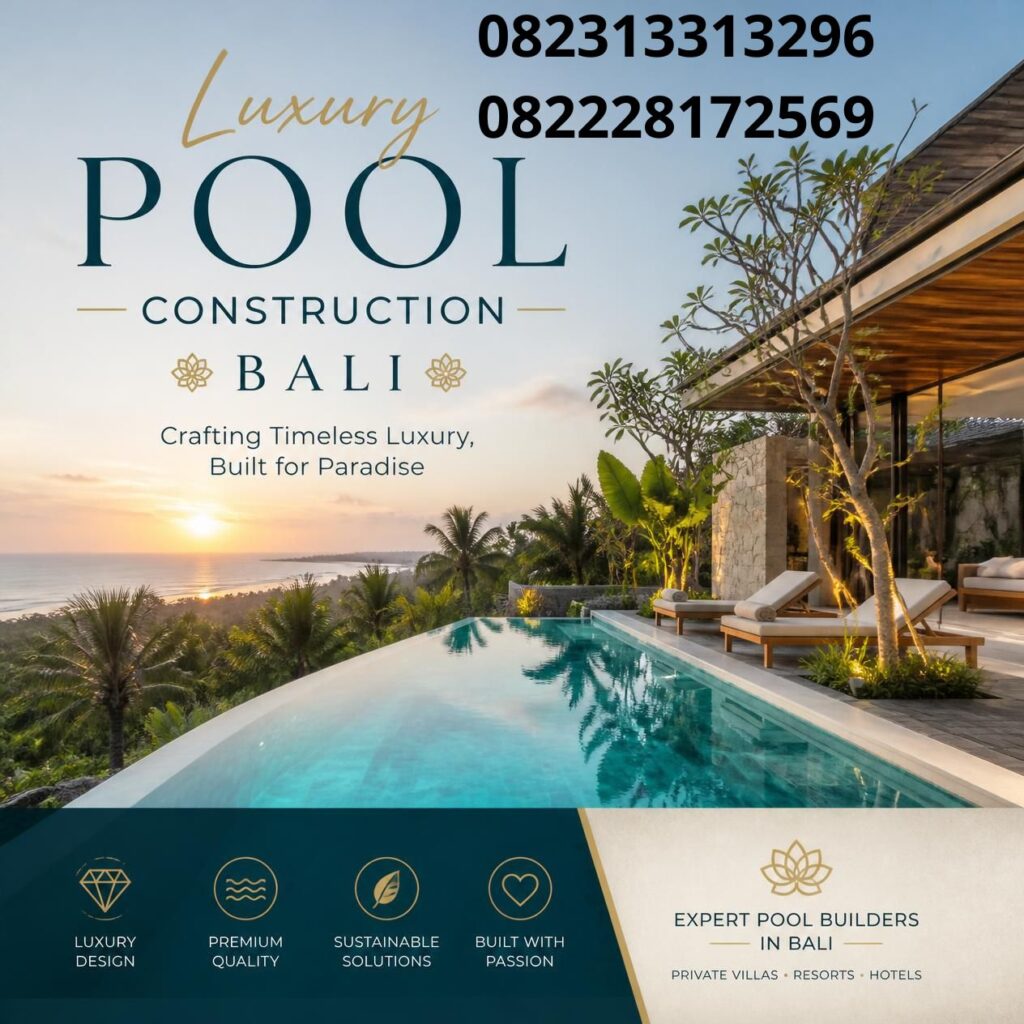
Reinforcement Installation
Workers install reinforcement according to the structural drawings. Therefore, accurate spacing and placement matter during this stage.
Reinforcement helps the concrete structure manage structural loads and ground pressure.
Moreover, the team should coordinate reinforcement with plumbing penetrations and other embedded components.
Poor coordination can create unnecessary modifications during later stages.
Concrete Pool Construction
Concrete placement requires careful preparation. The team should coordinate formwork, reinforcement, concrete supply, and placement sequences.
Workers should also monitor concrete quality throughout the process.
Furthermore, proper curing helps the structure develop its intended performance.
Construction teams should follow the project specifications instead of relying on assumptions.
Structural Joint Planning
Large structures may require carefully planned joints. Therefore, the structural design should address movement and construction sequencing.
The team should also coordinate joints with waterproofing details.
This coordination helps create a more consistent structural and waterproofing system.
Pool Waterproofing Method
Waterproofing plays a critical role in swimming pool construction. Therefore, the team should treat waterproofing as a technical system rather than a decorative layer.
A suitable waterproofing strategy depends on structural design, substrate condition, and selected finishing materials.
Preparing the Pool Surface
The surface needs proper preparation before waterproofing work. Workers should remove loose particles and correct unsuitable surface conditions.
Corners and penetrations also require careful attention.
Therefore, the team should inspect the entire surface before applying waterproofing materials.
Applying Waterproofing Systems
The selected waterproofing system should match the project specification. Workers should follow manufacturer requirements for preparation and application.
Moreover, the team should respect curing times before continuing with subsequent layers.
Rushing this stage can create avoidable technical problems.
Testing Waterproofing Performance
Water testing provides useful information before final finishing. Therefore, the project team should establish an appropriate testing procedure.
The test can help identify potential leakage points before workers install final finishes.
Consequently, early testing can reduce costly corrections during later stages.
Pool Plumbing Installation Method
Pool plumbing controls water circulation, filtration, drainage, and additional water features. Therefore, plumbing requires careful coordination.
The system normally includes suction lines, return lines, drains, skimmers, pumps, and filtration equipment.
Planning Pipe Routes
Builders should plan pipe routes before structural work progresses too far.
Shorter and logical routes can simplify maintenance and reduce unnecessary pressure losses.
Furthermore, pipe positions should match equipment locations.
Installing Pool Drainage
Drainage systems manage water around the pool and surrounding deck. Therefore, builders should coordinate drainage levels with landscape planning.
Surface water should move toward suitable drainage points.
Additionally, the system should reduce water accumulation around pool edges and walkways.
Installing Overflow Systems
Infinity pools require specialized overflow systems. Water flows across the edge and enters a collection system.
Therefore, the balance tank and circulation system need suitable capacity.
Accurate level control also influences the visual quality of an infinity edge.
Pool Filtration and Circulation System
A reliable filtration system supports water quality and operational efficiency. Therefore, builders should select equipment according to pool volume and usage.
The system normally includes pumps, filters, circulation lines, and control components.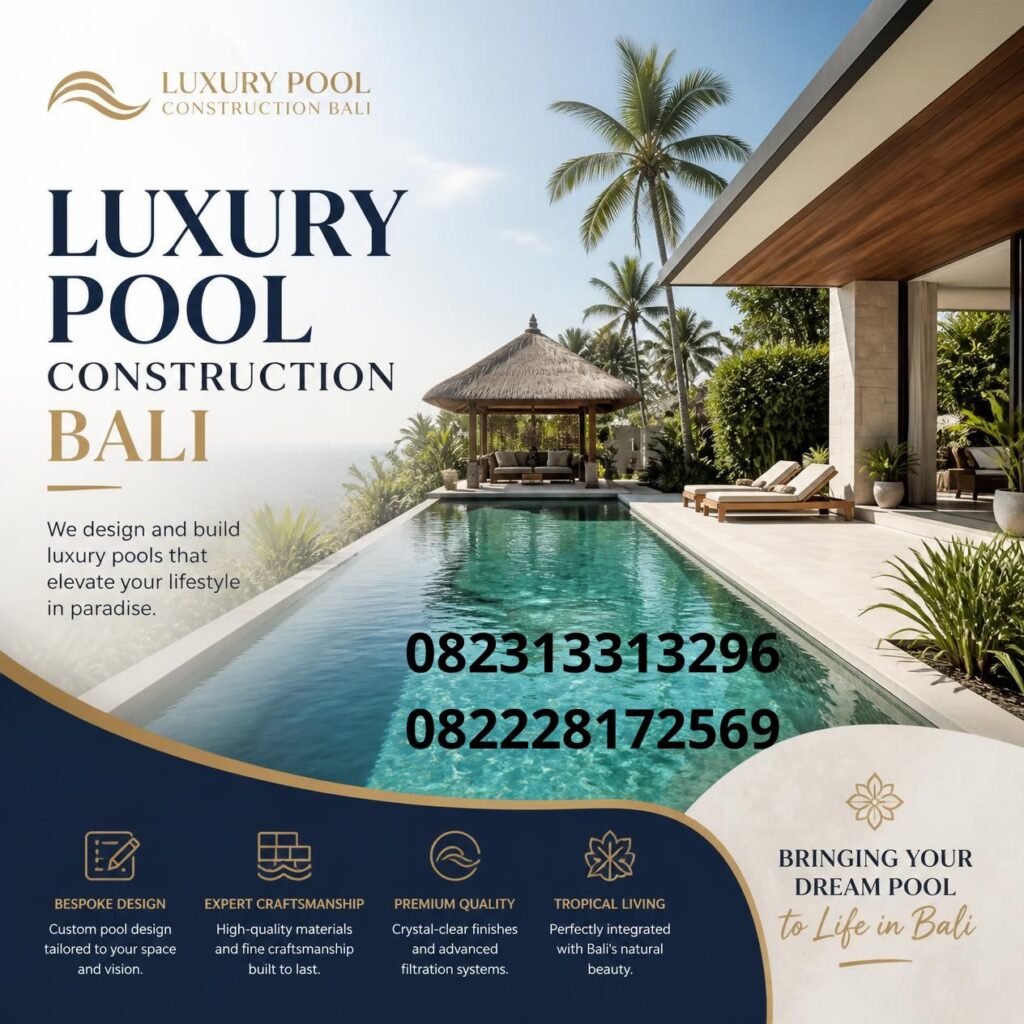
Choosing the Pool Pump
Pump capacity should match the required circulation rate. Therefore, the team should calculate requirements instead of choosing equipment by appearance.
Oversized pumps can increase energy consumption. Meanwhile, undersized systems may struggle with circulation requirements.
Consequently, equipment selection should follow technical calculations.
Selecting Pool Filters
Different filter technologies offer different operating characteristics. Therefore, the project should select filtration equipment according to pool requirements.
Maintenance access also matters during equipment selection.
A filter room should provide enough space for inspection, cleaning, and replacement work.
Planning Equipment Rooms
Equipment rooms need practical access and proper ventilation. Therefore, builders should consider equipment maintenance during the design stage.
The room should also protect electrical components from unnecessary water exposure.
Good planning makes routine servicing more convenient.
Luxury Pool Lighting Installation
Lighting can improve pool visibility and create stronger nighttime ambience. However, lighting systems require careful electrical planning.
Therefore, builders should coordinate lighting positions with the pool structure and surrounding landscape.
Underwater Pool Lighting
Underwater lights should provide suitable illumination without creating excessive glare.
The team should position fixtures according to pool dimensions and visual requirements.
Furthermore, electrical systems should follow applicable safety requirements.
Landscape Lighting Integration
Pool lighting can connect visually with garden and pathway lighting.
Therefore, designers can create a coordinated nighttime environment rather than isolated light points.
This approach can improve visual continuity across outdoor spaces.
Pool Tile and Surface Finishing
Luxury Pool Construction Bali – Surface finishing affects appearance, maintenance, and user experience. Therefore, material selection should consider both aesthetics and performance.
Pool interiors may use ceramic tiles, mosaic tiles, stone, or specialized pool finishes.
Choosing Pool Tiles
Tile selection should consider water exposure, cleaning requirements, texture, and visual appearance.
Moreover, lighter surfaces can create different water tones than darker materials.
The final selection should match the architectural concept and maintenance strategy.
Installing Pool Coping
Pool coping creates a transition between the water area and surrounding deck.
Therefore, coping should provide suitable edges and comfortable movement around the pool.
Material selection should also consider heat exposure and slip resistance.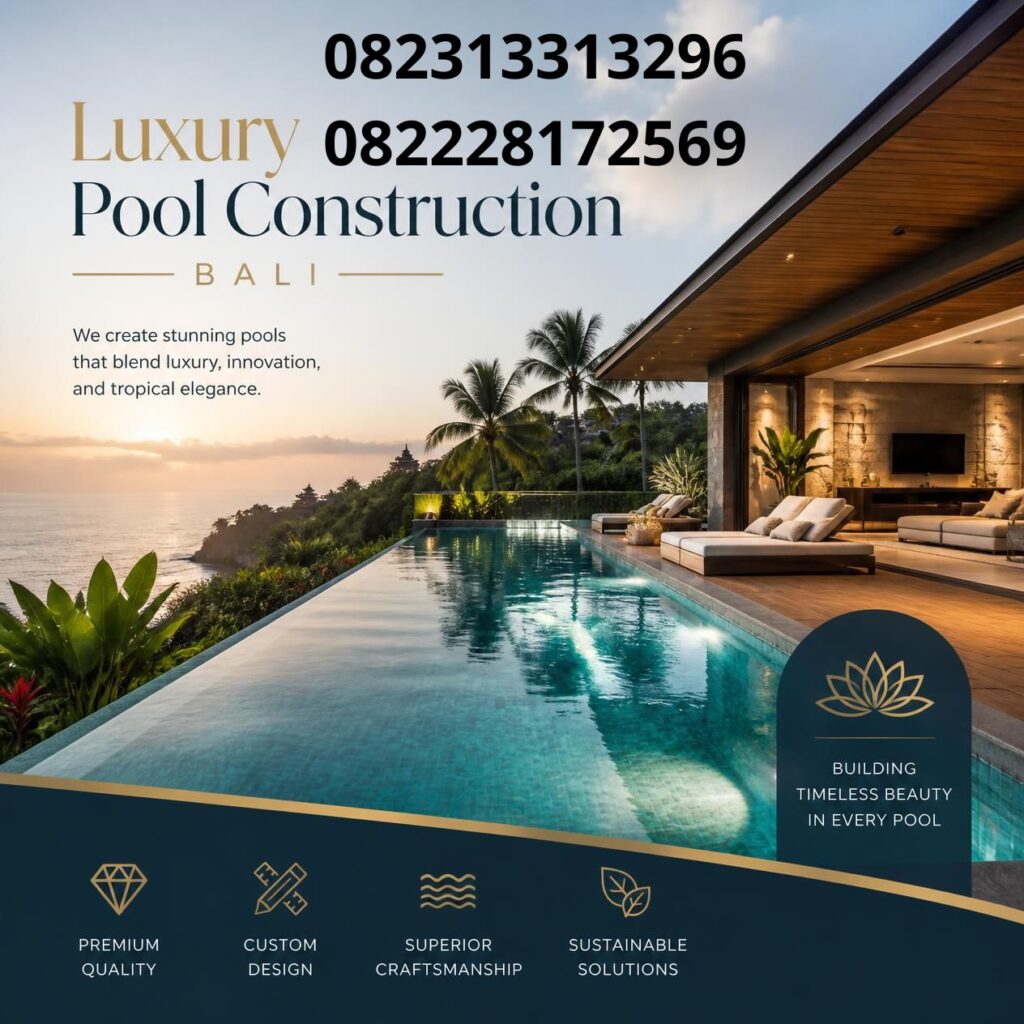
Selecting Pool Deck Materials
Pool decks require suitable outdoor materials. Therefore, designers should consider water exposure, sunlight, cleaning, and pedestrian movement.
Natural stone can create a premium appearance. Meanwhile, porcelain and engineered materials can offer alternative maintenance characteristics.
The best material depends on the property’s design and operational requirements.
Infinity Pool Construction Method in Bali
Infinity pools create a continuous visual relationship between water and the surrounding landscape. Therefore, their construction requires precise levels and hydraulic coordination.
The overflow edge must maintain accurate geometry. Even small level differences can affect the visual result.
Building the Infinity Edge
The structural edge requires careful dimensional control. Therefore, builders should verify levels throughout construction.
The edge should connect properly with the overflow channel and collection system.
Additionally, the surrounding landscape should support the intended visual perspective.
Installing the Balance Tank
The balance tank receives overflow water before the circulation system returns it.
Therefore, tank capacity should correspond with pool dimensions and operational requirements.
The equipment room should also provide convenient access to the tank system.
Sustainable Approaches for Pool Projects
Luxury Pool Construction Bali – Sustainable pool planning can reduce unnecessary resource consumption. Therefore, designers can consider efficient equipment and practical operating strategies.
Variable-speed pumps can support flexible circulation requirements. Efficient lighting can also reduce electrical consumption.
Additionally, proper pool covers can reduce evaporation during periods without use.
Landscape planning can also support efficient water management.
Therefore, sustainability should begin during design rather than after construction.
Arova Build as a Professional Construction Solution Provider
Arova Build operates as a professional construction solution provider from Surabaya, East Java.
The company can support construction planning according to each project’s specific requirements.
For Bali projects, the team needs to consider site access, local conditions, architectural direction, and construction logistics.
Therefore, each project should begin with a clear discussion of scope and technical requirements.
Arova Build can approach villa, outdoor, and pool construction as interconnected components.
This approach helps align architectural goals with practical construction considerations.
However, each property still requires individual assessment before the team determines suitable methods.
Practical Checklist Before Starting a Luxury Pool Project
Before construction begins, owners should prepare several essential points.
First, define the pool’s primary function and expected users.
Next, establish the preferred dimensions, depth, shape, and surrounding circulation.
Then, review the site conditions, access routes, drainage, and existing structures.
Afterward, coordinate structural, plumbing, electrical, waterproofing, and finishing requirements.
Finally, establish maintenance access and equipment requirements.
This sequence helps create a clearer project framework.
Luxury pool construction in Bali requires careful coordination between design, structure, equipment, waterproofing, finishing, and landscape planning.
Therefore, owners should evaluate the project as an integrated construction system.
Site conditions should guide excavation and structural decisions. Meanwhile, pool dimensions should guide equipment capacity and circulation planning.
Furthermore, waterproofing and drainage require detailed attention because they directly influence long-term pool performance.
Material selection should also consider climate, maintenance, safety, and architectural character.
Most importantly, every luxury pool needs a construction method that matches its actual site and intended use.
Arova Build, as a professional construction solution provider based in Surabaya, East Java, can discuss project requirements systematically.
For owners planning a Bali pool project, an early technical consultation can clarify scope, construction methods, materials, and supporting systems.