
Pool Builder Bali: How Professional Pool Construction Works – arovabuild
Pool Builder Bali – Building a swimming pool in Bali requires careful planning, technical coordination, and practical construction knowledge. Therefore, every project should begin with clear objectives and site information.
A pool combines structural, hydraulic, electrical, architectural, and landscape elements. Because of that, builders must coordinate several systems throughout the construction process.
Bali also presents unique environmental considerations for pool projects. Tropical rainfall, humidity, soil conditions, and coastal exposure can influence construction decisions.
Furthermore, each property has different space, access, and design requirements. Therefore, a suitable pool solution should follow the actual site rather than a generic template.
A professional pool builder helps connect design intentions with practical construction requirements. Consequently, property owners can make better decisions before construction begins.
Chat on WhatsApp
Chat on WhatsApp
Understanding How a Pool Builder Bali Project Starts
Every successful pool project starts with information about the site and intended use. Therefore, the initial discussion should identify the property’s requirements.
The owner should explain the desired pool size, shape, depth, location, and intended users. Additionally, the owner should describe the preferred design style.
The builder then studies the site and identifies practical construction constraints. Consequently, the project team can develop a more realistic construction strategy.
Site Assessment Before Pool Construction
Site assessment provides essential information before excavation begins. Therefore, the team should inspect the available space and surrounding conditions.
The team examines ground levels, access routes, existing structures, drainage, and utility locations. Additionally, the team considers equipment access and material delivery.
Soil characteristics also influence structural planning. For example, unstable ground may require additional engineering consideration before excavation.
Furthermore, groundwater can affect excavation and construction methods. Therefore, the project team should evaluate water conditions before finalizing construction procedures.
Determining Pool Position
Pool positioning affects circulation, views, sunlight, and landscape integration. Therefore, designers should consider the entire property instead of focusing only on the pool.
The team can evaluate sunlight throughout different times of the day. Additionally, designers can consider surrounding buildings, vegetation, and privacy requirements.
For villas, the pool often connects directly with outdoor living spaces. Consequently, its position should support movement between indoor and outdoor areas.
Establishing Pool Dimensions
Pool dimensions depend on available space and intended activities. Therefore, owners should determine whether the pool supports relaxation, exercise, recreation, or multiple purposes.
A compact villa pool may prioritize visual appeal and relaxation. Meanwhile, a larger hospitality pool may require separate circulation zones.
Pool depth also affects structural and safety planning. Therefore, designers should establish depth profiles before construction drawings progress.
Pool Builder Bali and the Design Development Process
After the initial assessment, the project moves toward design development. At this stage, the team translates the owner’s requirements into technical concepts.
The design should balance aesthetics, functionality, construction requirements, and maintenance needs. Therefore, the team should avoid focusing solely on visual appearance.
Pool design also needs coordination with surrounding architecture. Consequently, the pool can become part of the property’s overall design language.
Developing the Pool Layout
The layout determines the pool’s relationship with buildings, gardens, terraces, and circulation paths. Therefore, designers should consider the entire outdoor environment.
The team can define steps, shallow areas, seating zones, and deeper sections. Additionally, the layout can incorporate water features when the site supports them.
The designer should also consider equipment locations during layout development. This approach prevents difficult maintenance access later.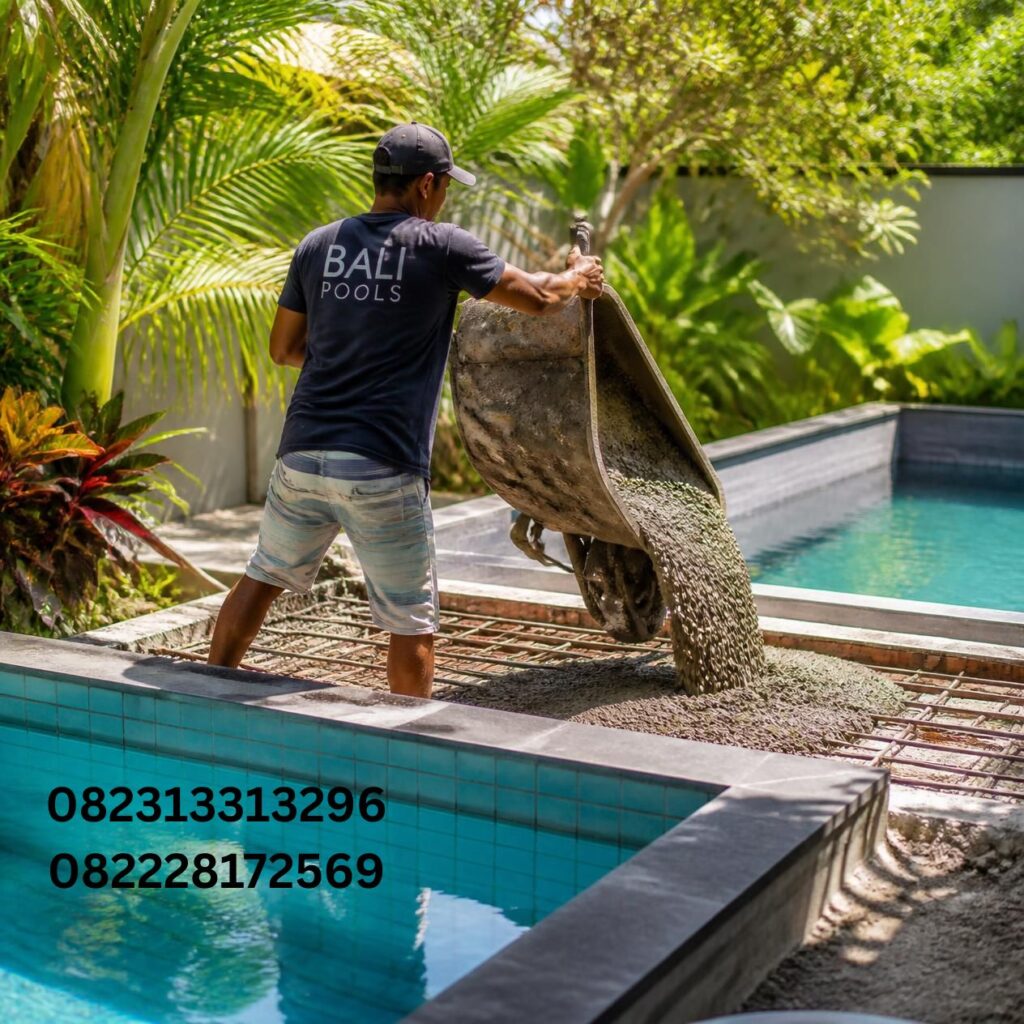
Selecting Pool Shapes
Rectangular pools provide clean geometry and efficient space planning. Meanwhile, organic shapes can create a more natural visual character.
Infinity pools require additional structural and hydraulic planning. Therefore, designers should evaluate the edge detail during early design development.
Curved pools can also create distinctive visual effects. However, complex geometry may increase construction complexity and finishing requirements.
Integrating the Pool with Landscape
Landscape design can strengthen the relationship between the pool and surrounding spaces. Therefore, planting, paving, lighting, and furniture should support the pool concept.
Tropical planting can complement many Bali properties. However, designers should consider root growth, maintenance, leaf fall, and water exposure.
Additionally, paving materials should provide suitable traction around wet areas. Consequently, the pool deck can support safer movement.
Structural Planning for Swimming Pool Construction
Pool structures must withstand water pressure and surrounding ground forces. Therefore, structural planning represents one of the most important construction stages.
The engineering approach depends on soil conditions, pool dimensions, depth, and structural configuration. Consequently, each project may require different structural solutions.
baca juga : https://arovabuild
Excavation and Ground Preparation
Construction typically begins with careful site preparation and excavation. Therefore, the team should establish accurate levels before removing soil.
Excavation depth depends on the planned pool structure and surrounding finished levels. Additionally, the team needs adequate working space around the structure.
The team should manage excavated soil according to site conditions. Furthermore, workers should maintain safe access around the excavation area.
Reinforced Concrete Pool Structure
Reinforced concrete provides a common structural approach for permanent swimming pools. Therefore, the team needs accurate reinforcement and formwork planning.
Steel reinforcement helps distribute structural forces throughout the pool shell. Meanwhile, concrete provides the primary structural mass.
The team must coordinate reinforcement with pipe penetrations and embedded components. Consequently, plumbing installation can proceed without unnecessary structural interference.
Concrete Placement
Concrete placement requires careful coordination between materials, labor, and equipment. Therefore, the team should plan each pour before construction begins.
Consistent concrete placement helps create a uniform structural shell. Additionally, workers need appropriate compaction techniques to reduce unwanted voids.
After placement, the team needs appropriate curing procedures. Consequently, the concrete can develop its intended structural performance.
Waterproofing in Pool Construction
Waterproofing protects the surrounding structure from unwanted water movement. Therefore, the waterproofing system requires careful preparation and application.
The team should treat waterproofing as part of the overall construction system. Consequently, waterproofing should not rely only on surface finishes.
Preparing the Pool Surface
The surface should meet the requirements of the selected waterproofing system. Therefore, workers need to remove contaminants and correct unsuitable areas.
Corners, joints, penetrations, and transitions require special attention. Additionally, the team should follow the manufacturer’s application requirements.
Proper preparation improves the continuity of the waterproofing layer. Consequently, the system can provide more consistent protection.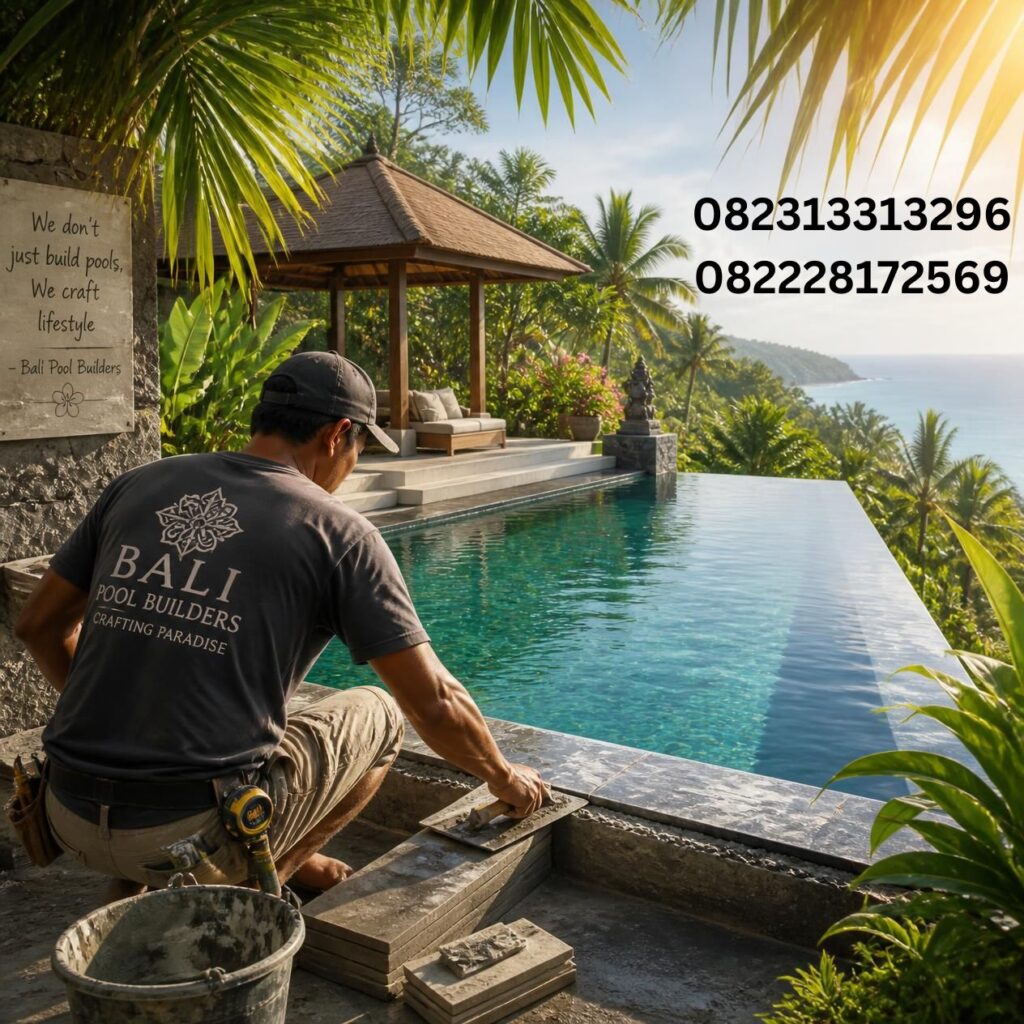
Applying Waterproofing Layers
Different projects may use different waterproofing systems. Therefore, the project team should select products according to structural and finishing requirements.
Workers need to apply each layer according to technical specifications. Additionally, they should observe curing or drying requirements between applications.
The team should inspect the completed waterproofing before covering it. Consequently, potential issues can receive attention before finishing work begins.
Testing Water Retention
Water retention testing can help identify potential leakage issues. Therefore, the team may perform controlled testing before final finishes.
The testing period should follow the project’s technical requirements. Additionally, the team should monitor water levels and surrounding conditions.
If the test reveals a problem, workers should investigate the source. Consequently, repairs can occur before the project reaches final completion.
Hydraulic Systems and Pool Circulation
A swimming pool needs a reliable circulation system to maintain water quality. Therefore, hydraulic planning should begin during the design stage.
The system typically connects the pool, pump, filter, drains, skimmers, returns, and treatment equipment. Consequently, every component needs proper coordination.
Pool Pump Selection
The pump moves water through the circulation system. Therefore, its capacity should match the pool volume and hydraulic design.
Oversized pumps can increase energy consumption. Meanwhile, undersized pumps may struggle to provide adequate circulation.
The team should calculate flow requirements before selecting equipment. Consequently, the system can operate more efficiently.
Filtration System
Filtration removes suspended particles from circulating pool water. Therefore, filter selection should consider pool volume, usage, and circulation requirements.
Different filtration technologies provide different operating characteristics. Consequently, the project team should select equipment based on practical maintenance needs.
The equipment room should also provide sufficient maintenance access. Therefore, designers should avoid placing components where technicians cannot reach them easily.
Skimmers and Main Drains
Skimmers collect surface debris and help direct water toward the filtration system. Meanwhile, drains support circulation and water management.
The number and location of these components depend on pool design. Therefore, hydraulic planning should consider the entire water surface.
Proper positioning helps improve circulation. Additionally, it can reduce stagnant areas within the pool.
Return Jets
Pool Builder Bali – Return jets send filtered water back into the pool. Therefore, their positioning influences overall circulation performance.
The design should distribute returning water across the pool effectively. Consequently, the system can support more consistent water movement.
Electrical Systems for Bali Swimming Pools
Electrical systems support pumps, lighting, controls, heating equipment, and other pool components. Therefore, electrical planning needs close coordination with hydraulic systems.
Wet environments require careful electrical safety considerations. Consequently, the team should follow applicable electrical standards and installation requirements.
Underwater Pool Lighting
Underwater lighting can enhance nighttime pool visibility and atmosphere. Therefore, lighting design should consider both function and visual impact.
The team should position fixtures according to pool geometry. Additionally, designers should coordinate lighting with architectural features.
Lighting systems should use equipment suitable for swimming pool applications. Consequently, the installation can support safer long-term operation.
Pool Equipment Power Supply
Pumps and filtration equipment require suitable electrical capacity. Therefore, the team should calculate connected loads before installation.
Electrical panels should support appropriate protection and control systems. Additionally, equipment locations should allow safe maintenance access.
The team should separate electrical planning from assumptions based solely on pool size. Consequently, the final system can reflect actual equipment requirements.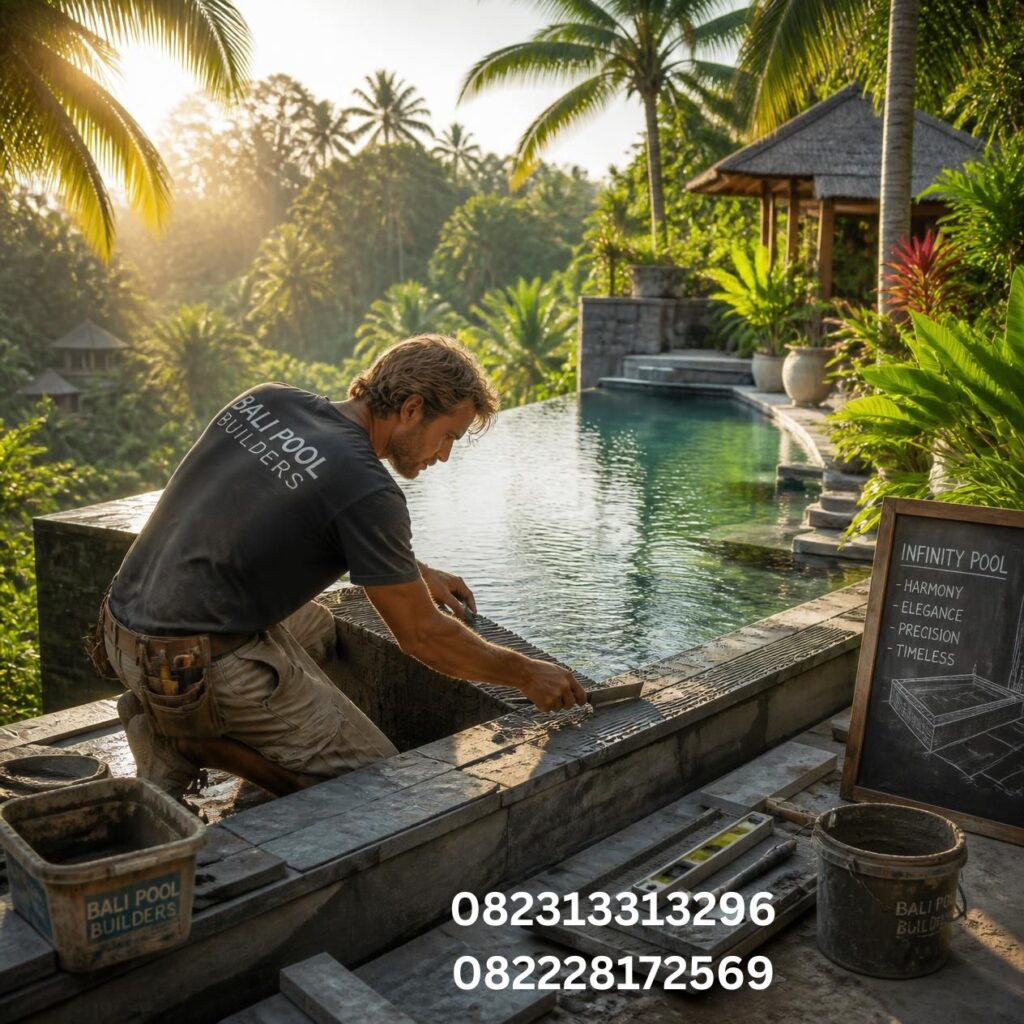
Pool Finishing Options for Bali Projects
Pool finishing affects appearance, waterline detailing, maintenance, and overall design character. Therefore, owners should select finishes alongside architectural planning.
Common options include tiles, natural stone, and specialized pool coatings. Each option provides different visual and maintenance characteristics.
Pool Tiles
Tiles provide extensive design flexibility. Therefore, owners can select colors, textures, patterns, and formats according to the project’s concept.
Small mosaic tiles can support curved surfaces. Meanwhile, larger formats can create a cleaner contemporary appearance.
The installation process requires accurate substrate preparation. Additionally, workers need suitable adhesive and grout systems for pool environments.
Natural Stone Around Pools
Natural stone can create a strong connection with tropical landscapes. Therefore, it often suits outdoor environments when designers select appropriate materials.
However, different stones have different absorption and maintenance characteristics. Consequently, the team should evaluate each material before installation.
Surface texture also matters around wet areas. Therefore, designers should prioritize appropriate traction and maintenance requirements.
Pool Coping
Pool Builder Bali – Pool coping forms the transition between the pool structure and surrounding deck. Therefore, coping requires both functional and aesthetic consideration.
The coping should coordinate with waterproofing and drainage details. Additionally, its edge profile can influence the visual character of the pool.
Infinity Pool Construction in Bali
Infinity pools create a visual connection between water and the surrounding landscape. Therefore, many properties use this concept to emphasize views.
However, infinity systems require additional hydraulic and structural planning. Consequently, the design should address the overflow system from the beginning.
Designing the Overflow Edge
The overflow edge requires accurate level control. Therefore, construction teams need precise surveying and finishing work.
Water flows across the edge into a collection system. Subsequently, the system returns water through filtration equipment.
Any level inconsistency can affect the visual overflow effect. Therefore, builders should control structural and finishing tolerances carefully.
Balancing Tank System
Infinity pools commonly require a balancing tank to manage overflow water. Therefore, designers need to allocate suitable equipment space.
The tank collects water during normal operation and changing water levels. Consequently, the system can maintain the intended overflow effect.
The tank also needs access for inspection and maintenance. Therefore, designers should include service access within the overall layout.
Arova Build as a Professional Pool Construction Solution
Arova Build provides professional construction solutions for property projects. Its business location sits in Surabaya, East Java.
However, Bali projects require site-specific planning regardless of the provider’s business location. Therefore, each project should begin with location assessment and technical coordination.
Arova Build can approach pool construction through integrated planning and construction considerations. Consequently, owners can discuss architectural, structural, hydraulic, and finishing requirements within one project framework.
A Practical Project Approach
Arova Build can start discussions with project requirements and site information. Therefore, owners can explain their preferred pool concept and intended use.
The team can then review dimensions, location, access, and surrounding spaces. Additionally, the discussion can address finishing preferences and equipment requirements.
This approach helps create a clearer project scope. Consequently, owners can evaluate construction requirements before making major decisions.
Coordinating Pool and Building Design
Pool design should connect with the surrounding building. Therefore, the team should coordinate pool levels, terraces, doors, drainage, and landscape.
For villa projects, this coordination can improve indoor-outdoor movement. Additionally, it can strengthen the overall architectural composition.
A coordinated approach also helps reduce construction conflicts. Consequently, different trades can follow a more organized sequence.
Practical Checklist Before Hiring a Pool Builder Bali
Before starting construction, owners should prepare essential project information. Therefore, the initial consultation can focus on practical requirements.
The owner should provide site location, approximate dimensions, preferred pool type, and intended use. Additionally, photographs or site drawings can help the initial discussion.
Pool Planning Checklist
First, determine the pool’s approximate size and depth. Next, establish the preferred location within the property.
Then, identify the desired shape and finishing style. Additionally, determine whether the project requires an infinity edge or water features.
Finally, consider filtration, lighting, drainage, and maintenance access. Consequently, the project discussion can address both appearance and technical requirements.
Budget Planning Checklist
Set a preliminary investment range before finalizing specifications. Therefore, the design team can align recommendations with realistic priorities.
Separate structural, equipment, finishing, and landscape considerations. Additionally, allocate room for site-specific requirements.
Avoid choosing a builder solely from the lowest initial quotation. Consequently, the owner can compare scope, specifications, process, and long-term value.
A professional pool builder in Bali needs to combine design understanding with construction expertise. Therefore, every project should begin with site assessment and clear requirements.
The construction process involves excavation, structural work, waterproofing, plumbing, electrical systems, finishing, and testing. Additionally, landscape integration can strengthen the final result.
Pool design also requires attention to Bali’s tropical climate and local site conditions. Therefore, drainage, material selection, maintenance, and water management deserve early consideration.
Furthermore, project costs depend on dimensions, structure, equipment, finishes, site access, and design complexity. Consequently, owners should evaluate the complete scope instead of relying on generic price assumptions.
Arova Build serves as a professional construction solution provider with its business location in Surabaya, East Java. For Bali projects, the team can develop the approach according to site-specific requirements.
If you are planning a villa, resort, or private swimming pool in Bali, an initial consultation can clarify your options. You can discuss the site, pool concept, dimensions, finishes, and technical requirements first.
With clearer information, you can develop a more practical scope before construction begins. Therefore, an early consultation can help you understand the project without committing to unnecessary decisions.
