Villa Landscaping Bali: Why So Many Gardens Fail by Their Second Wet Season – arovabuild
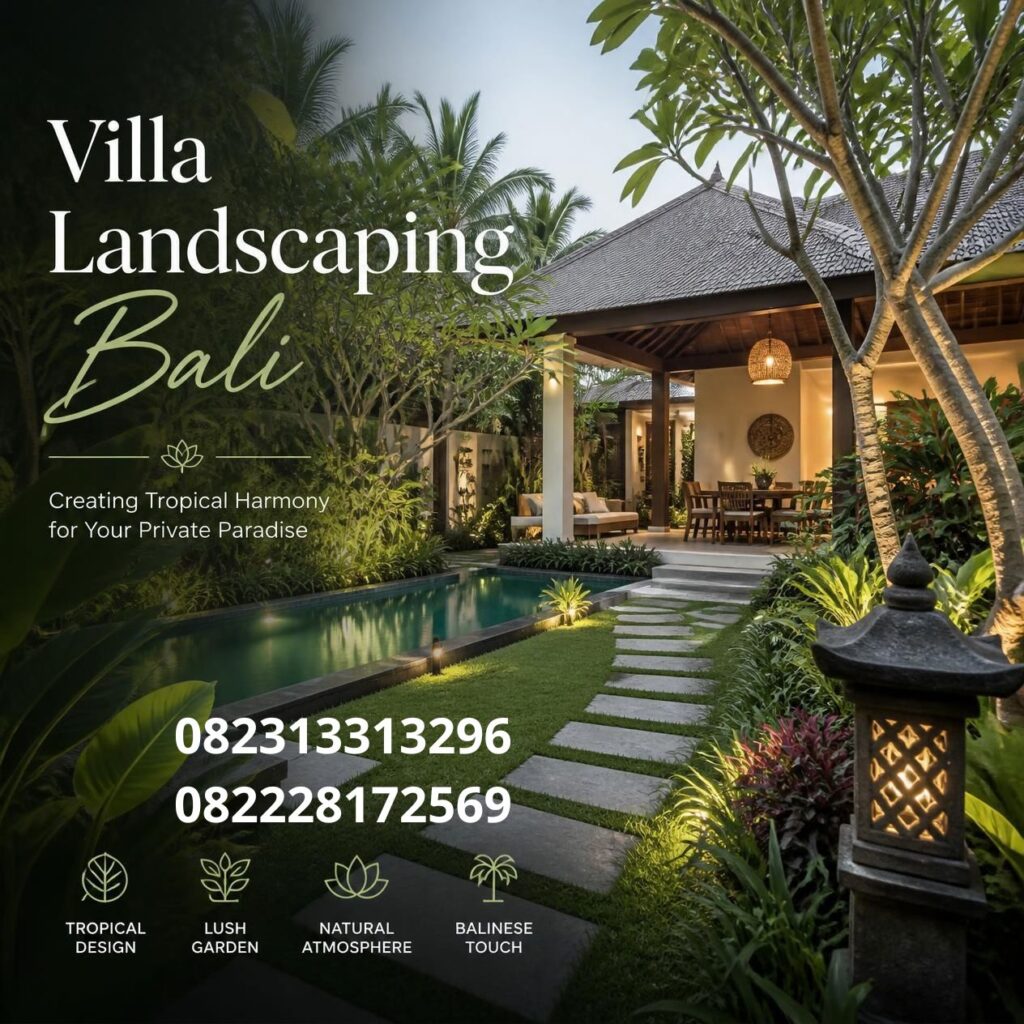
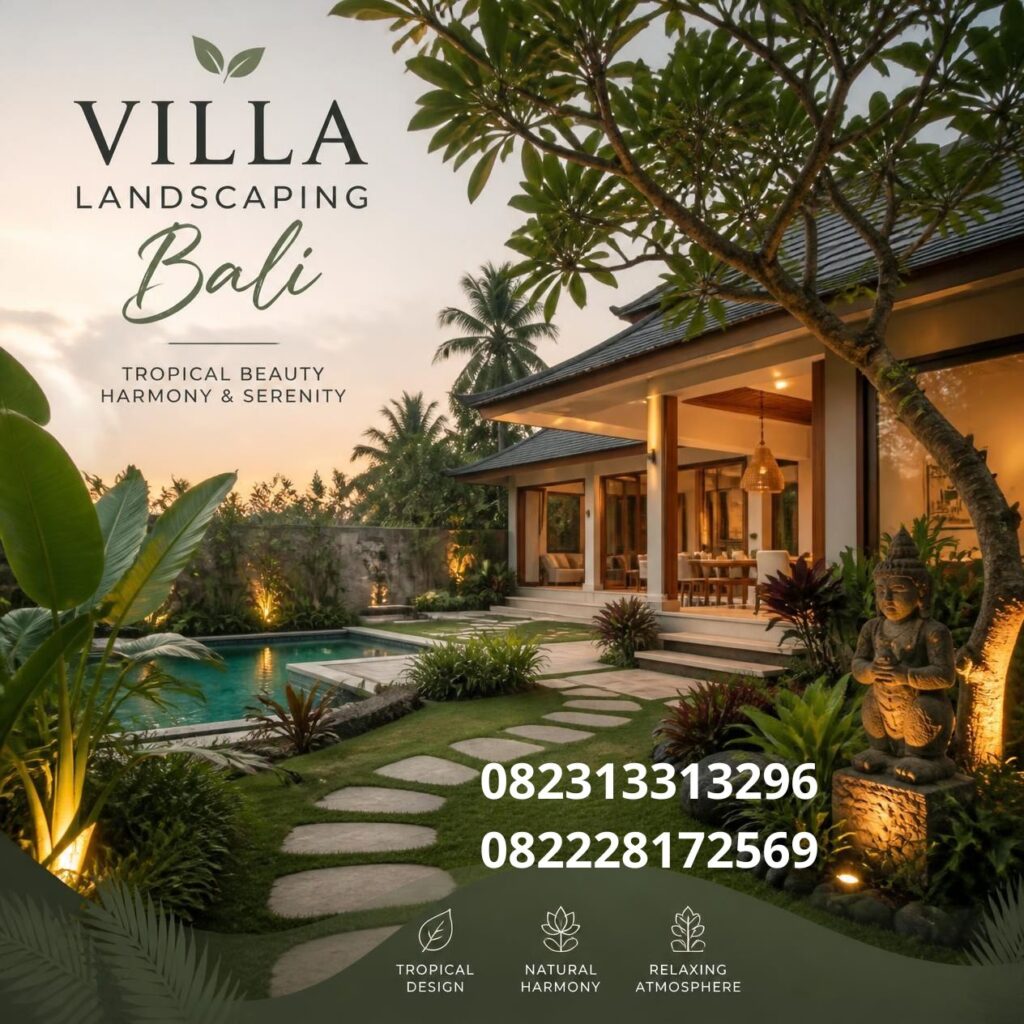
Villa Landscaping Bali – Bali is barely 150 kilometers across, yet a villa on the Bukit peninsula and a villa in the hills above Ubud sit in two different climates. The Bukit is dry, windy, and built on limestone with a thin skin of alkaline soil. Ubud is wetter, shadier, and humid enough to grow moss on a wall in a few months. Canggu and Pererenan are different again: former rice fields with heavy clay, a high water table, and salt in the air.
Most villa landscaping Bali projects ignore this. The garden gets designed from a mood board, planted in a hurry before handover, and photographed while everything is still fresh. Then the weather arrives.
If you are an overseas owner, a developer, or an investor building for the rental market, this guide explains what goes wrong, why, and how to brief a landscape build that still looks good after the photos are taken.
Chat on WhatsApp
Chat on WhatsApp
The Problem: A Garden That Looks Finished at Handover and Tired a Year Later
The pattern is remarkably consistent. Around twelve to eighteen months after completion, owners start reporting the same things:
- Lawn that has thinned into bare patches under trees and along walls
- Standing water after heavy rain, sometimes creeping toward the living pavilion
- Soft stone turning black or green, and pool decks that have become slippery
- Timber decking cupping, splitting, or rotting at the fixings
- Garden lights failing one by one
- Plants that have either died or grown so fast they block the view the villa was built around
For a rental villa, this is more than cosmetic. Guests book on photographs. A garden that no longer matches the listing affects reviews, nightly rates, and occupancy.
What Actually Causes It
Drainage was treated as an afterthought
A tropical downpour can drop an enormous volume of water on a plot in under an hour. If the levels were never properly designed, that water goes wherever gravity takes it. On clay-heavy sites in the Canggu area it simply sits. On sloped Ubud plots it runs, carrying topsoil with it and undermining paths and retaining walls.
Drainage is invisible when done well, which is exactly why it gets cut from budgets.
One planting palette was used for the whole island
The “tropical resort” look of heliconia, gingers, tree ferns, and broad-leafed alocasia thrives in Ubud’s humidity. Put the same plants on an exposed Uluwatu clifftop and they scorch within a season unless someone waters them constantly. The reverse also holds: frangipani and agave that love the dry south can sulk and rot in a shaded, damp valley garden.
Materials were chosen from photos, not from performance
Soft volcanic paras stone carves beautifully and looks authentically Balinese, but it is porous. In wet zones it grows algae quickly and erodes over time. Certain timbers that perform well in temperate climates fail fast under equatorial sun and termite pressure. Pale stone around a pool looks stunning until it becomes either blindingly hot or dangerously slick.
Nobody planned for maintenance
Villa Landscaping Bali – any villa owners live abroad for most of the year. A design that needs skilled weekly pruning, hand-watering, and regular stone sealing will degrade under a general villa staff member with a hose. The garden has to match the maintenance it will realistically receive.
The Fix: Build the Garden in the Right Order
Good villa landscaping is mostly a sequencing discipline. The work that matters most happens before a single plant arrives.
- Read the site. Sun path, prevailing wind, soil type, existing trees worth keeping, where water currently flows, and what the neighbors might build next.
- Set levels and drainage. Falls away from buildings, subsoil drains where the ground holds water, soak pits or channels sized for real storms, and proper outlets.
- Build the hardscape. Retaining walls, paths, decks, pool surrounds, boundary walls, and any water features.
- Run services before finishing. Irrigation lines, lighting conduits, and outdoor power go in while the ground is open. Retrofitting them means cutting into finished work.
- Prepare the soil. Break up compaction left by construction, remove buried rubble, and import suitable topsoil where needed. On limestone sites this step decides everything.
- Plant, then light. Trees first, then shrubs, groundcover, and lawn. Lighting is aimed last, at night, once the plants are in place.
Ideally, planting is timed for the start of the wet season so new roots establish with natural rainfall instead of fighting through the dry months.
read also : https://arovabuild
Matching the garden to the area
| Area type | Typical conditions | What tends to work |
|---|---|---|
| Bukit (Uluwatu, Ungasan, Pecatu) | Dry, windy, shallow alkaline soil over limestone | Frangipani, bougainvillea, agave, pandanus, raised planters with imported soil, drip irrigation |
| Coastal flats (Canggu, Pererenan, Seseh) | Heavy clay, high water table, salt breeze | Subsoil drainage, salt-tolerant palms and coastal shrubs, raised lawn areas |
| Upland and valley (Ubud, Tegallalang, Sidemen) | High rainfall, shade, humidity, slopes | Ferns, gingers, heliconia, erosion-control groundcovers, non-slip dense stone, terracing |
| East and north coast (Amed, Lovina) | Hot, drier, often rocky | Drought-tolerant planting, shade trees, gravel gardens, efficient irrigation |
If you already have a plot and a concept, this is a good moment to have it checked against the site itself. The team at arovabuild.com can review drawings and site photos and tell you where the risks are before anything is built.
Softscape or Hardscape: Where the Budget Should Go
Owners often ask which matters more. The honest answer depends on how the villa will be used.
Softscape-led gardens rely on planting for their effect. They cost less up front, feel lush quickly, and cool the property naturally. The downside is ongoing care. Tropical growth is fast, and a planting-heavy garden needs regular, competent pruning or it turns into a thicket.
Hardscape-led gardens put more of the budget into stone, decking, walls, and water. They cost more to build but hold their shape for years and tolerate lighter maintenance. Done badly, they feel hot and hard, and they reflect glare into the living spaces.
For most rental villas, a hardscape frame with restrained, well-chosen planting is the safer investment. For a private residence with full-time garden staff, a richer planting scheme is realistic.
As a very general guide, softscape-focused work in Bali often falls somewhere around USD 15 to 40 per square meter, while hardscape-heavy schemes with stone paving, walls, lighting, and water features can run from roughly USD 60 to well over USD 150 per square meter. Site access, slope, and material choices move these numbers a lot, so treat them as orientation only and ask for a quote based on your actual plot.
Choosing Materials That Age Well in the Tropics
Stone
Dense volcanic andesite is the workhorse for paths and pool decks. With a flamed or bush-hammered finish it stays grippy when wet and resists algae far better than softer stone. Paras and other soft carving stones are best kept for vertical features and sheltered walls. Pale limestone and sandstone suit dry southern sites but need sealing and regular cleaning in wetter zones.
Decking
Indonesian hardwoods such as ulin (ironwood) and bengkirai handle sun and rain well when properly detailed, with ventilation underneath and stainless fixings. Composite decking offers lower upkeep and consistent color, though it can get hot underfoot in full sun. Neither is wrong. The choice comes down to whether you prefer natural weathering or predictability.
Lawn
Fine-leafed zoysia gives the manicured look but demands full sun. Under trees or beside tall walls it thins out. Broader-leafed shade-tolerant grasses or groundcovers are the realistic choice for those spots. Many failed lawns are simply the right grass in the wrong light.
Lighting and irrigation
Use fittings rated for outdoor wet conditions, low-voltage systems where possible, and accessible junction points. Salt air on the coast corrodes cheap fittings quickly. For irrigation, drip lines in planting beds waste far less water than sprinklers, which matters on the Bukit where water supply is a genuine constraint.
How to Choose a Contractor for Villa Landscaping in Bali
A portfolio of freshly finished gardens tells you little. Ask better questions.
- Can I see a project that is at least two years old? This reveals how the work ages.
- Who designs the drainage, and can I see it on a drawing? A vague answer here is a warning.
- Where do the materials and plants come from? Sourcing affects both quality and schedule.
- What does the maintenance plan look like after handover? A good contractor specifies it in writing.
- How will I be updated if I am overseas? Expect scheduled photo and video reports tied to payment milestones.
- Is the landscape coordinated with the building work? Separate teams working to separate drawings are the root of many drainage and level problems.
That last point is where a Surabaya-based builder has a practical advantage. East Java is one of Indonesia’s main sources of natural stone, timber processing, and nursery stock, with the highland growers around Malang and Batu supplying plants across the region. Materials travel by road and the short ferry crossing from Ketapang to Gilimanuk, reaching most Bali sites within a day or two. Surabaya’s port also makes it straightforward to bring in imported fittings.
arovabuild.com works from Surabaya and approaches the garden as part of the build, not as decoration added at the end. Levels, drainage, structure, and planting are planned together, which is how the expensive mistakes get avoided.
Frequently Asked Questions
How much does villa landscaping in Bali cost?
It varies widely with site conditions and materials. Simple planting-led gardens sit at the lower end, while schemes with extensive stonework, lighting, and water features cost several times more per square meter. A site-based quote is the only reliable figure.
How long does a villa garden take to complete?
For a typical villa plot, construction and planting usually take around four to ten weeks once the building work allows access. Allow a further three to six months for plants to fill in and the garden to look established.
When is the best time to plant?
The beginning of the wet season, generally around November, gives new plants months of natural rainfall. Dry-season planting is possible but needs reliable irrigation from day one.
Which plants are easiest to maintain?
Frangipani, pandanus, bougainvillea, agave, and many native palms tolerate neglect well in sunny, drier sites. In wet, shaded gardens, ferns, philodendrons, and gingers grow easily but need periodic cutting back.
Can I manage a landscaping project from overseas?
Yes, provided the scope, drawings, and payment stages are clear, and your contractor sends regular visual progress reports. Agree on the reporting schedule before work begins.
A Garden That Still Looks Good in Year Five
Successful villa landscaping Bali projects share a few habits. They choose stone, timber, and plants for the specific microclimate, and they are honest about how much care the garden will actually get.
Get those decisions right and the garden becomes an asset that supports your rental rates and your own enjoyment of the property for years. Get them wrong and you pay for the garden twice.
If you are planning a new villa or need to rescue an existing garden, contact arovabuild.com with your plot location, size, and any drawings you have. You will get a clear assessment of what the site needs and a quote built around your property, not a template.