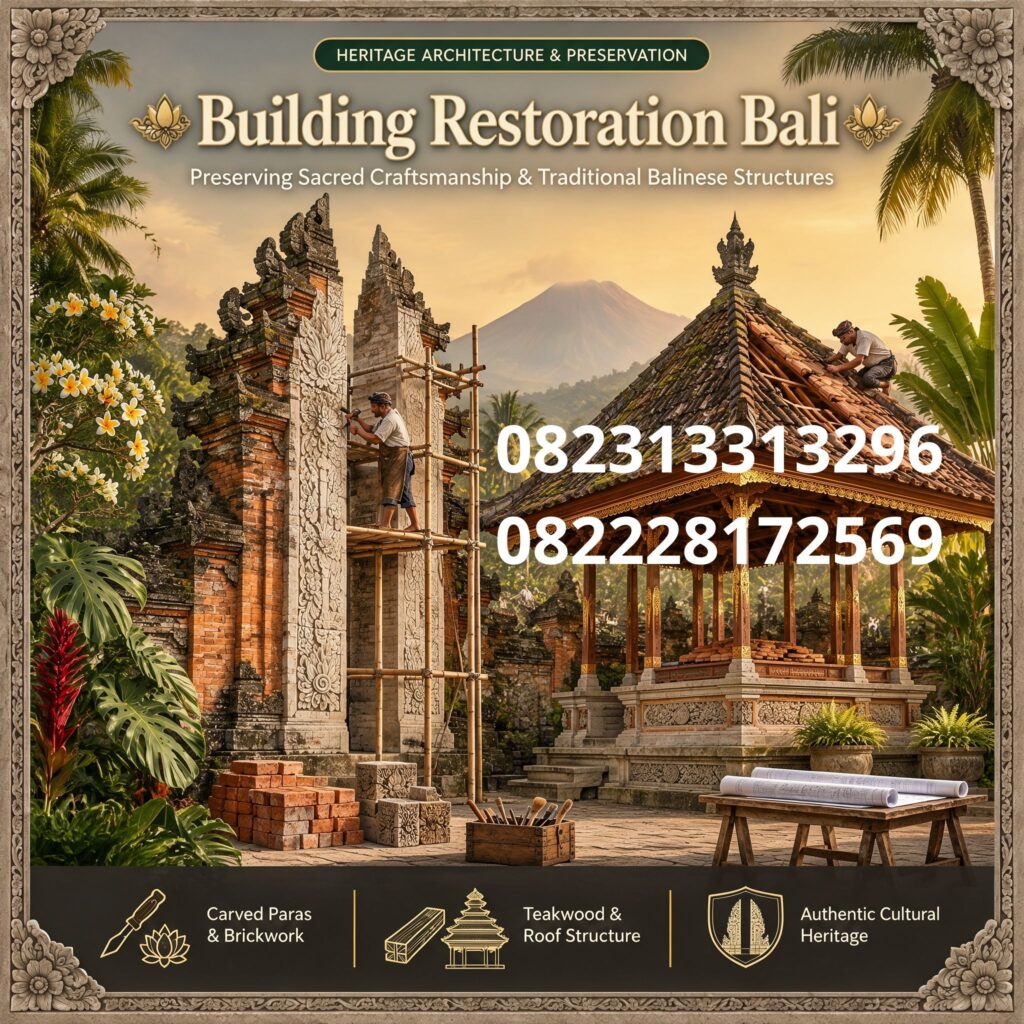
Building Restoration Bali: How to Bring a Tired Property Back Without Losing Its Soul – arovabuild
Building Restoration Bali – Bali gets roughly two seasons, wet and dry, but your building only cares about one thing: moisture. For about half the year, heavy monsoon rain, high humidity, and salty coastal air work on every roof, wall, and timber beam on the island. That’s why a villa built only ten or fifteen years ago can already look decades older. For this reason, building restoration in Bali isn’t really a luxury project. For many owners, it’s the difference between a property that keeps earning and one that slowly loses value.
I’ve walked through plenty of Bali properties with owners who assumed they needed a full rebuild. In most cases, they didn’t. They needed someone to find what was actually failing, fix the cause, and protect the parts that gave the building its character in the first place.
This guide follows that same logic. First we look at the problem, then the causes, then the solutions, and finally how to choose the right team for the job.
Chat on WhatsApp
Chat on WhatsApp
The Quiet Decline: Signs Your Bali Property Needs Restoration
Most buildings don’t fail all at once. Instead, they send small signals for years, and owners who live abroad often miss them because a caretaker or villa manager only reports the obvious issues.
Watch for these early warning signs:
- Dark patches or peeling paint low on the walls, usually within a meter of the floor
- White, powdery deposits on stone or render surfaces
- Doors and windows that stick during the wet season but close fine in the dry months
- Soft spots, tiny holes, or fine dust near timber beams and frames
- Hairline cracks that come back after every repaint
- A musty smell in closed rooms, even after cleaning
- Thatched or shingle roofs that look thin, patchy, or sagging
Any one of these alone may be minor. Together, though, they usually point to a pattern, and patterns are what restoration work should target.
Why “Just Repaint It” Rarely Works
Building Restoration Bali – Here’s the most common mistake I see. An owner notices stained walls, hires someone to repaint, and six months later the stains are back. Meanwhile, the money is gone and the real problem has grown.
Paint covers symptoms. It doesn’t stop water. So if moisture is rising from the ground or leaking through a roof joint, fresh paint simply traps it inside the wall, which often makes things worse.
What Actually Damages Buildings in Bali
Understanding the cause matters more than anything else, because the right fix depends entirely on it. Bali’s environment creates a fairly specific set of threats.
Rising Damp and Poor Drainage
Many older Balinese buildings, and quite a few newer ones, sit on foundations without a proper damp-proof layer. As a result, groundwater moves up through brick and stone like a sponge. Add rice-field areas with high water tables, such as parts of Ubud, Tabanan, and Canggu, and the problem becomes constant.
Poor site drainage adds to it. When rainwater pools against walls during the monsoon, it keeps feeding moisture into the structure for months.
Salt Air on the Coast
Properties near the sea in areas like Seminyak, Sanur, Jimbaran, and Nusa Dua face another enemy. Salt carried by sea breezes settles on surfaces, soaks into porous materials, and then crystallizes as it dries. Over time, this breaks down render, corrodes steel reinforcement, and causes concrete to crack and flake. Eventually, rusting rebar expands inside concrete columns and pushes the surface apart.
read also : https://arovabuild
Termites and Timber Rot
Bali’s beautiful timber architecture comes with a price. Termites thrive in warm, humid climates, and untreated or poorly treated wood is an easy meal. Similarly, timber that stays damp for long periods begins to rot from the inside, often without visible signs until a beam gives way.
Traditional Roofs Reaching the End of Their Life
Alang-alang thatch, bamboo, and wooden shingles look wonderful, but they’re natural materials with a limited lifespan. In addition, many were installed with too shallow a pitch, which lets rain sit on the surface rather than run off. Once the roof starts leaking, every material underneath it begins to suffer.
Soft Volcanic Stone
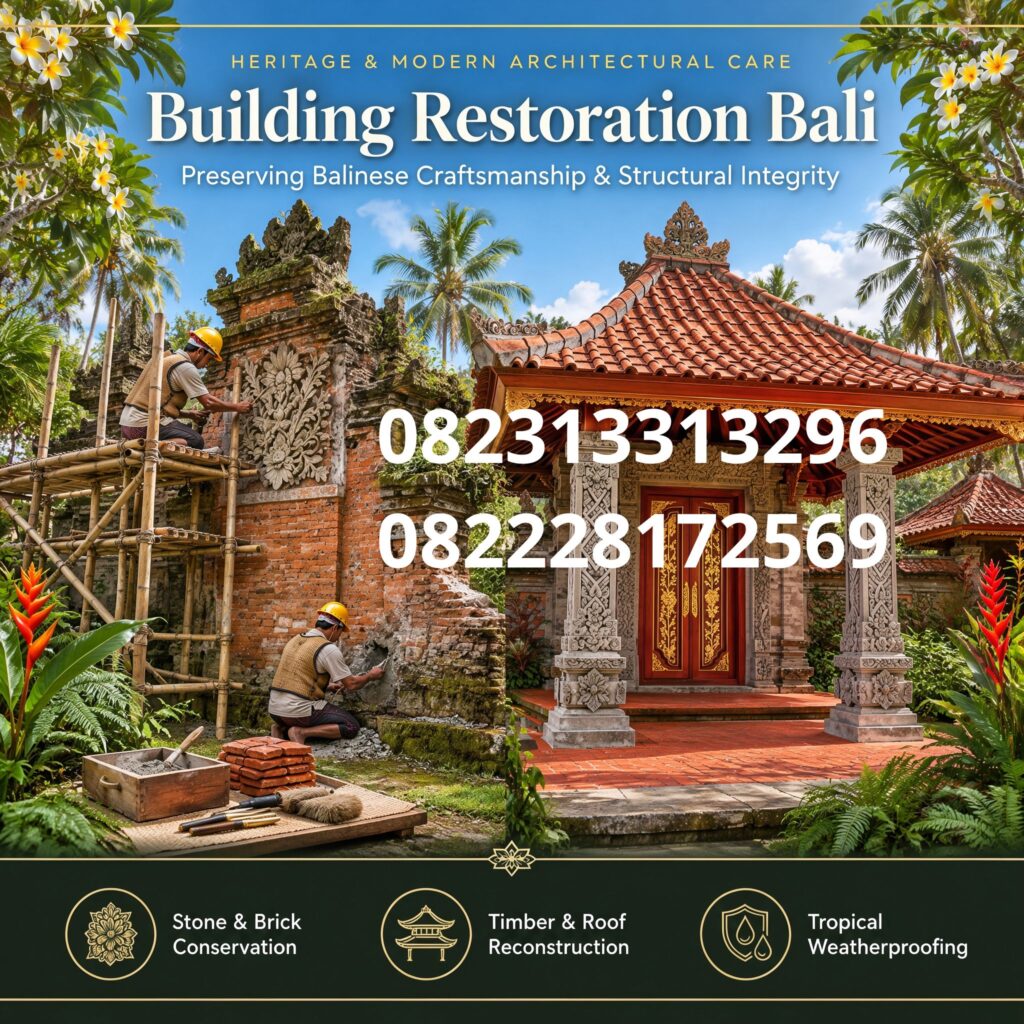
Paras, the soft carved stone you see on temples and villa facades across Bali, is easy to shape and gorgeous when new. However, it’s also porous and absorbs water readily. Without proper sealing, moss, algae, and salt crystallization slowly erode the carved details.
The Restoration Approach That Actually Lasts
Good restoration follows a simple principle: fix the cause, repair the damage, then protect the result. Skip any step and you’ll pay again later.
Step One: A Proper Condition Survey
Before any work starts, a qualified team should inspect the whole building, not just the visible problem. That means checking moisture levels in walls, tapping timber to find hollow sections, examining the roof structure from inside, and reviewing drainage around the site.
A good survey gives you a priority list. Consequently, you can decide what must happen now, what can wait a season, and what simply needs maintenance.
Step Two: Treat the Source of Moisture
This is the unglamorous part, but it’s the most important. Depending on the building, it may involve:
- Injecting a chemical damp-proof course into the base of walls
- Regrading the ground so water flows away from the building
- Adding or repairing gutters, downpipes, and drainage channels
- Replacing cement-based render with breathable lime-based render on older walls, so trapped moisture can escape
Step Three: Structural and Material Repairs
Once moisture is under control, repairs can begin. Cracked concrete gets cleaned back to sound material, corroded rebar gets treated or replaced, and the section gets rebuilt with suitable repair mortar. Damaged timber gets assessed piece by piece. Sometimes a beam only needs a spliced repair at the rotten end rather than a full replacement, which saves both money and original material.
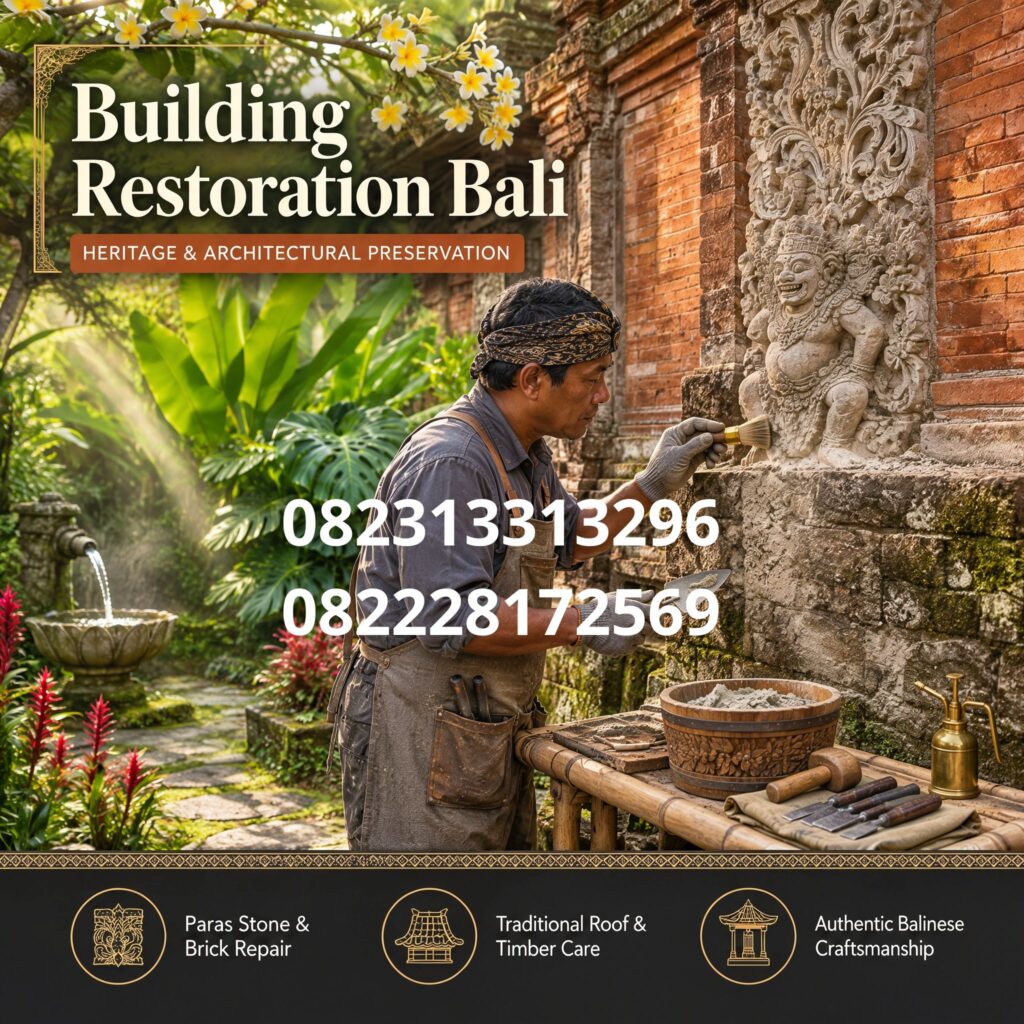
For carved stone and decorative elements, the goal is to preserve as much as possible. Skilled craftsmen can often repair or recreate damaged sections so they match the original carving.
Step Four: Protection for the Next Decade
Finally, the building needs protection. Typically, that includes termite treatment for the soil and timber, breathable sealers for stone, appropriate exterior coatings for coastal exposure, and roof details that shed water properly.
If you’re unsure where your own property falls on this scale, a site assessment from arovabuild.com can give you a clear picture before you commit to a budget.
Restoration, Renovation, or Rebuild? Choosing the Right Path
Owners often use these words interchangeably, yet they lead to very different projects and costs. Here’s how they compare:
| Approach | What It Involves | Best For | Main Trade-Off |
|---|---|---|---|
| Restoration | Repairing and preserving existing structure, materials, and character | Traditional or character properties with a sound core | Requires skilled craftsmen and careful planning |
| Renovation | Updating layout, finishes, and systems, often replacing old elements | Properties that work structurally but feel outdated | Can erase original character if not handled carefully |
| Partial rebuild | Replacing specific failed sections, such as a roof or a wing | Buildings with localized serious damage | Matching new work to old can be tricky |
| Full rebuild | Demolishing and starting again | Structurally unsafe buildings beyond economic repair | Highest cost, longest timeline, loses all original value |
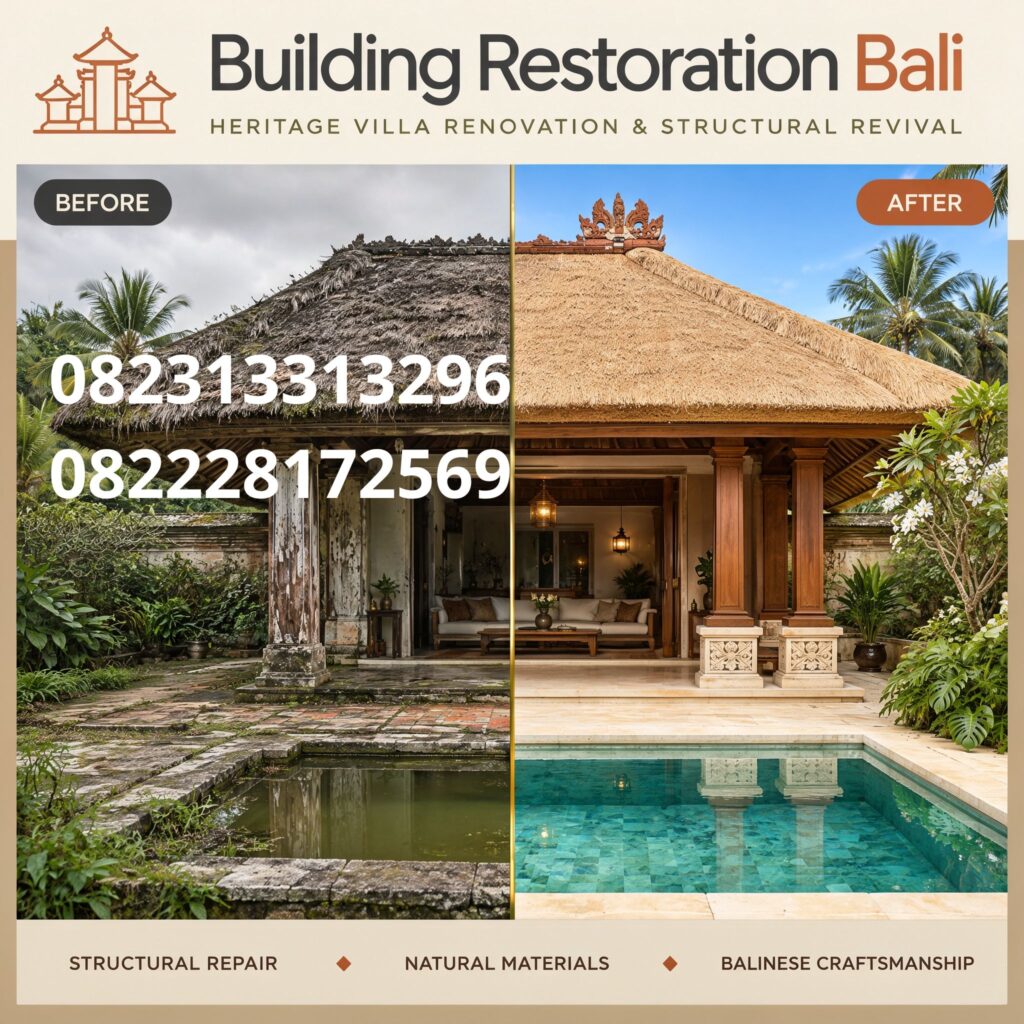
In my experience, the best projects often combine approaches. For example, you might restore the main joglo-style living pavilion, renovate the bathrooms, and rebuild a badly damaged staff quarters. Mixing methods like this usually delivers the best value.
What Does Building Restoration in Bali Cost?
Honestly, there’s no single number, and anyone who quotes a price without seeing the building is guessing. Cost depends on the size of the property, the extent of the damage, the materials involved, access to the site, and how much specialist craftsmanship the job requires.
As a rough guide, though, small targeted repairs like damp treatment for a few walls or a section of roof can sit in the low tens of millions of rupiah. A full restoration of a mid-sized villa, by contrast, can run into the hundreds of millions or more, especially when it includes roof replacement and timber work.
Here are a few factors that push costs up:
- Hidden damage found once walls or ceilings are opened
- Remote or hillside sites with difficult access for materials
- Specialist materials like reclaimed hardwood or hand-carved stone
- Tight deadlines, for instance restoring before high rental season
Meanwhile, a few things bring costs down. Catching problems early, planning work in the dry season, and keeping as much original material as possible all help. That’s why a proper survey usually pays for itself.
Timing Matters More Than You Think
Bali’s dry season, roughly from April to October, is the ideal window for most exterior and roof work. Render cures properly, timber treatments soak in, and crews lose fewer days to rain. Interior work, on the other hand, can usually continue year-round. If you own a rental villa, scheduling around peak tourist months also protects your income.
How to Choose a Building Restoration Team in Bali
This is where many owners, especially those living overseas, feel most uncertain. You can’t stand on site every day, so you need a team you can trust to do the work properly and report back honestly.
Ask these questions before signing anything:
Do they start with a survey or a price? A team that quotes before inspecting is guessing. Look for one that wants to understand the cause first.
Can they explain the cause in plain language? If they can’t tell you why the damage happened, they probably can’t stop it from happening again.
How do they handle traditional materials? Restoration needs people who understand lime render, paras stone, hardwood joinery, and traditional roofing. General builders don’t always have that skill.
What does reporting look like? For overseas owners especially, regular photo and video updates make a huge difference. Ask how often you’ll hear from them and in what format.
Is the scope written clearly? A detailed scope of work protects both sides. It should list what’s included, what isn’t, and how they’ll handle surprises.
How do they source materials? Bali’s construction market sometimes faces material shortages and price swings. A team with supply lines from Java can often keep projects moving when local stock runs short.
That last point is one reason property owners work with arovabuild.com. Operating from Surabaya, the team has direct access to East Java’s large building-material market, and Bali sits just across the Bali Strait. That combination helps with sourcing, planning, and keeping projects on schedule.
Red Flags to Avoid
On the flip side, be cautious of anyone who promises a fixed price for unknown damage, pushes full demolition without a clear reason, or skips moisture treatment and goes straight to cosmetic finishes. Likewise, a team that can’t show you previous restoration work in progress may not have the experience your building needs.
Frequently Asked Questions About Building Restoration in Bali
How long does a villa restoration in Bali usually take?
Small repairs can take a few weeks. A full restoration of a medium-sized villa typically takes a few months, depending on damage, material availability, and weather.
Can I restore my property while I live overseas?
Yes. Many owners manage restoration remotely through clear contracts, regular photo and video updates, and scheduled video calls with the project team.
Is it worth restoring an old traditional Balinese building?
In most cases, yes, if the core structure is sound. Restored traditional buildings often hold more value and appeal to guests than generic new construction.
Do I need a permit for building restoration in Bali?
It depends on the scope. Cosmetic repairs usually don’t require one, but structural changes or extensions may need approval. A local contractor can guide you through the requirements.
What’s the best time of year to restore a building in Bali?
The dry season, roughly April to October, works best for roofs, exterior walls, and anything that needs to cure or dry properly.
How do I stop the damage from coming back after restoration?
Fix the moisture source, use breathable and climate-appropriate materials, treat for termites, and schedule an inspection at least once a year.
Giving Your Bali Property a Second Life
Bali’s climate is hard on buildings, but most damage follows a predictable path. Moisture gets in, materials weaken, and small problems grow into expensive ones when nobody treats the cause. Good building restoration in Bali breaks that cycle. It starts with an honest survey, deals with water first, repairs what’s worth saving, and protects the building for years to come.
The payoff goes beyond looks. A well-restored property keeps its character, holds its value, and gives guests or family a place that feels genuinely Balinese rather than patched together.
If your villa, home, or commercial building is showing its age, the smartest first step is a clear assessment. Contact arovabuild.com to discuss your property, get an honest look at its condition, and receive a quote that matches the work it actually needs.