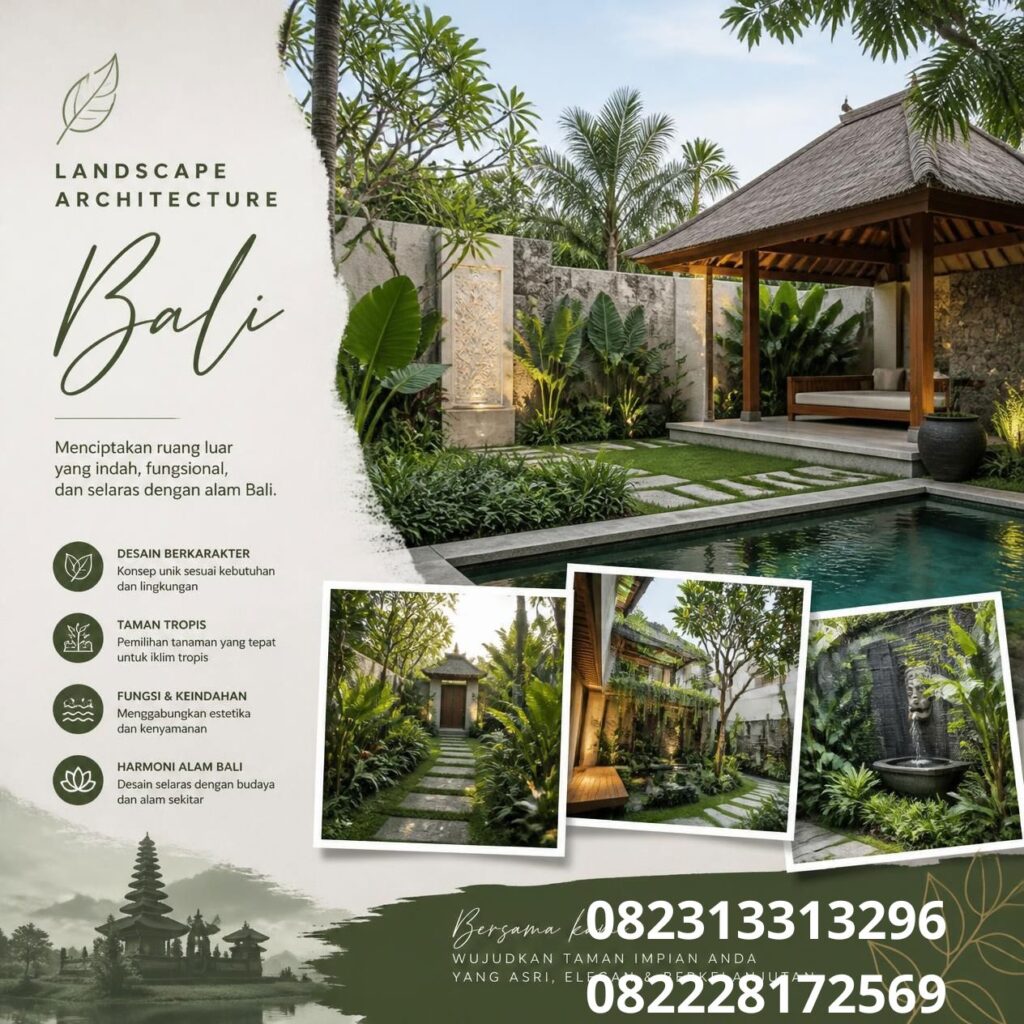
Landscape Architecture Bali: Why Beautiful Gardens Fail and What Lasts – arovabuild
Landscape Architecture Bali – The most common mistake I see on villa and resort projects is simple: the garden gets designed last. The building is drawn, the pool is positioned, the budget is nearly spent, and only then does someone ask what to do with the leftover ground. In landscape architecture Bali projects, that order of operations is expensive. The island’s rain, slopes, and salt air punish any outdoor space that was treated as decoration instead of as part of the structure.
If you are an overseas owner, developer, or hospitality operator planning a build here, this is the part of the project where early decisions save the most money later.

Chat on WhatsApp
Chat on WhatsApp
The Mistake That Costs Villa Owners Twice
A typical story goes like this. An investor buys a sloping plot with a rice field view. The villa goes up, and it looks superb in the handover photos. Then the first wet season arrives. Water sheets off the roof and the driveway, runs across the lawn, and collects against the lowest wall. The retaining wall starts to lean, the lawn turns to mud, and the timber deck goes green and slippery.
The owner then pays a second time. First for the garden that failed, then for the excavation, drainage, and replanting that should have been there from the start. Retrofitting drains under a finished garden usually costs far more than installing them during earthworks, because everything on top has to come out first.
None of this is bad luck. It is predictable.
What Bali’s Climate and Ground Actually Do to a Garden
Months of serious rain, then months of almost none
Landscape Architecture Bali – Bali’s wet season generally runs from around November to March, and tropical downpours can drop a great deal of water in under an hour. The dry season that follows can leave parts of the island parched for weeks. A landscape here has to move large volumes of water quickly, then keep plants alive with very little. Designing for only one of those conditions is how gardens fail.

Three different islands under your feet
Soil varies sharply across short distances, and this is where many imported design ideas go wrong.
- The Bukit Peninsula (Uluwatu, Ungasan, Jimbaran): limestone with thin topsoil. It drains fast, holds little moisture, and is hard to excavate. Planting pits often need imported soil.
- Ubud and the central uplands: deep volcanic soil, fertile and soft, with steep ravines. Things grow fast, but slopes move if they are cut carelessly.
- The coastal belt (Canggu, Seminyak, Sanur): sandy or former paddy land, often with a high water table. Soakaways can stop working when the ground is already saturated.
A planting plan that thrives in Ubud can die within a season on the Bukit.
Salt, sun, and wind on the coast
Within a few hundred meters of the sea, salt spray burns soft-leaved plants and corrodes ordinary steel fixings, light fittings, and irrigation parts. Strong UV fades and cracks unprotected timber. These are slow failures, which makes them easy to ignore at design stage and costly five years in.
What Landscape Architecture Bali Projects Need Before Any Planting
Good landscape work on the island follows a clear order: shape the ground, manage the water, build the hard elements, then plant.
Water first, plants second
Before choosing a single palm, a competent designer maps where water arrives, where it travels, and where it leaves. In practice that means:
- Grading the site so water flows away from buildings and pool edges
- Subsurface drains behind every retaining wall, with weep holes that actually discharge somewhere
- Swales, gravel trenches, or retention areas sized for peak storms
- Permeable paving for driveways and paths so runoff is slowed at the source
- Rainwater storage for dry-season irrigation, where the site allows it
If your land borders working rice fields, there is an extra consideration. Bali’s traditional subak irrigation channels are shared community infrastructure, and blocking or redirecting them causes real problems with neighbors. A good design keeps those channels flowing and treats them as a feature.
Materials that age well in the tropics
Material choice decides how much maintenance you inherit. Here is an honest comparison of common options.

| Material | Strengths | Weaknesses | Best use |
|---|---|---|---|
| Andesite stone | Hard, low water absorption, good grip when flamed | Heavy, gets hot in full sun | Driveways, steps, pool surrounds |
| Lava stone | Very good slip resistance, natural look | Porous, darkens and collects dirt | Paths, feature walls, wet areas |
| Soft paras stone | Classic Balinese character, easy to carve | Erodes, grows moss quickly | Carved panels under cover, low-wear walls |
| Ironwood (ulin) | Extremely durable outdoors, even in wet areas | Costly, heavy, silvers with age | Decks, jetties, boardwalks |
| Bengkirai hardwood | More affordable, strong | Needs regular oiling, can crack | Covered decks, pergolas |
| Washed pebble or exposed aggregate | Affordable, grippy, easy to repair | Looks plain if poorly detailed | Service paths, parking |
One practical tip: ask to see any stone wet before approving it. Colors shift and some finishes become dangerously slick, and in Bali your paving will be wet for a third of the year.
read also : https://arovabuild
Planting that suits the site
The goal is a garden that looks full after the gardeners go home. On the coast, salt-tolerant species such as frangipani, pandanus, coconut palm, and sea hibiscus cope well. In the humid uplands, heliconia, gingers, ferns, and alocasia give that dense jungle character with little effort. On the dry limestone of the Bukit, bougainvillea, agave, and other drought-tolerant plants save a great deal of irrigation water.
Fast growth cuts both ways. Bamboo and some palms can outgrow their space within two or three years, and aggressive roots lift paving and crack pool shells. Mature size matters more than how a plant looks on planting day.
Designing with Balinese culture
Balinese design tradition values balance between people, nature, and the spiritual. In practical terms, many properties include a small shrine area, staff and community ceremonies may need space, and local regulations and village customs can affect building heights, setbacks, and river or cliff edges. A design that respects this from the beginning moves through approvals and neighborhood relations far more smoothly than one that has to be corrected afterwards.
If you would like a second opinion on a site plan or concept before construction starts, arovabuild.com can review it and point out where water, slope, or material choices may cause trouble.
Why a Surabaya-Based Team Makes Sense for a Bali Project
Overseas clients are sometimes surprised to work with a design and build team located in Surabaya, in East Java, on a Bali project. The logic is mostly about supply.
Surabaya is one of Indonesia’s largest commercial and port cities, and much of the stone, timber, steel, lighting, and irrigation equipment used on Bali construction sites passes through East Java anyway. The province is also home to natural stone producers and large highland plant nurseries. Sourcing close to the origin gives better selection and more control over quality before anything is loaded.
Transport is routine. Trucks run overland through East Java to the ferry crossing at the island’s western tip, then on to the south, and a load can usually reach site within a day or two. A team that manages this route regularly knows how to schedule around ferry delays, wet-season road conditions, and Balinese holidays. Nyepi, the annual day of silence, shuts down the whole island including ports and the airport, and major ceremony periods reduce labor availability. Project schedules that ignore the Balinese calendar slip.
For an international buyer, a Surabaya base also means one point of contact for design, procurement, and construction instead of three separate contracts to coordinate from abroad.
How to Choose a Landscape Architect for Your Bali Property
Portfolios all look good. These questions tell you more.
- When do you want to be involved? The right answer is before the building footprint is fixed.
- Can I see a grading and drainage plan, not only a planting plan? If drainage is not drawn, it is not designed.
- How does this design perform in January? Ask them to walk you through a heavy storm on your site.
- What will maintenance cost each month? A serious designer can estimate staff hours, water use, and replacement cycles.
- Who builds it? Design-only firms hand over drawings. Design and build teams stay accountable for the result.
- Can I see a project that is at least three years old? New gardens flatter everyone. Older ones show the truth.
Be cautious with anyone who offers a full concept without visiting the site or asking for a topographic survey. Levels drive everything.
What It Costs and How Long It Takes
Costs vary widely with slope, access, and material grade, so treat any figure as a rough guide. Many villa projects set aside somewhere around 5 to 15 percent of the total construction budget for landscape, with steep sites and resort-level finishes sitting at the higher end. Retaining walls and drainage often take a larger share than owners expect, while planting itself is comparatively affordable in Indonesia.
On timing, design for a private villa usually takes several weeks to a couple of months, and construction a few months more. Earthworks are best done in the dry season. Planting does well at the start of the rains, when new roots establish with less irrigation.
For an exact figure, you will need a site survey and a defined scope. Get in touch for a quote based on your actual plot.
Frequently Asked Questions
What does a landscape architect do on a Bali villa project?
They plan everything outside the building walls: levels, drainage, retaining structures, paving, pools and water features, lighting, irrigation, and planting. On sloping or coastal sites, their work protects the building as much as it frames it.

When is the best time to start landscape design in Bali?
At the same time as the architectural design. Early coordination lets the building, pool, and garden share one drainage and levels strategy, which avoids costly rework.
Which plants are low maintenance in Bali’s climate?
Frangipani, pandanus, and coconut palms suit the coast. Heliconia, gingers, and ferns suit humid inland areas. Bougainvillea and agave handle the dry southern limestone. The right choice depends on your exact location.
Can a foreign owner manage a landscape project in Bali remotely?
Yes, provided there is a single accountable team, clear drawings, a fixed scope, and regular photo or video reporting. Remote projects fail when responsibility is split across many small contractors.
How do I stop my garden flooding in the wet season?
Correct site grading, drains behind retaining walls, permeable surfaces, and outlets sized for peak storms. Plants alone will not solve a drainage problem.
Is a tropical garden expensive to maintain?
It depends on the design. Large lawns, clipped hedges, and thirsty species cost the most. Dense native-style planting with good mulch and efficient irrigation costs far less over time.
Build the Garden the Island Will Let You Keep
Bali rewards outdoor spaces that work with its conditions and quietly dismantles those that fight them. Start early, solve water and slope before aesthetics, choose materials for how they look in year five, and plant for the specific soil and exposure of your site. Work with a team that can explain how your garden behaves in a storm, and that stays responsible through construction.
If you are planning a villa, resort, or commercial property and want landscape architecture Bali conditions will not undo, contact arovabuild.com with your site details and plans. An early conversation costs little and can protect the entire investment.