Outdoor Landscaping Bali: Why So Many Villa Gardens Fail by Year Two, and How to Build One That Doesn’t – arovabuild
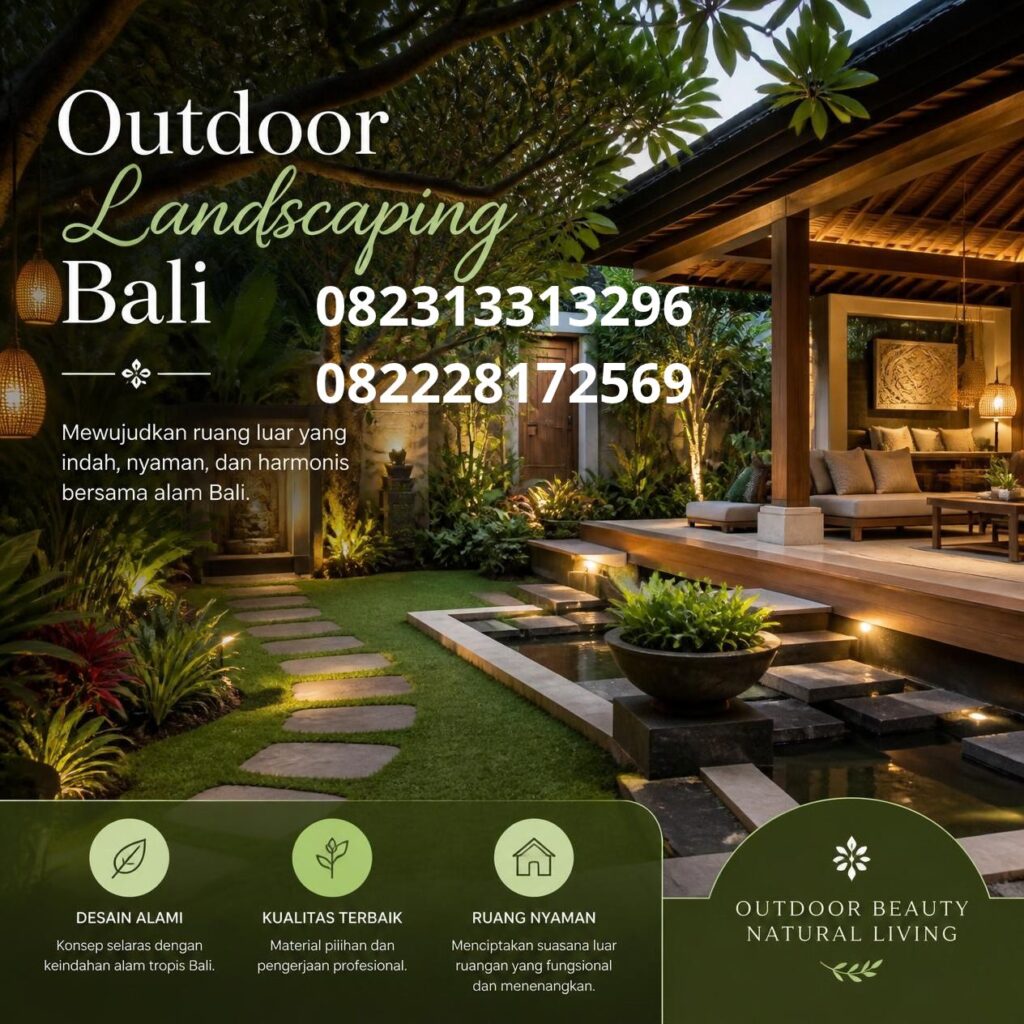
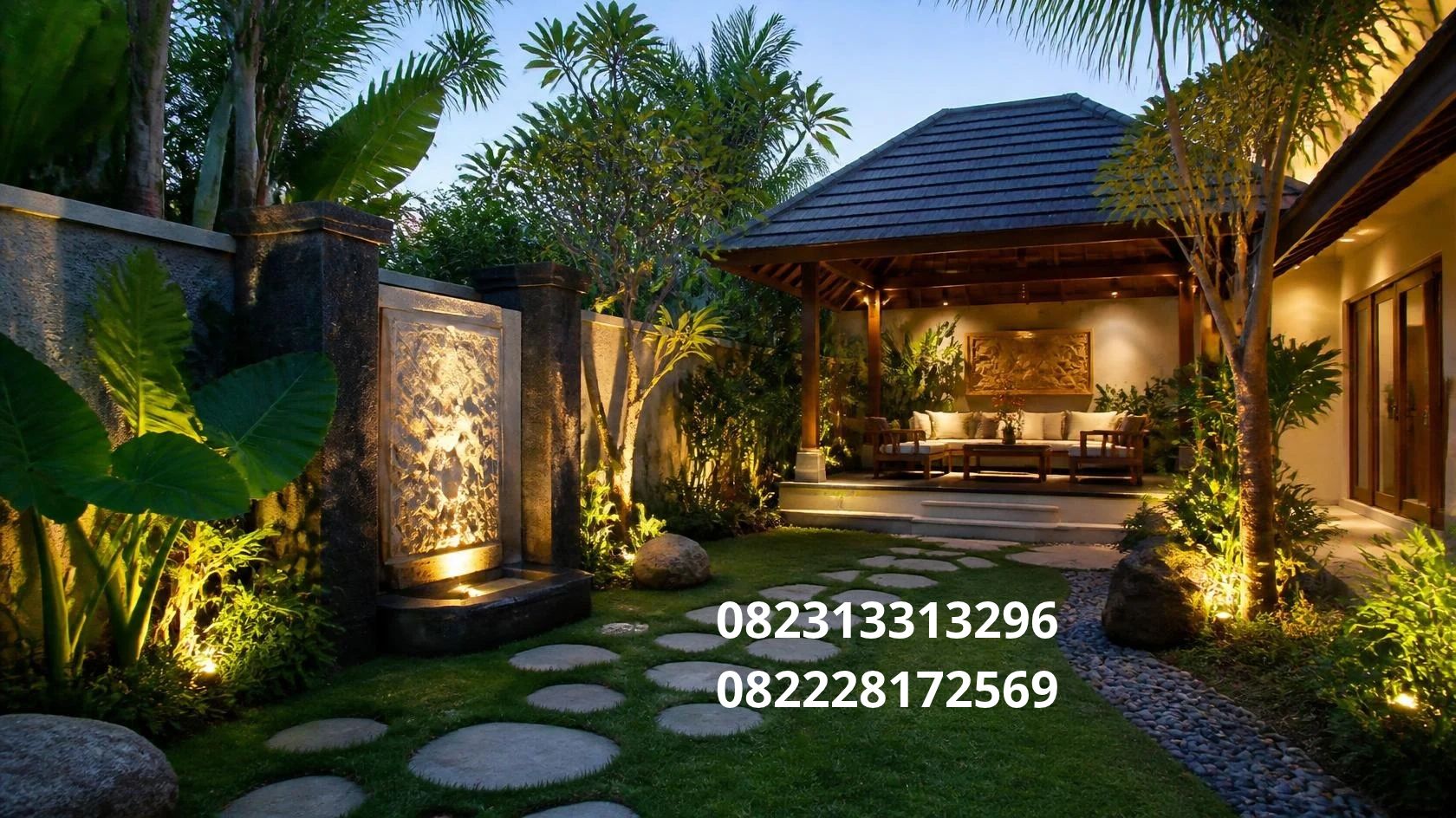
Outdoor Landscaping Bali – The most expensive mistake in Bali villa projects happens before a single plant goes in the ground. An owner falls for a photo of a lush tropical garden, hands it to a contractor, and asks for the same thing. Twelve months later the lawn is patchy, the stone path is slick with algae, the timber deck has gone grey and splintery, and water pools against the villa wall every time it rains.
The photo was never the problem. Outdoor landscaping Bali projects go wrong because the design was copied from a picture instead of being built for the site. A garden in the hills of Ubud and a garden on the cliffs of Uluwatu sit on the same island, yet they need almost opposite solutions.
If you are an overseas owner, investor, or developer planning a villa, resort, or rental property, this guide covers what goes wrong, why, and how to brief a builder so your garden still looks good after several wet seasons.
Chat on WhatsApp
Chat on WhatsApp
The Three Problems That Show Up After Handover
Water with nowhere to go
Bali’s wet season, roughly November through March, delivers rain in short, violent bursts. A garden that looks perfectly level in August can turn into a shallow pond in January. When the landscaping is graded toward the building, or when paved areas have no fall, water sits against foundations, seeps under decking, and drowns plant roots.
Surfaces that turn dangerous
Humidity and shade are an open invitation to moss and algae. Smooth stone around a pool or along a shaded path becomes a slip hazard within one season. For a rental villa this is more than cosmetic, because guests walk barefoot and wet.
Plants in the wrong place
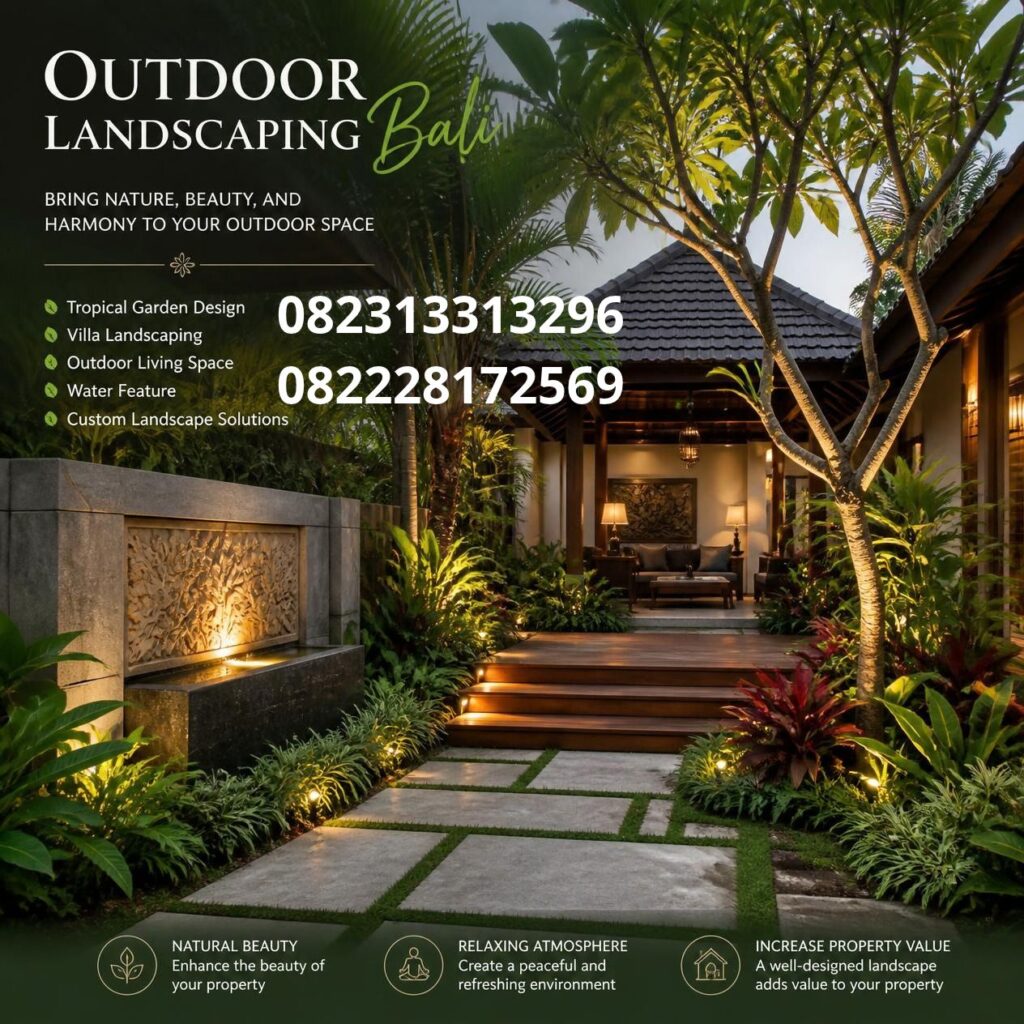
Outdoor Landscaping Bali – Imported or mismatched species struggle. Shade lovers get scorched in full coastal sun, thirsty tropical foliage wilts on dry limestone ground, and fast growers swallow the view the villa was built to frame. Replacing mature plants costs far more than choosing correctly the first time.
What Causes These Failures
Most trace back to one of four causes.
Bali has several microclimates. Ubud and the central highlands are cooler, wetter, and humid most of the year. Canggu, Seminyak, and Sanur are hot and exposed to salt air. The Bukit Peninsula, including Uluwatu and Jimbaran, sits on limestone with thin soil and long dry spells. A plant list or material palette that thrives in one zone can fail in another.
The budget goes to what you can see. Drainage pipes, sub-base compaction, and soil preparation never appear in listing photos, so they are the first items trimmed. They are also what determines whether everything on top survives.
Materials are picked for looks alone. Soft carved stone is beautiful on a wall and a poor choice underfoot. Some timbers handle tropical weather for decades, and others rot in a few years without constant oiling.
Nobody plans for maintenance. Many owners live abroad and visit a few weeks a year. A garden that needs daily attention from a skilled gardener will decline quickly under a general villa staff member with a hose.
Outdoor Landscaping Bali Done Properly: Build From the Ground Up
Good tropical landscape construction follows a sequence. Skipping ahead is where money gets wasted.
Start with levels and drainage
Before any design work on planting, have the site surveyed for levels. Paved surfaces should fall away from buildings. Lawns and garden beds need subsoil drains or gravel soakaways sized for heavy tropical downpours, not gentle showers. On sloped sites, common around Ubud’s river valleys, retaining walls need weep holes and drainage behind them, or water pressure will eventually push them over.
One practical tip: ask your builder where the water goes during the heaviest hour of rain. If the answer is vague, the plan is not finished.
Choose hardscape materials for grip and weather
Indonesia has excellent natural stone, and much of it is quarried in Java. The right choice depends on where it sits and how it will be used.
| Material | Best use | Strengths | Watch out for |
|---|---|---|---|
| Andesite (grey volcanic stone) | Paths, driveways, pool surrounds | Hard, dense, good grip with a flamed or rough finish | Dark tones get hot in full sun |
| Lava stone | Steps, feature walls, wet areas | Naturally porous and textured, very slip resistant | Holds dirt, needs periodic pressure washing |
| Paras and other soft sandstone | Carved panels, wall cladding | Carves beautifully, classic Balinese look | Erodes and grows moss quickly, poor for flooring |
| Limestone | Walls, paving in dry coastal zones | Light color stays cool, suits coastal design | Stains easily, can be slippery when polished |
| Green pool stone | Pool lining | Gives water the deep green tropical tone | Needs correct sealing and skilled installation |
| River pebbles | Borders, drainage strips, outdoor showers | Cheap, drains well, softens hard edges | Loose pebbles migrate without edging |
For decking and pergolas, dense tropical hardwoods such as ironwood and bengkirai handle sun and rain far better than softer species. Teak performs well but costs more. Composite decking is an option for owners who want lower upkeep, though it runs hot under bare feet.
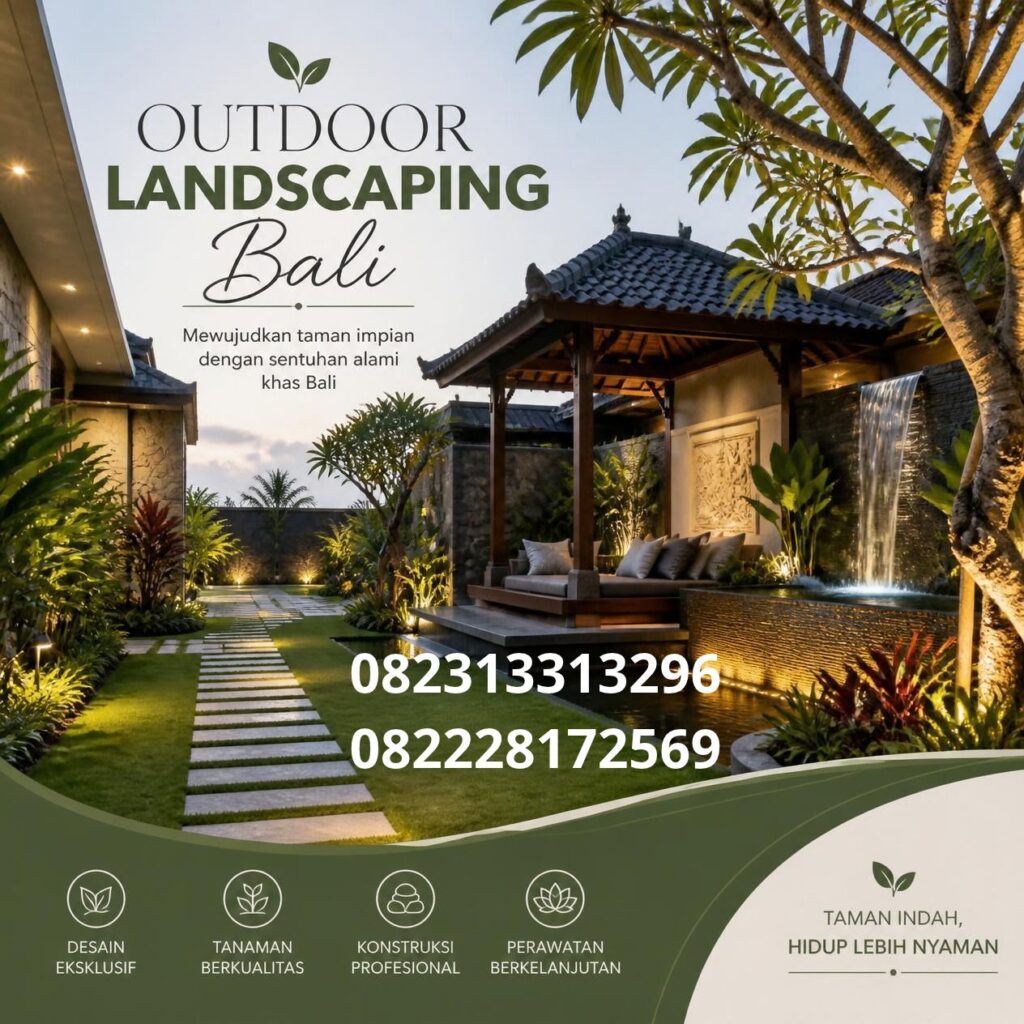
read also : https://arovabuild
Match the planting to the zone
Here is a simple way to think about plant selection by area.
- Humid highlands (Ubud, Tegallalang, Payangan): tree ferns, heliconia, gingers, alocasia, philodendron, and bamboo used with root barriers. Moss will come whether you invite it or not, so design with it.
- Hot coastal flats (Canggu, Seminyak, Sanur): frangipani, coconut palms, pandanus, bougainvillea, and hardy grasses that tolerate salt and foot traffic.
- Dry limestone (Uluwatu, Ungasan, Jimbaran): agave, frangipani, bougainvillea, cycads, and drought-tolerant groundcovers. Imported topsoil and drip irrigation are usually needed.
Local species cost less, establish faster, and forgive missed watering. Mature frangipani trees transplant well and give a new garden instant age, which is why they anchor so many villa courtyards.
Plan lighting and irrigation before the paving
Conduits for garden lighting and irrigation lines should go in before hard surfaces are laid. Retrofitting means cutting stone you already paid for. An automatic drip system on a timer protects the planting during the dry months from April to October, and it removes the biggest risk for absentee owners: inconsistent watering.
Owners who want a second opinion on a concept before committing can send their site plan and reference photos to arovabuild.com for a practical review of materials and buildability.
Why a Surabaya-Based Builder Makes Sense for a Bali Project
Overseas buyers often assume the contractor must sit next door to the site. For landscape construction, the supply chain matters just as much.
Surabaya is the industrial and logistics center of East Java, and East Java is where a large share of the region’s stone, timber, steel, and fabricated building products are processed. Materials move by truck across the province to the ferry crossing at Banyuwangi, then over the narrow strait into western Bali. It is a routine route for construction freight, and it means stone and timber can be selected, cut, and checked close to the source before they travel.
That brings practical advantages for a project owner:
- Stone can be sorted for color consistency and finish before shipping, which avoids mismatched batches arriving on site.
- Custom items like pergola frames, planters, gates, and water features can be fabricated in workshops and delivered ready to install.
- Surabaya’s port handles international freight, useful if your project includes imported fittings or if you are sourcing Indonesian landscape materials for a property outside the country.
arovabuild.com operates from Surabaya, which places it close to this material base while serving projects across the strait in Bali.
How to Choose a Landscape Contractor Without Being on Site
Most foreign owners manage their build remotely. These checks protect you.
Ask for a drawing set that goes beyond a rendering. A pretty 3D image tells you nothing about falls, drain positions, or sub-base thickness. Request a levels plan, a drainage layout, a planting schedule with species and sizes, and a materials list with finishes specified.
Get the quote itemized. Hardscape, softscape, irrigation, lighting, and earthworks should appear as separate lines. Lump-sum quotes make it impossible to see where corners might be cut.
Agree on progress reporting. Weekly photos and short video walk-throughs are standard practice for remote clients. Tie payments to visible milestones such as completed drainage, completed paving, and completed planting.
Ask about the establishment period. New gardens need closer care for the first few months. Clarify who replaces plants that die in that window and who trains your villa staff on upkeep.
Check the land terms. Many foreign-held properties in Bali sit on leasehold land. Match your landscape investment to the remaining lease length, and confirm with your legal advisor what improvements are permitted.
What Should You Budget?
Costs vary widely with site conditions, so treat any figure as a starting point. As a general guide, a planting-led garden with simple paths sits at the lower end, often somewhere in the range of USD 30 to 70 per square meter. Designs heavy on natural stone, decking, water features, and lighting can run from around USD 100 to well over USD 200 per square meter. Steep sites, poor access, and imported soil push numbers higher.
A sensible rule is to allow a meaningful share of the landscape budget for the parts nobody photographs: earthworks, drainage, and soil. Then set aside a monthly maintenance amount from day one. For an exact figure based on your plot, request a site-specific quote.
Frequently Asked Questions
When is the best time to start a landscaping project in Bali?
Earthworks, drainage, and paving go faster in the dry season, roughly April to October. Planting toward the end of the dry season lets new plants establish with help from the first rains.
How long does a villa garden take to build?
A typical private villa garden takes around six to twelve weeks once design is approved. Larger resort grounds or sites needing retaining walls take longer.
Which plants need the least maintenance in Bali?
Frangipani, pandanus, bougainvillea, agave, and native palms are forgiving. Pair them with a hardy lawn grass and drip irrigation for a garden that tolerates long owner absences.
Can foreigners hire a builder from outside Bali?
Yes. Indonesian contractors work across provinces, and many Bali projects are supplied and built by teams from Java. What matters is clear drawings, an itemized contract, and regular reporting.
What stone is safest around a swimming pool?
Rough-finished andesite and lava stone give reliable grip when wet. Avoid polished or honed finishes in any area where people walk barefoot.
Do I need a permit for landscaping work?
Planting generally does not, but structures such as walls, pools, and pavilions may fall under building approvals and local zoning rules. Confirm requirements for your specific plot before work begins.
Plant Once, Enjoy for Years
A Bali garden succeeds or fails underground. Get the levels and drainage right, choose stone and timber for grip and durability, match plants to your part of the island, and plan irrigation and maintenance for the months you are away. Do those things in that order and the lush look in the reference photo follows naturally.
If you are planning outdoor landscaping Bali owners and guests will enjoy for many seasons, send your site details and ideas to arovabuild.com. You will get straightforward advice on what suits your location, along with a clear, itemized quote to plan around.