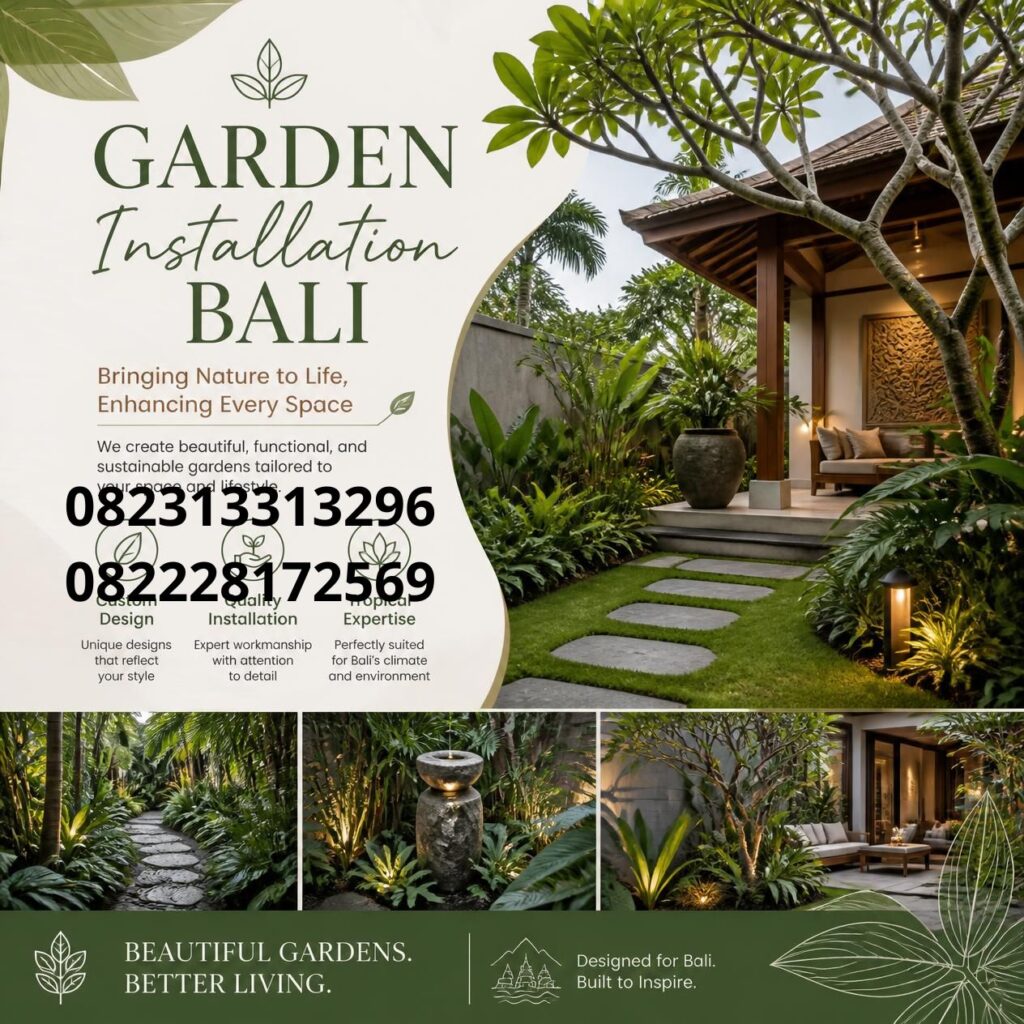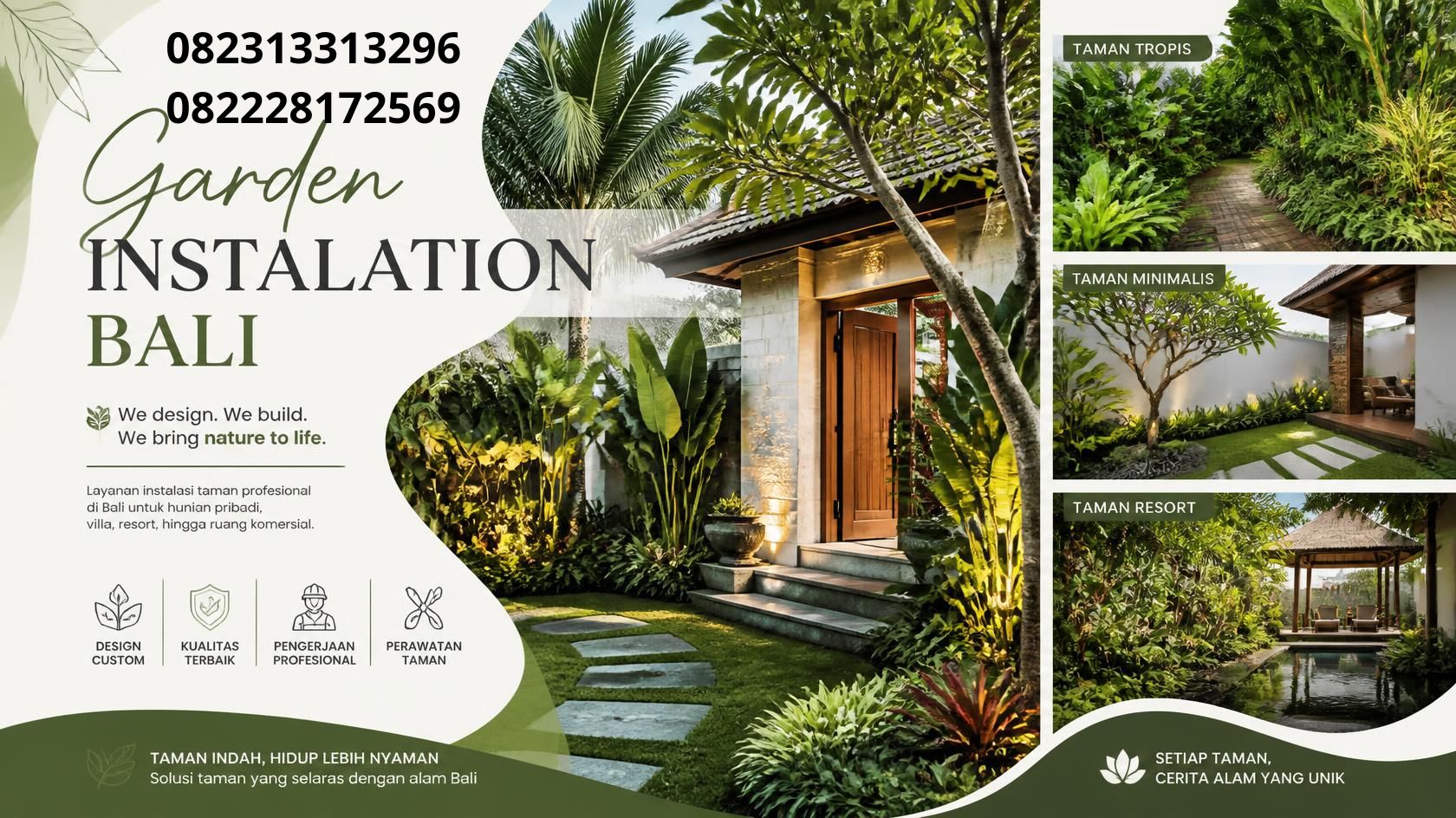
Garden Installation Bali: Choosing the Garden Style That Survives the Island
Garden Installation Bali – The most expensive mistake in a garden installation in Bali has nothing to do with plants. It’s choosing a style from a photo without asking whether that design can handle a monsoon that drops a month’s worth of rain in a week, or salt wind coming off the Indian Ocean every afternoon. Owners pick a look first and the site second, and within one wet season the lawn is waterlogged, the gravel has washed into the pool, and half the shrubs have rotted.
A good garden here starts the other way around. You read the site, then you choose a style that fits it, then you choose materials that hold up. This guide compares the main garden types and materials used across the island so you can make that decision with your eyes open.
Chat on WhatsApp
Chat on WhatsApp
Why Bali Gardens Fail (and Why It’s Rarely the Gardener’s Fault)
Garden Installation Bali – Bali has two seasons that behave like two different countries. From roughly November to March, heavy rain arrives in bursts, soil saturates fast, and anything planted in a low spot sits in standing water. From April to October, the dry season brings steady sun, and a garden without a watering plan starts to brown in weeks.
Then there’s location. A villa in Ubud sits in a cooler, wetter, more humid zone where ferns and moss thrive and full-sun plants sulk. A property on the Bukit Peninsula sits on limestone with thin topsoil, so roots have very little to work with unless soil is brought in. Coastal areas like Canggu, Seminyak, and Sanur deal with salt spray, sandy ground, and wind.
The same garden design will perform completely differently in each of these places. That’s why a copy-paste approach so often ends in replanting.
Five Garden Styles Compared for Bali Conditions
Below are the styles most owners ask about, with honest notes on where each works and where it struggles.
The Lush Tropical Garden
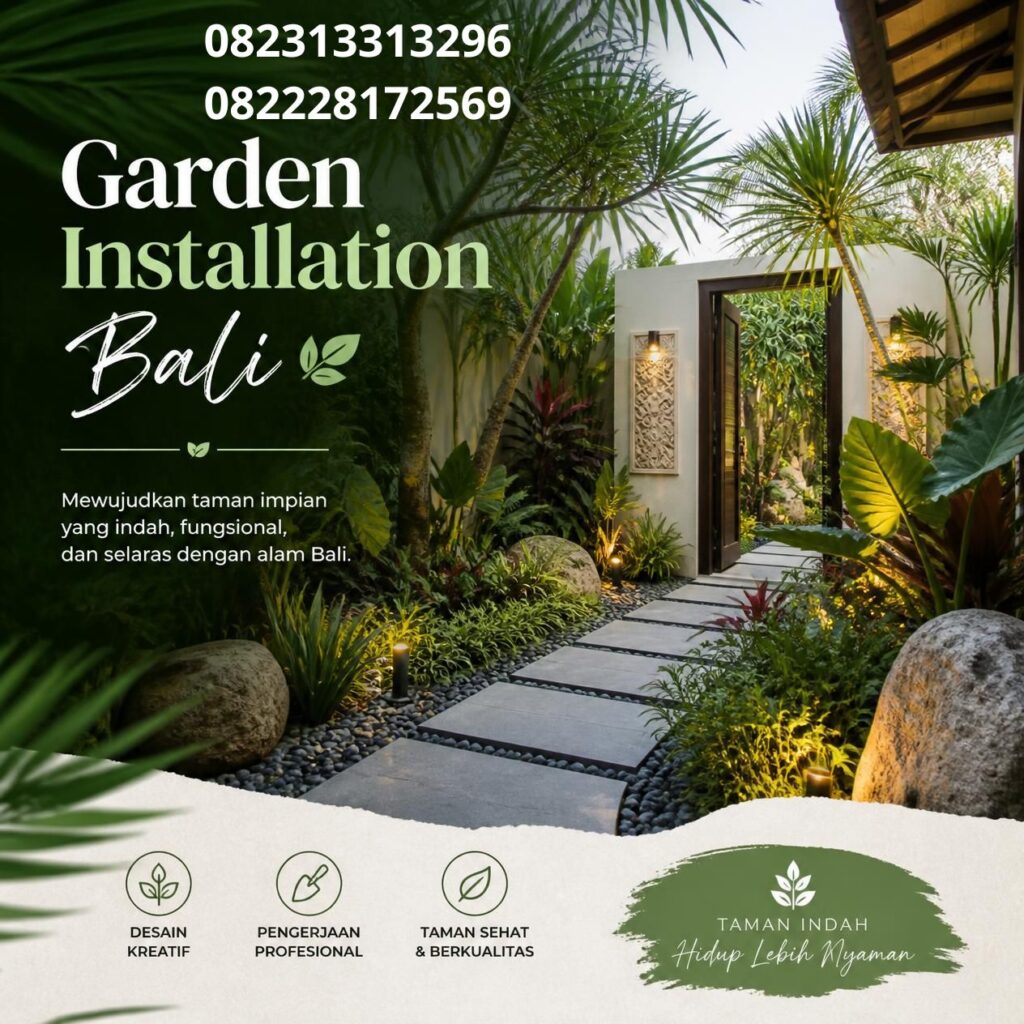
This is the look most people picture: layered greenery, broad leaves, palms, heliconia, bird of paradise, frangipani, and ground covers filling every gap. Done well, it feels like the villa grew out of the jungle.
Where it shines: Ubud, Tabanan, and other wetter inland areas where plants grow quickly and the humidity does half the work.
Watch out for: Fast growth means regular trimming. Without a maintenance plan, a tropical garden can overwhelm paths and block views within a year. Dense planting near walls also traps moisture against buildings.
The Modern Minimalist Garden
Garden Installation Bali – Clean lines, a limited plant palette, large-format stone or concrete paving, and a few sculptural specimens such as a single frangipani or a row of tall grasses. It suits contemporary villas and works well for rental properties because it photographs beautifully and needs less upkeep.
Where it shines: Coastal areas and the Bukit, where fewer plants means fewer plants to fail.
Watch out for: Hard surfaces get hot in the dry season and shed ater fast in the wet season. Drainage has to be designed carefully, or every downpour turns the terrace into a shallow pond.
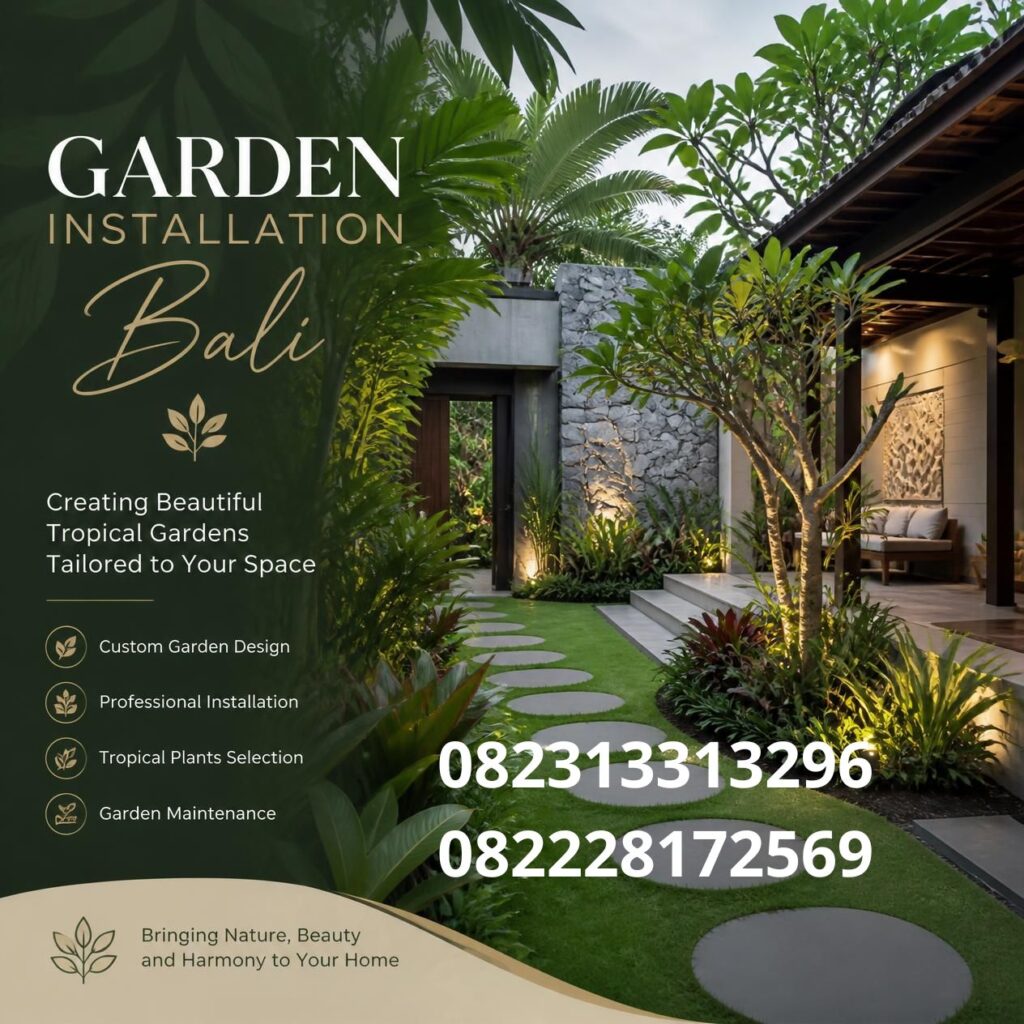
The Traditional Balinese Courtyard Garden
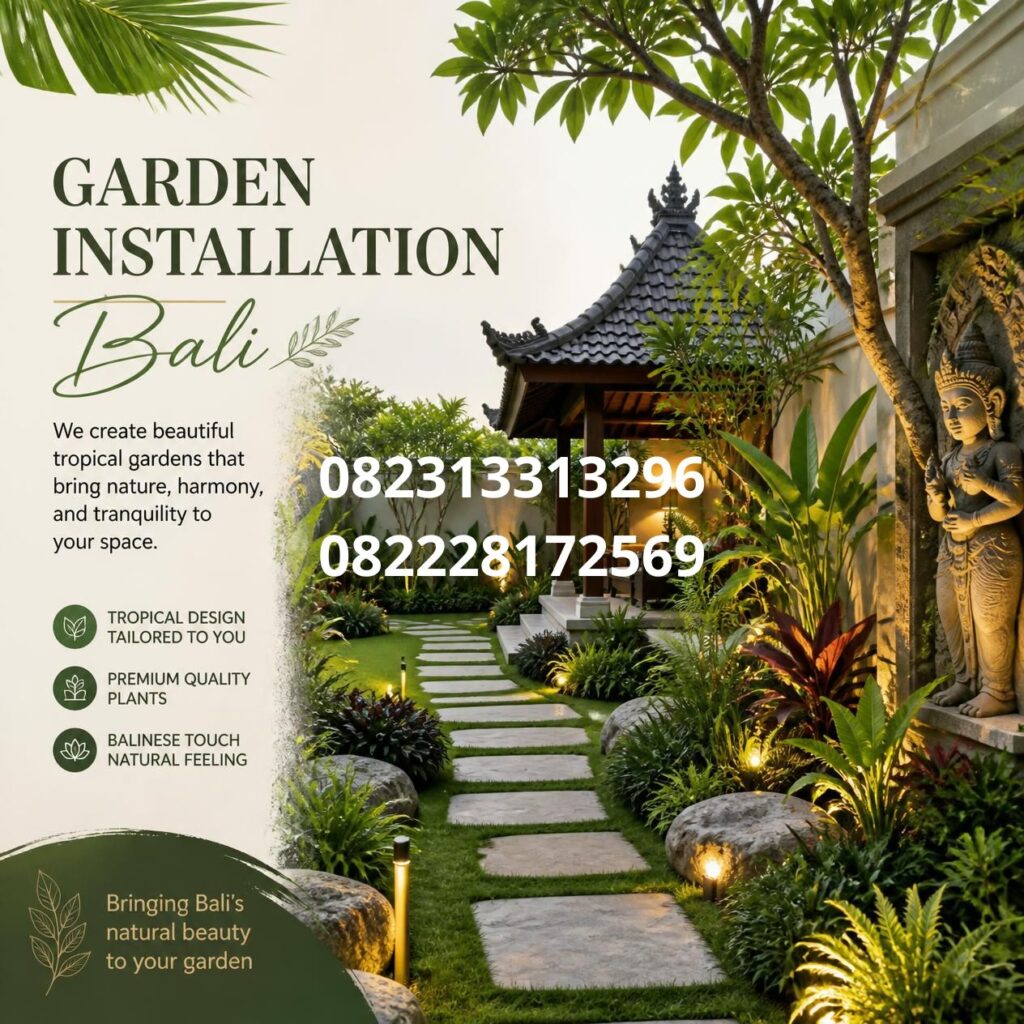
Built around local materials and traditions: carved paras stone, volcanic andesite, lotus ponds, statues, frangipani trees, and sometimes a shrine corner. Many owners also borrow the logic of the aling-aling, the entrance wall that creates privacy and a sense of arrival.
Where it shines: Almost anywhere on the island, and especially for owners who want the property to feel rooted in place.
Watch out for: Paras is soft and porous. It looks gorgeous carved, but it grows moss quickly in damp areas and weathers faster than harder stones. Plan where it’s used.
baca juga : https://arovabuild
The Zen or Rock Garden
Raked gravel, boulders, moss, a few pruned trees, and lots of empty space. Calm, quiet, and well suited to meditation corners or small courtyards.
Where it shines: Shaded courtyards and small spaces between buildings.
Watch out for: Loose gravel and heavy rain are not friends. Without edging, a stable base, and slope control, the gravel migrates after every storm.
The Edible and Productive Garden
Herb beds, raised vegetable planters, banana, papaya, lemongrass, chili, and citrus. Increasingly popular with long-stay residents and retreat owners who want kitchen produce on site.
Where it shines: Sunny inland plots with decent soil.
Watch out for: It’s the highest-maintenance option. It needs regular harvesting, pest control, and someone who actually cares about it.
Grass and Hardscape Materials Side by Side
Style decides the look, but materials decide whether the garden still looks good in two years. Here’s a practical comparison of common choices for a garden installation in Bali:
| Material | Best Use | Strengths | Weaknesses |
|---|---|---|---|
| Japanese grass (zoysia type) | Ornamental lawns, borders | Fine texture, dense, tidy look | Slow to recover from heavy foot traffic, dislikes deep shade |
| Carpet grass (broadleaf type) | Family lawns, shaded areas | Tolerates partial shade and wet soil | Coarser look, spreads into beds |
| Seashore paspalum | Coastal properties | Handles salt and sandy soil well | Needs regular mowing and sun |
| Paras stone | Carvings, wall cladding, accents | Easy to carve, warm traditional look | Soft, absorbs water, grows moss |
| Andesite (volcanic stone) | Paving, steps, pool decks | Hard, durable, good grip | Heavier and costlier to install |
| River stones and pebbles | Drainage channels, borders | Natural look, helps water flow | Can shift without proper edging |
| Hardwood decking | Pathways, terraces | Warm, comfortable underfoot | Needs sealing and termite protection |
One tip that saves a lot of regret: don’t use a single grass type across the whole property. Many gardens have sunny lawns, shaded strips beside walls, and wet low points. Matching grass to each zone costs a little more at installation and far less in replacement later.
How to Choose: A Consultant’s Shortlist of Questions
After walking many sites, the decision usually comes down to a handful of honest answers. Ask yourself these before you approve any design.
Who will maintain it? If the villa is a rental with a small staff, lean minimalist or courtyard. If you have a dedicated gardener, a lush tropical or productive garden becomes realistic.
Where does the water go? Stand on the site during or after heavy rain if you can. Low spots, runoff from neighboring plots, and roof downpipes all need a plan. Drainage is invisible when it works and very visible when it doesn’t.
How much sun does each area actually get? Bali’s sun is intense, but tall walls and neighboring buildings create deep shade pockets. Plants chosen for full sun will struggle there.
Is the property near the coast? Salt and wind narrow your plant list considerably. Choose tolerant species and give young plants protection while they establish.
What’s the soil like? On limestone areas, budget for imported topsoil and compost. In clay-heavy inland areas, improve drainage before planting.
How will people use the space? A lawn for kids and dogs needs tougher grass than a lawn that’s mostly admired from the pool. Paths should follow how people actually walk, not just how the plan looks from above.
If you’d like a second opinion on any of these, the team at arovabuild.com is happy to look at your site photos or plans and suggest a direction before you commit to a design.
What a Proper Garden Installation in Bali Looks Like, Step by Step
A garden that lasts goes through the same core stages, regardless of style.
- Site survey. Measuring the area, checking slopes, sun, shade, soil, and existing trees worth keeping.
- Design and plant plan. Layout, hardscape, planting zones, lighting points, and irrigation routes.
- Earthworks and drainage. Grading, soil improvement, drainage pipes or channels, and sub-base for paving.
- Hardscape. Paths, walls, steps, water features, and edging go in before planting so plants aren’t trampled.
- Irrigation and lighting. Pipes and cables are laid while the ground is still open.
- Planting. Trees first, then shrubs, ground cover, and finally lawn.
- Establishment care. The first weeks decide whether plants take root. Watering, staking, and early pest checks matter most here.
Skipping or rushing step three is behind most of the failed gardens on the island. It’s the least glamorous stage, and the one that protects everything else.
Timing Your Project Around the Seasons
The dry season is generally easier for earthworks and hardscape because the ground is workable and concrete cures properly. Planting toward the end of the dry season or at the start of the rains can help establishment, since nature takes over some of the watering. That said, installing in the wet season is entirely possible with good drainage and protection for fresh soil.
Common Garden Installation Mistakes We See Across Bali
Planting too close to the building. Large trees near foundations or pool walls cause root problems years later. Give every tree its mature footprint.
Forgetting about leaf drop. Some beautiful trees shed constantly. Beside a pool, that means daily cleaning.
Choosing plants that only look good at the nursery. Ask how a plant behaves at full size, not just how it looks in a pot.
No lighting plan. Most villa gardens are enjoyed in the evening. Uplighting on a frangipani or soft path lights transform the space after dark and are far easier to install before planting.
Underestimating maintenance. Every garden needs care. The question is how much, and whether you’ve planned for it.
Working From Surabaya, Building in Bali
arovabuild.com is based in Surabaya, East Java, which puts the team within practical reach of Bali by road and ferry across the Bali Strait. That connection to East Java’s material suppliers and workshops can be useful for sourcing stone, timber, planters, and hardscape elements for projects on the island. For overseas owners and investors who can’t be on site often, having a clear project scope, regular progress photos, and a single point of contact makes a long-distance build much less stressful.
Garden Installation Bali FAQ
How much does garden installation in Bali cost?
It depends on size, style, hardscape, soil preparation, and plant maturity. A simple lawn and shrub garden sits at the lower end, while full landscapes with water features, stonework, and lighting cost considerably more. Get a site-specific quote rather than relying on a per-square-meter guess.
How long does a garden installation take?
Small courtyard gardens can take a few weeks. Larger villa landscapes with hardscape and drainage work often take one to three months, depending on scope and weather.
What grass is best for Bali?
It depends on the area. Fine-textured zoysia types suit sunny ornamental lawns, broadleaf carpet grass handles shade and wet ground, and seashore paspalum performs well near the coast.
Can I install a garden during the rainy season?
Yes, with proper drainage and protection for exposed soil. Hardscape and earthworks are usually smoother in the dry season, while planting can benefit from early rains.
Which plants need the least maintenance in Bali?
Established frangipani, many palms, mondo-style ground covers, and hardy shrubs adapted to local conditions generally need less care than fast-growing flowering plants or lawns.
Can the garden be installed while I’m overseas?
Yes. Many owners manage projects remotely through agreed designs, scheduled updates, and photo or video progress reports.
Your Garden, Built for the Island It Grows On
A successful garden installation in Bali comes from matching the style to the site: lush tropical where rain and humidity help, minimalist or courtyard designs where conditions are tougher, and the right grass and stone for each zone. Get the drainage right, plan the maintenance honestly, and the garden will improve every year instead of being replanted.
If you’re planning a new villa garden or reworking an existing one, send your site details to arovabuild.com and ask for a quote. The team will help you choose a design that looks the way you imagined and holds up through every wet and dry season Bali throws at it.