Office Renovation Bali: How to Upgrade Your Workspace Without Losing Months of Business – arovabuild
Office Renovation Bali – The most expensive mistake I see in office renovation in Bali has nothing to do with tiles, paint, or furniture. Instead, it is the assumption that a renovation here works the same way it does in Singapore, Sydney, or Berlin. Owners sign off on a design, set a six-week deadline, and then watch the schedule slip because nobody planned for monsoon rain, temple ceremony days, or materials arriving from Java. As a result, the team works from cafés for three months, and the budget quietly grows.
So, if you run a company, an agency, a coworking space, or a regional branch on the island, this guide explains why Bali office projects go off track and how you can plan one that finishes on time.
Chat on WhatsApp
Chat on WhatsApp
Why Office Renovation in Bali Is Different From Anywhere Else
Bali looks like an easy place to build. Labor is skilled, craftsmanship is excellent, and natural materials are everywhere. However, three local realities shape every office project, and ignoring them is where trouble starts.
The Climate Attacks Interiors Faster Than You Expect
Office Renovation Bali – Humidity on the island often stays high for most of the year. During the wet season, roughly November to March, heavy afternoon downpours become routine. Consequently, materials that perform well in dry climates can swell, warp, or grow mold within a single season.
For example, standard MDF cabinetry near an air-conditioned meeting room can absorb moisture every time the AC switches off at night. Within a year, edges start bubbling. Similarly, gypsum ceilings under a poorly sealed roof can sag after one rainy season. An office that looks perfect at handover may look tired by its first anniversary if nobody specified materials with the climate in mind.
The Calendar Has More Pauses Than You Planned For
Balinese ceremonial life follows its own rhythm. Major observances such as Galungan, Kuningan, and Nyepi affect work schedules, and on Nyepi the entire island goes silent for a full day. Workers also take time off for family and village ceremonies throughout the year.
None of this is a problem in itself. In fact, a good contractor treats these dates as fixed points in the schedule. The trouble only begins when a timeline ignores them entirely.
Materials Often Travel Before They Arrive
Many finishing materials, fixtures, and specialty items come from Java, especially from the Surabaya region. Shipping usually moves by truck and ferry across the Bali Strait. Normally that route runs smoothly. Still, weather, port queues, and holiday traffic can add days. Therefore, a project that orders materials late can stall while crews wait.
The Real Causes Behind Delayed or Disappointing Office Renovations
Office Renovation Bali – Once you understand the local conditions, the common failures start to make sense. Below are the causes we see most often when owners describe a renovation that went wrong.
Starting construction before the design is final. Changing the layout after walls go up costs time and money. Moving a single partition can mean rerouting electrical lines, data cables, and AC ducts.
Treating the office like a villa. Many Bali offices occupy converted villas or shophouses (ruko). Those buildings were not designed for twenty laptops, a server cabinet, and air conditioners running ten hours a day. Without an electrical upgrade, breakers trip constantly.
Underestimating sound. Open-air Balinese architecture is beautiful. Yet it does nothing to stop scooter noise, roosters, or a neighbor’s construction. Video calls suffer as a result, and staff productivity drops.
Skipping a phasing plan. Many businesses cannot close for two months. However, they never ask whether the work could happen in stages while the team keeps operating.
Choosing finishes for photos, not for daily use. Polished concrete, natural stone, and raw timber look stunning online. Meanwhile, some of these surfaces stain, crack, or need sealing every year in a humid climate.
Solutions That Keep Your Bali Office Project on Track
Now for the practical side. The fixes below come from real project experience, and most of them cost far less than the problems they prevent.
Lock the Layout Before Anyone Picks Up a Hammer
First, finalize the floor plan, the furniture layout, and the position of every power outlet and data point. Then sign it off. That single habit eliminates most mid-project changes.
A useful test: walk through a typical workday on paper. Where does each person sit? Where does the printer go, and where do visitors wait? If you cannot answer those questions, the design is not ready yet.
baca juga : https://arovabuild
Choose Materials That Respect the Humidity
Material choice matters more here than in almost any other region. The comparison below shows how common options behave in a Bali office environment.
| Material | Strength in Bali’s Climate | Watch Out For |
|---|---|---|
| Moisture-resistant HMR board | Holds shape better than standard MDF | Edges still need proper sealing |
| Solid treated timber | Warm look, long lifespan | Needs proper drying and finishing |
| Aluminum partition frames | Rust-free, stable dimensions | Can feel cold without soft finishes |
| Homogeneous porcelain tiles | Low water absorption, easy to clean | Slippery if glazed near entrances |
| Vinyl or SPC flooring | Comfortable, quiet underfoot | Requires a dry, level subfloor |
| Moisture-resistant gypsum | Suits ceilings in AC rooms | Fails if the roof leaks above it |
Also, ask for anti-mold paint in storage rooms, pantries, and toilets. It costs slightly more, yet it saves a repaint within two years.
Upgrade the Building’s Infrastructure, Not Just Its Surfaces
Before choosing a single finish, check the bones. Specifically, look at the electrical capacity, the grounding, the condition of the roof, and the drainage around the building.
For many converted villas and ruko, an electrical upgrade becomes the most important line item. Modern offices need dedicated circuits for AC units, a stable supply for the server or router, and enough outlets so nobody runs extension cords across walkways. In addition, a UPS for networking equipment protects you from the short power interruptions that occasionally happen across the island.
Internet is the other lifeline. So, plan cable routes for fiber and Wi-Fi access points during the renovation, not after. Running data cables through finished ceilings later is messy and expensive.
Design for Sound From Day One
If your team spends hours on video calls with clients abroad, acoustics deserve real attention. Some effective, affordable steps include:
- glass partitions with laminated panels for meeting rooms
- acoustic ceiling panels in open work areas
- solid-core doors instead of hollow ones for call rooms
- rugs, upholstered seating, and planted walls to absorb echo
- one or two small enclosed phone booths for private calls
Even a single soundproofed call room can change how a team feels about the office.
Phase the Work So Your Business Keeps Running
For companies that cannot pause operations, phased renovation is often the smartest route. For instance, the crew completes the meeting rooms and one wing first, while staff work in the other half. Then everyone moves over, and the second phase begins.
Noisy work such as demolition, drilling, and tile cutting can also run in the early morning or on weekends where local regulations and neighbors allow. Phasing usually adds a little to the total timeline. Nevertheless, it keeps revenue flowing, which matters far more for most businesses.
If you want to see whether a phased approach fits your space, arovabuild.com can review your current layout and suggest a realistic sequence before you commit to any budget.
How to Choose the Right Partner for Office Renovation in Bali
A good plan still needs the right team. When you compare contractors, focus on how they work rather than how attractive their portfolio looks.
Ask How They Handle Materials and Logistics
A reliable contractor knows where each material comes from and how long it takes to reach the site. Ask them directly: which items ship from Java, how early they order, and what happens if a shipment runs late. Clear answers signal experience.
Request a Detailed, Itemized Quotation
A single lump-sum number tells you very little. Instead, look for a breakdown covering demolition, structural or roof repairs, electrical, plumbing, AC, ceilings, flooring, partitions, built-in furniture, and finishing. That way, you can see where the money goes and adjust scope if needed.
Check How They Communicate With Owners Abroad
Many office owners in Bali are foreign entrepreneurs, or regional managers who are not on site every day. In that case, weekly photo updates, a shared schedule, and a single English-speaking point of contact make a huge difference. Ask for an example of a progress report before you sign.
Clarify Permits and Building Rules Early
Major structural changes, extensions, or changes in building use may require approval from local authorities. Rules also differ between areas, and some zones have height or design guidelines that protect Balinese architectural character. Ask your contractor to explain what your specific project needs, and confirm it with the relevant office rather than assuming.

What Does an Office Renovation in Bali Cost?
Costs vary widely, so any honest answer starts with “it depends.” Generally, the biggest factors include:
- the size of the space in square meters
- whether you need structural, roof, or electrical work
- the level of finish, from a simple refresh to a full premium fit-out
- the amount of custom built-in furniture
- the AC system and its capacity
- whether the work runs in phases
A light refresh with new paint, lighting, and flooring sits at the lower end of the range. By contrast, a full fit-out with new partitions, ceilings, custom joinery, upgraded electrical systems, and acoustic treatment costs considerably more per square meter. Because every building differs, the most useful step is a site survey followed by an itemized quote. Then you can decide which upgrades deliver the best return.
One more budgeting tip: set aside a contingency of roughly 10 to 15 percent. Older villas and ruko often hide surprises behind walls, especially in wiring and plumbing.
Small Design Choices That Make a Bali Office Feel Right
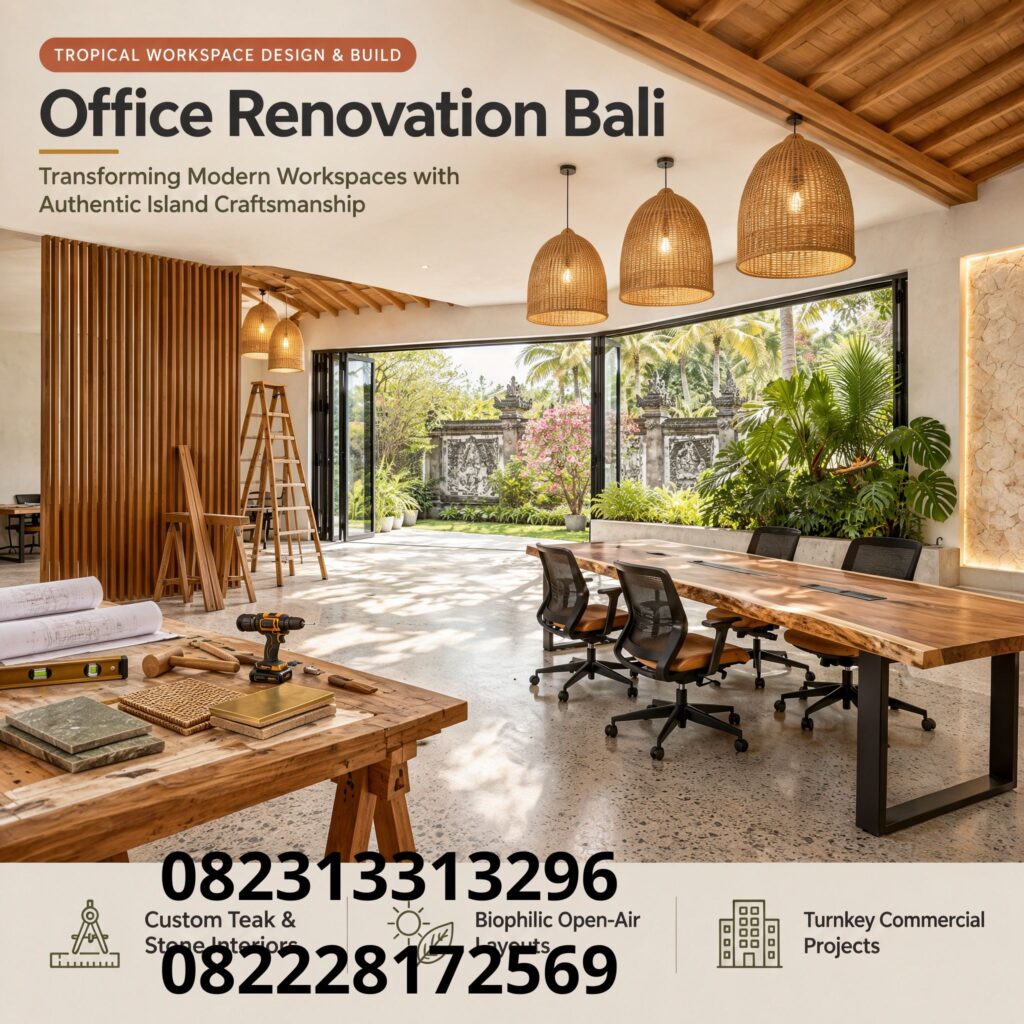
Beyond the technical side, the best Bali offices share a few design habits. They let in natural light without overheating the room, often through deep overhangs or louvers. They also bring the outdoors in with plants, timber accents, and courtyard views, while keeping work areas sealed and cool.
Local craftsmanship offers another advantage. Hand-carved panels, woven ceiling details, or terrazzo made by local artisans give an office genuine character. Still, use these elements as accents in reception areas and lounges rather than in high-traffic workspaces, where durability comes first.
Finally, plan a comfortable pantry and break area. In a place where many people relocated for lifestyle, an office that feels pleasant to spend time in helps attract and keep good staff.
Frequently Asked Questions About Office Renovation in Bali
How long does an office renovation in Bali usually take?
A light refresh may take a few weeks, while a full fit-out can take two to four months or more. Ceremony days, the rainy season, and material shipping all influence the final timeline.
Can we keep working during the renovation?
Yes, in many cases. A phased plan lets your team use part of the office while the crew works on another section.
What is the best time of year to renovate in Bali?
The dry season, roughly April to October, usually makes roof, exterior, and structural work easier. Interior work can continue year-round with proper planning.
Do I need a permit to renovate an office in Bali?
Cosmetic interior work often needs less paperwork than structural changes or extensions. However, requirements vary, so confirm with your contractor and local authorities before starting.
Which flooring works best for a humid office?
Porcelain tiles and quality vinyl or SPC flooring both perform well. The key is a dry, properly leveled subfloor.
Can a contractor based outside Bali manage the project?
Yes. A team with solid logistics and on-site supervision can deliver well, especially when materials already come from Java.
Your Next Workspace Starts With the Right Plan
A successful office renovation in Bali comes down to a few decisions made early: lock the layout, choose humidity-ready materials, upgrade the electrical and network backbone, plan for sound, and respect the island’s calendar. Get those right, and the beautiful part, the timber, the light, the greenery, falls into place naturally.
Based in Surabaya with direct access to Java’s material supply, arovabuild.com helps businesses plan and deliver office renovations in Bali with clear schedules, itemized quotes, and regular progress updates. Share your floor plan or a few photos of your current space, and the team will help you map out a renovation that fits your budget and keeps your business running.