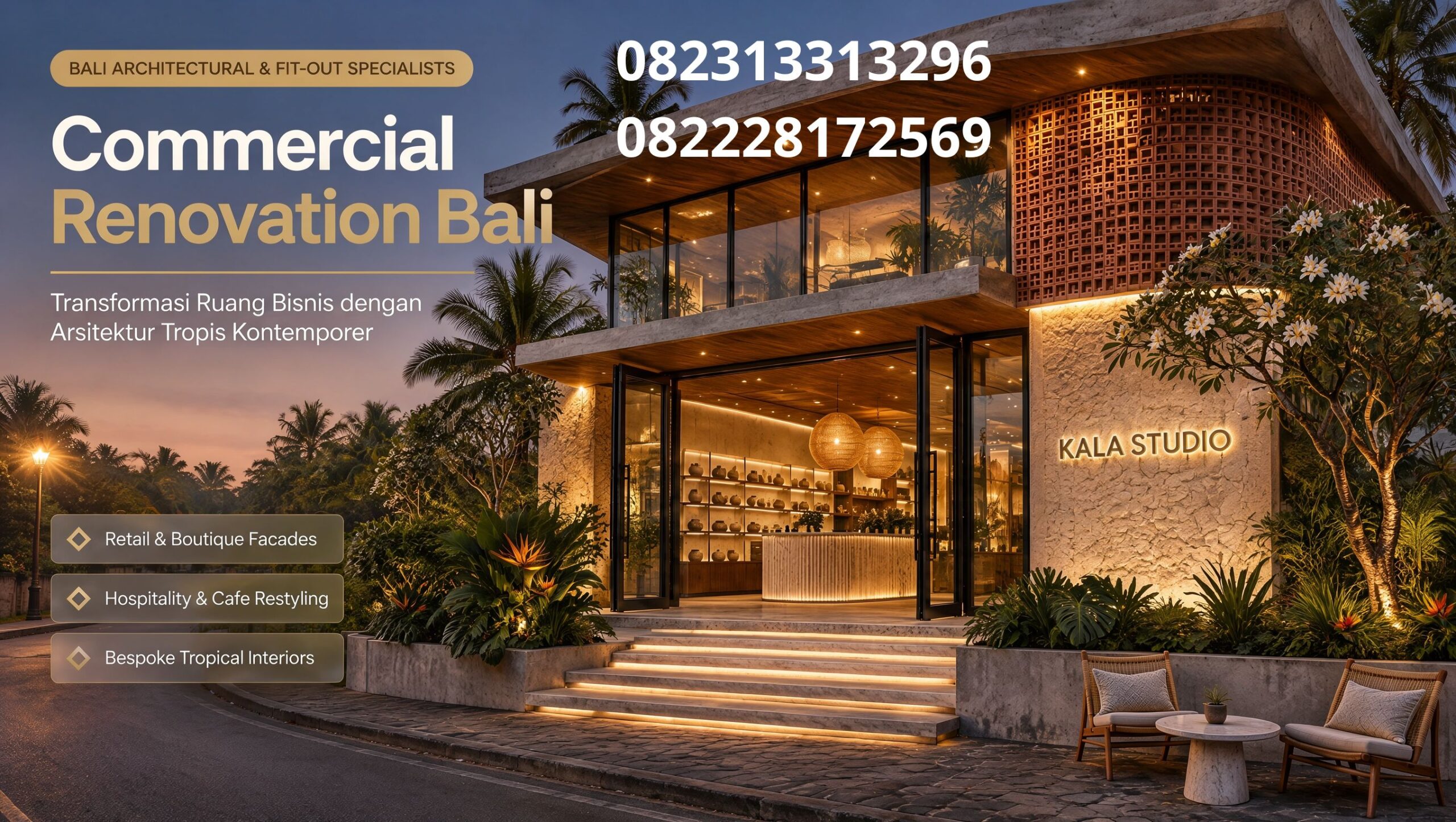
Commercial Renovation Bali: Why Good Projects Go Over Budget, and How to Keep Yours on Track – arovabuild
Commercial Renovation Bali – Most owners who plan a commercial renovation in Bali make the same early mistake. They build the schedule around the drawings. The design looks finished, the contractor gives a start date, and the reopening date goes on the calendar. Then the rainy season arrives, a temple ceremony closes the street for two days, imported fittings sit in transit, and the café that should have reopened in eight weeks is still covered in dust at week fourteen.
Commercial Renovation Bali projects seldom fail because of bad design. Instead, they struggle because the plan ignores how building actually works on the island. After years of watching projects succeed and stall, I can tell you the difference usually comes down to decisions made before anyone picks up a hammer.
This guide walks through the real problems, why they happen, how to solve them, and how to choose a renovation partner you can trust with a working business.

Chat on WhatsApp
Chat on WhatsApp
The Real Problem With Commercial Renovation in Bali
Commercial Renovation Bali – When a renovation goes wrong in Bali, owners usually notice three symptoms.
First, the budget creeps. Small “unforeseen” items keep appearing, from rotted roof timber to wiring that doesn’t meet current standards. Second, the timeline stretches, often by weeks rather than days. Third, and most painful, problems show up after handover. Paint starts peeling within a year, a bathroom ceiling grows mold, or a timber deck warps by the next wet season.
Each of these costs money twice. You pay for the original work, and then you pay again to fix it, often while closing the business a second time. For a restaurant in Seminyak or a boutique in Ubud, that second closure can hurt more than the repair bill itself.
So the smart question isn’t “How cheap can this be?” Rather, it’s “What will this cost me over the next five years?”
Where the Trouble Actually Starts
Understanding the causes makes the solutions obvious. In practice, four forces drive most of the problems.
Bali’s Climate Punishes Shortcuts
Bali sits in the humid tropics, and the climate is relentless on buildings. Humidity stays high for much of the year, while the wet season, which typically runs from around November to March, brings heavy downpours that test every roof joint and drainage line.
Coastal areas add another layer. Properties in Canggu, Sanur, Nusa Dua, and Uluwatu face salt-laden air that corrodes standard metal fittings far faster than inland sites. Meanwhile, termites remain a constant threat to untreated timber anywhere on the island.
As a result, a material that performs perfectly in a dry or temperate climate may fail in Bali within two or three years. Contractors who source on price alone tend to learn this lesson at the client’s expense.
Permits and Community Approvals Follow Their Own Clock
Commercial renovation in Indonesia often requires building approval, now known as PBG (Persetujuan Bangunan Gedung), especially when the work changes structure, function, or floor area. On top of that, Bali has provincial rules on building height and traditional architectural character that apply in many zones.
Then there is the banjar, the local community council. Good relations with the banjar matter, particularly for noisy work, material deliveries, and projects near temples. Religious ceremonies can pause work on short notice. Nyepi, the island-wide Day of Silence, stops nearly all activity for a full day, and the surrounding preparation affects schedules too.
None of this is a problem if you plan for it. However, it becomes a serious problem when your contractor treats it as an afterthought.

Materials Travel Further Than You Think
Much of what goes into a Bali renovation comes from outside the island. Steel, glass, aluminum frames, ceramic tiles, sanitary ware, and many finishing materials travel from Java, typically by truck and ferry across the Bali Strait or by sea freight into Benoa.
Because of that, lead times matter. A delayed truck or a shortage in one item can freeze an entire trade on site. Smart planning orders long-lead items early and keeps buffer stock for anything that breaks easily in transit.
This is one reason a Surabaya-based team such as arovabuild.com brings real value to Bali projects. Surabaya is one of Indonesia’s major industrial and logistics hubs, so sourcing and coordinating materials from East Java becomes far more predictable.
Renovating Around a Business That Must Stay Open
Many commercial owners can’t afford to close completely. Hotels need rooms available, and restaurants need some revenue. Retail tenants have leases with fixed opening obligations.
Working around live operations takes careful sequencing, dust and noise control, safe access for guests, and night or off-peak shifts when necessary. Without a clear phasing plan, the renovation either disrupts customers or drags on far longer than it should.
Practical Fixes That Save You Money Later
Once you see the causes, the solutions follow naturally. Here’s what consistently works.
read also : https://arovabuild
Specify for the Tropics From Day One
Material choices made at the design stage decide how the space will look in three years. For Bali, a durable specification usually includes:
- Stainless steel or marine-grade fixtures for coastal properties
- Properly treated or kiln-dried timber, plus anti-termite soil treatment where relevant
- Mold-resistant paints and moisture-tolerant ceiling boards in wet areas
- Generous roof overhangs and well-sized gutters to handle tropical rain
- Cross-ventilation and adequate exhaust to reduce trapped humidity
- Waterproofing membranes on roofs, terraces, and bathrooms, tested before tiling
These choices sometimes cost more upfront. Still, they are almost always cheaper than replacing failed finishes after one wet season.
Build the Schedule Backward From Opening Day
Start with your target reopening date and work backward. Allow time for approvals, material lead times, ceremonial days, and weather. If major roof or exterior work is involved, aim to complete it before the heaviest rains.
Also, insist on a schedule that shows dependencies. For example, tiling can’t start until waterproofing passes a flood test, and the electrician needs the ceiling layout before final fit-out. A schedule that lists tasks without their dependencies is a wish list, not a plan.

Phase the Work So Revenue Keeps Flowing
For operating businesses, phasing is often the single most valuable decision. A resort might renovate one villa block at a time. Similarly, a restaurant could rebuild its kitchen first, then the dining area, with temporary partitions keeping guests away from the work zone.
Phasing does stretch the total duration. That said, it protects your cash flow and your reputation, which is usually the better trade.
If you’d like a realistic phasing plan for your property, the team at arovabuild.com can review your space and walk you through options before you commit to anything.
What Different Commercial Spaces Actually Need
Not every commercial space carries the same priorities. The table below summarizes what tends to matter most by property type.
| Property Type | Top Priority | Common Pitfall |
|---|---|---|
| Restaurant / café | Kitchen ventilation, grease handling, durable flooring | Underestimating exhaust and drainage needs |
| Retail shop | Lighting, display flexibility, storefront appeal | Choosing finishes that fade in strong sun |
| Villa / boutique hotel | Bathroom waterproofing, guest comfort, quiet work phasing | Disturbing guests during peak season |
| Office / co-working | Electrical capacity, data cabling, acoustic comfort | Too few power points for modern use |
| Beach club / bar | Corrosion-resistant fittings, outdoor-ready materials | Using indoor-grade metal near the sea |
Use this as a starting checklist when you brief your designer or contractor. If your property mixes uses, such as a villa with a restaurant, plan for the most demanding use in each zone.
Budgeting Without the Guesswork
Owners often ask for a price per square meter right away. That figure can be useful as a rough guide, but it hides most of what really drives cost.
In general, renovation scope falls into three broad tiers:
- Cosmetic refresh: new paint, lighting, minor fixtures, and soft furnishings. This is the lowest cost per square meter and the fastest to deliver.
- Interior fit-out: new layouts, partitions, ceilings, flooring, built-in joinery, and upgraded services. Costs rise noticeably here.
- Structural or full renovation: roof replacement, structural repairs, new wet areas, extensions, or change of use. This tier carries the highest cost and usually requires permits.
Within each tier, the biggest swing factors are material specification, site access, the condition of existing structure and wiring, and how much work happens around live operations.
A sensible budget also includes a contingency, often around 10 to 15 percent for renovation work, because older buildings almost always hide surprises behind walls and ceilings. Exact figures depend entirely on your property, so a site survey and detailed quote remain the only reliable way to know your real number.
How to Choose the Right Renovation Partner in Bali
The contractor you choose will shape every outcome discussed above. Before signing, ask these questions directly:
Who manages the project day to day? You want a named project manager who reports to you regularly, not a rotating crew with no single point of contact.
How do they handle permits and the banjar? A good partner explains the approval path for your specific scope and builds community coordination into the schedule.
What materials do they recommend for your location, and why? Listen for answers tied to humidity, salt air, and termites. Generic answers suggest generic results.
How do they price changes? Variations happen in every renovation. Clear, written variation pricing prevents disputes later.
Can they show you a phasing plan? For any operating business, this question separates experienced commercial builders from residential crews stretching into unfamiliar work.
What happens after handover? Ask about defect periods and how quickly they respond to issues.
Pay attention to how a contractor talks about risk. Honest partners tell you what could go wrong and how they will manage it. Promises of “no problems at all” should make you cautious, not comfortable.

Frequently Asked Questions About Commercial Renovation in Bali
How long does a commercial renovation in Bali usually take?
A cosmetic refresh may take a few weeks, while a full fit-out or structural renovation can run several months. Permits, weather, material lead times, and phasing around operations all affect the final timeline.
Do I need a permit to renovate a commercial building in Bali?
It depends on the scope. Cosmetic work often doesn’t need building approval, but structural changes, extensions, or a change of use generally require a PBG. Your contractor should confirm this for your specific project.
Can I keep my business open during renovation?
Often, yes. With good phasing, temporary partitions, and scheduled noisy work, many hotels, restaurants, and shops continue operating during renovation.
What is the best time of year to renovate in Bali?
The drier months, roughly April to October, suit exterior and roof work best. Interior work can continue year-round with proper planning.
How much does commercial renovation in Bali cost?
Costs vary widely by scope, materials, and site condition. A cosmetic refresh sits at the lower end, while structural work costs significantly more. Request a site survey for an accurate quote.
Can a contractor based outside Bali handle my project?
Yes, provided they have the logistics, site management, and local coordination in place. A Java-based team can even offer advantages in sourcing and supply reliability.
Turning Your Renovation Into a Stronger Reopening
A successful Commercial Renovation Bali project comes down to a few disciplined choices. Specify materials that suit the tropics, plan around permits, ceremonies, and weather, and phase the work so your business keeps earning. Above all, choose a partner who talks openly about risk and manages it before it reaches your budget.
When you’re ready to plan your renovation properly, arovabuild.com is here to help. Share your property details and goals, and the team will help you map out scope, timing, and a realistic quote, so your space reopens stronger, sooner, and built to last.